
Palpitations: read in the order of your curiosity
Before grouping symptoms under a single name
When experiencing throbbing, observe accompanying symptoms along with the speed and regularity of the pulse
Heart throbbingis a symptom where the heart feels as if it is pounding, racing, fluttering, or skipping a beat. While this may be due to caffeine, lack of sleep, or tension, it is also necessary to check for arrhythmia, anemia, thyroid issues, and the effects of medication. If accompanied by chest pain, severe shortness of breath, or a feeling of fainting, seek emergency evaluation immediately. If tests show no urgent issues but the symptoms recur chronically, consult with Baekrokdam regarding Korean herbal medicine treatment by observing how sleep, digestion, and tension correlate with the throbbing.
Categorizing Symptoms
Distinguish the situation that occurred along with the sensation
Determine the next course of action based on when the throbbing started and the accompanying symptoms.
| Presentation | Possibilities to Check | Priority Action |
|---|---|---|
| Briefly beating fast after caffeine or lack of sleep | Lifestyle stimuli · Tension response | Record triggers and pulse |
| Irregular pulse or recurrence during exercise | Arrhythmia or cardiac causes | Consultation for ECG or long-term heart rhythm monitoring |
| Accompanied by fatigue, paleness, or weight changes | Systemic causes such as anemia or thyroid issues | Blood tests and medication review |
| Accompanied by chest pain, severe shortness of breath, or feeling of fainting | Dangerous cardiac issues | Immediate emergency evaluation |
When to seek medical attention first
Seek medical attention immediately in these cases
Do not wait if the following symptoms occur along with palpitations.
- If palpitations do not stop and are accompanied by chest pain or chest pressure
- If there is severe shortness of breath, fainting, or a feeling of imminent fainting
- If palpitations, dizziness, and chest pain recur during exercise
- If you have a known heart condition and experience palpitations different from before
Different scenarios described as the heart beating
If pulsating sensations, dizziness, and cold sweats recur even after a cardiac evaluation
We first check for risks of arrhythmia, heart disease, thyroid issues, anemia, medication side effects, chest pain, and fainting. If symptoms recur in connection with sleep, posture, meals, or tension after the necessary evaluations, we link the onset, pulse, accompanying symptoms, and recovery time.
Distinguish between fast, skipped, or strong beats
Note whether the rhythm was regular or irregular, if you were able to measure your pulse, and how many minutes it lasted.
A normal ECG does not rule out all episodes
If symptoms were not present at the time of the test, link the episode time, activity, and wearable device records to your medical evaluation.
Observe the sequence of dizziness and cold sweats
Categorize chronologically whether weakness followed the pulsating sensation, or if dizziness occurred first followed by the heart beating.
Treatment GoalWhile ensuring cardiac risks are not overlooked, we narrow down the onset conditions and recovery time of episodes to reduce disruptions to outings, sleep, and work caused by pulsating sensations.
Consult using pulsating sensation records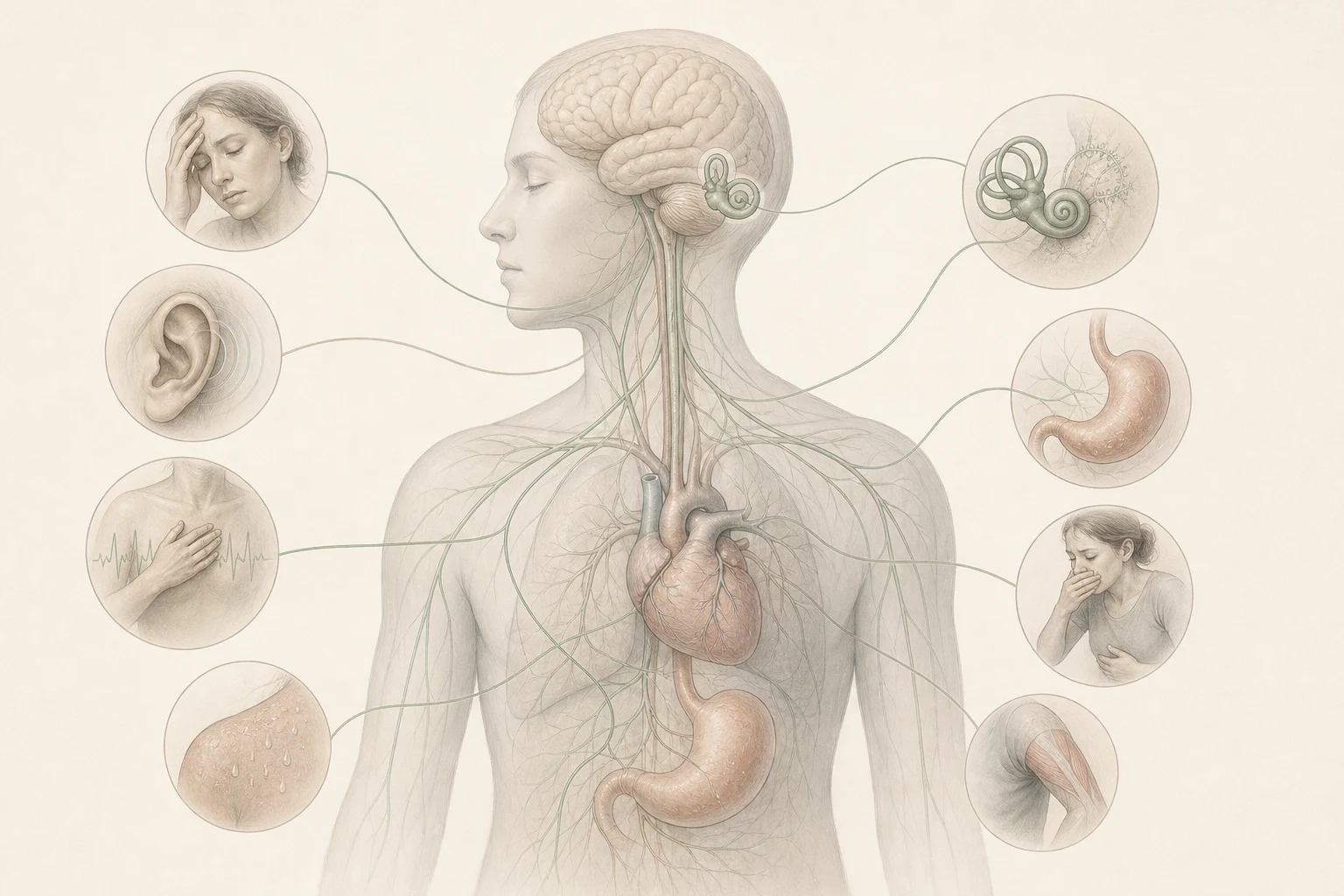
While the systemic response is real, the term 'autonomic nerve' alone does not replace a diagnosis of cardiac, neurological, or endocrine causes.
Photos show daily life scenes where symptoms appear, and explanatory diagrams simplify how reactions in the ears, balance, nerves, and the entire body are connected. They do not represent an individual's diagnostic or treatment results.If you have had these experiences
If pulsating sensations, dizziness, and cold sweats recur even after a cardiac evaluation
Some people find that while an ECG showed no abnormalities, they experience sudden heart racing accompanied by cold sweats and dizziness, leading them to remain cautious about going out or sleeping. After ruling out cardiac risks, we restore the sequence of these episodes.
For those who were fine during tests but experience repeated fast, skipped, or strong beats in daily life
When pulsating sensations recur even after checking for causes related to the heart, thyroid, anemia, or medication
For those who experience nausea, cold sweats, and weakness that last until the next day following a pulsating sensation
When the onset of pulsating sensations is clearly linked to lack of sleep, meals, posture, or tension
For those whose episodes vary depending on caffeine, lack of sleep, meals, or changes in posture
When cold sweats, nausea, a sense of exhaustion, and delayed recovery persist for a long time after an episode
This is how we approach the medical evaluation
Chest pulsating: the sequence of symptom onset and symptoms to check first
For pulsating sensations, we first check for risks of arrhythmia, heart disease, thyroid issues, anemia, medication effects, chest pain, and fainting. If symptoms recur alongside sleep, posture, meals, or tension even after necessary evaluations, we connect the onset, pulse, accompanying symptoms, and recovery time.
Distinguishing between fast, skipped, and strong beats
We record whether the rhythm was regular or irregular, if the pulse could be measured, and how many minutes it lasted.
A normal ECG does not dismiss all episodes
If symptoms were not present at the time of the test, we incorporate the timing of episodes, activities, and wearable device records into the medical evaluation.
Observing the sequence of dizziness and cold sweats
We break down the timeline to see if weakness followed the pulsating sensation, or if a dizzy spell occurred before the heart started racing.
Reasons why it may not heal easily
Days when chest pulsating persists and the accompanying bodily conditions
For pulsating sensations, we first check for risks of arrhythmia, heart disease, thyroid issues, anemia, medication effects, chest pain, and fainting. If symptoms recur alongside sleep, posture, meals, or tension even after necessary evaluations, we connect the onset, pulse, accompanying symptoms, and recovery time.
Distinguishing the first symptom from the following symptoms
Pulsating sensations, dizziness, cold sweats, nausea,Tremor· Amidst the grogginess, record what occurred first and what followed a few minutes later.
Observe the timing relative to posture, meals, and sleep
Keep only the recurring connections, noting how many minutes or hours after standing up, showering, fasting, eating, or staying up all night the symptoms began.
Measure the recovery time after an episode ends
Observe how long it takes for energy, concentration, and walking to return to normal, even after heart rate or nausea have subsided.

Placing the test name, date of administration, first symptom, accompanying symptoms, and recovery time on the same timeline allows for a more continuous flow of questions during multiple medical evaluations.
Conceptual reference · NICE: Shared decision making · AHRQ: Questions Are the AnswerTest and lifestyle records
How to place test results and lifestyle records on a single timeline
Please record the pulse at the time of symptoms, as well as the events before and after posture, meals, and sleep.
First, rule out cardiac emergencies and their causes
Chest pain, shortness of breath, and fainting require immediate priority evaluation.
Determine the sequence of the episode's onset
Record the sequence of posture, meals, and tension relative to dizziness and sweating.
Adjust by observing activity and sleep recovery
Compare the date of the episode, its duration, and the feeling of lethargy the following day.
Korean herbal medicine pattern identification for heart palpitations
If palpitations, dizziness, and cold sweats continue to recur even after a cardiac evaluation, Korean herbal medicine treatment distinguishes between four patterns
Observe how palpitations relate to posture, sleep, and meals PresyncopeCauses related to hyperthyroidism, anemia, or the heart are checked first. Afterward, remaining changes in digestion, body heat, and energy levels are addressed through Korean herbal medicine treatment.
When you feel pulsating and tire easily even with slight movement
We observe whether a rapid heart rate, shortness of breath, and fatigue persist for a long time after light activity. We ask about food intake, paleness, coldness in the hands and feet, and restorative sleep. We reinforce energy to help the heart rate and fatigue recover after activity.
When sleep is shallow and the heart pounds even at small stimuli
We observe whether your attention becomes fixed on your heartbeat when lying down, making it difficult to fall asleep. We check for early morning awakening, cold sweats, anxiety, forgetfulness, and decreased appetite. We simultaneously monitor sleep, mental and physical stability, and the recovery of blood and essence.
When chest tightness, nausea, and a heavy head occur together
We observe whether pulsating, a feeling of something stuck in the throat, dizziness, and nausea occur on the same day. We ask about bloating, phlegm, upper body heat, and tension. By reducing phlegm-heat and reversed stomach-qi, we manage the simultaneous worsening of heart rate and gastrointestinal symptoms.
Changes to monitor during treatment
The lifestyle you wish to reclaim beyond just stopping the pulsating
While ensuring cardiac risks are not overlooked, we narrow the trigger conditions and recovery time of episodes to reduce the interruptions to outings, sleep, and work caused by pulsating.
Start time, duration, regularity, measured pulse, and posture/activity at the time
In the first consultation, these criteria serve as the current starting point. While ensuring cardiac risks are not overlooked, we narrow the trigger conditions and recovery time of episodes to reduce the interruptions to outings, sleep, and work caused by pulsating.
Presence of chest pain, dyspnea, or syncope, and ECG/test results
Treatment priorities are adjusted by comparing changes over several days rather than a single good day. While ensuring cardiac risks are not overlooked, we narrow the trigger conditions and recovery time of episodes to reduce the interruptions to outings, sleep, and work caused by pulsating.
Sequence of dizziness, cold sweats, nausea, sleep, and meals
The direction of the next medical evaluation is determined based on the lifestyle the patient wishes to resume. While ensuring cardiac risks are not overlooked, we narrow the trigger conditions and recovery time of episodes to reduce the interruptions to outings, sleep, and work caused by pulsating.
At the crossroads of test results and recovery speed
If pulsating, dizziness, and cold sweats continue to recur even after a cardiac evaluation, Korean herbal medicine treatment distinguishes between four different patterns.
We observe how pulsating sensations relate to posture, sleep, and diet, and first check for feelings preceding fainting as well as thyroid, anemia, or cardiac causes. Subsequently, remaining changes in digestion, body heat, and energy levels are addressed through Korean herbal medicine treatment.
Pattern identification is not about grouping various symptoms into a single autonomic nerve issue. While maintaining the causes to be verified in ear, balance, nerve, and heart evaluations, we identify the axis where dizziness, tinnitus, headache, facial movement, sleep, digestion, body heat, and heart rate actually change together to adjust the priority of the prescription.
When you feel pulsating sensations and tire easily even with slight movement
- Changes observed in the head, ears, and face
- We check if heart rate, shortness of breath, and lethargy persist for a long time after light activity.
- Changes observed concurrently in the body
- We ask about food intake, paleness, coldness in the hands and feet, and restorative sleep.
- Prescription priority
- Supplementing energy to aid the recovery of heart rate and fatigue after activity.
When sleep is shallow and the heart races even at small stimuli
- Changes observed in the head, ears, and face
- We check if attention becomes fixed on the heart rate when lying down, making it difficult to fall asleep.
- Changes observed concurrently in the body
- We check for early morning awakening, night sweats, anxiety, forgetfulness, and decreased appetite.
- Prescription priority
- We simultaneously verify sleep, mental and physical stability, and the recovery of blood.
When chest tightness, nausea, and a heavy head overlap
- Changes observed in the head, ears, and face
- We check if pulsating sensations, a foreign body sensation in the throat, dizziness, and nausea occur on the same day.
- Changes observed concurrently in the body
- We ask about bloating, phlegm, and heat and tension in the upper body.
- Prescription Priority
- We manage the simultaneous worsening of heart rate and gastrointestinal symptoms by reducing phlegm and reversed qi flow (wigisangyeok).
When facial heat, cold sweats, and coldness in the hands and feet occur alternately
- Changes observed in the head, ears, and face
- We check if upper body heat, chills, and sweating are followed by a sense of exhaustion during an episode.
- Changes observed throughout the body
- We check for fluctuations in body heat related to menstruation, sleep, and fasting.
- Prescription Priority
- We reduce significant fluctuations in body heat, sweating, and heart rate responses.
Order of Prescription Adjustment
- First, distinguish between cardiac emergencies and their causes
Chest pain, shortness of breath, and fainting require immediate priority evaluation.
- Align the sequence of episode onset
Record the sequence of posture, meals, tension, dizziness, and sweating.
- Adjust based on recovery of activity and sleep
Compare the date of the episode, its duration, and the following day's exhaustion.
- Change one priority at a time and verify through daily functioning
Compare not only the pulse rate but also the frequency of disruptions to climbing stairs, going out, and sleeping, as well as the time it takes to feel comfortable after a pulsating sensation.
Why consider Korean herbal medicine treatment now?
- When pulsating sensations recur even after checking for heart, thyroid, anemia, or medication-related causes
- When the onset of pulsating sensations clearly coincides with lack of sleep, meals, posture, or tension
- When cold sweats, nausea, exhaustion, and delayed recovery persist long after an episode
What is verified in Korean herbal medicine treatment for this condition
- Start time, duration, regularity, measured pulse, and posture or activity at the time
- Presence of chest pain, shortness of breath, or fainting, and ECG or test results
- Sequence of dizziness, cold sweats, nausea, sleep, and meals
We first check for chest pain and feelings of fainting
If current symptoms do not stop, or if you experience shortness of breath or feel as if you might collapse, seek emergency or cardiac care without delay.
We check the ECG and systemic causes
By checking pulse patterns, medications, and the presence of anemia or thyroid issues, we ensure that causes requiring treatment are not overlooked.
We examine remaining hypersensitivity after tests
If symptoms recur chronically along with issues with sleep, digestion, or tension, the prescription is adjusted based on actual daily life discomfort.
Things to prepare before the consultationIt is helpful for the consultation if you bring records from the last 2 weeks regarding start times, duration, pulse records, caffeine intake, meals, sleep, presence of chest pain or dizziness, and test results.
If new paralysis, slurred speech, gait disturbance, sudden hearing loss, thunderclap headache, chest pain, dyspnea, or fainting occurs, a prompt medical evaluation is required even if previous tests were normal. After ruling out these exceptions, we focus on herbal medicine treatment for chronic, recurrent, and recovery-phase symptoms.
Consult using heart palpitations recordsDizziness, Ear, Head, and Face Glossary
Additional information to know regarding heart palpitations
You can check simple definitions before proceeding to detailed explanations.Frequently Asked Questions
Frequently Asked Questions About Heart Palpitations
Do I need a medical examination even if palpitations only last for a few seconds?
If they occur briefly and disappear immediately without other symptoms, you can monitor them by keeping a record. Please seek medical evaluation if they recur frequently, last longer, or are accompanied by chest pain, shortness of breath, or a feeling of fainting.
What should I record when I experience palpitations?
Please note the start time, duration, activities, meals, or caffeine intake at the time, the speed and regularity of your pulse, and whether you experienced chest pain, dizziness, or shortness of breath.
If my heart tests are normal, can I receive Baekrokdam herbal medicine treatment?
After urgent causes related to the heart, anemia, or thyroid have been sufficiently ruled out, if symptoms recur alongside sleep issues, tension, or digestive discomfort, we will determine the scope of consultation by reviewing your current treatments and medications.
If I experience palpitations after drinking coffee, is it because of the caffeine?
While there may be a temporal connection, that alone cannot confirm the cause. Record the time and amount of intake, your pulse, and the duration; if it recurs, check for other causes as well.
Can problems other than the heart cause palpitations?
Yes. Lack of sleep, tension, the effects of medication, anemia, and thyroid issues are possible, and these must be distinguished from heart rhythm problems.
What should I bring to find the cause of my palpitations?
Please bring a record of the start and end times, your activity and pulse at the time, caffeine, alcohol, or smoking history, medications and supplements, and whether you experienced chest pain, shortness of breath, or dizziness.
When should I go to the emergency room immediately during palpitations?
If current symptoms do not stop and are accompanied by chest pain, severe shortness of breath, fainting, or a feeling that you are about to faint, seek emergency help immediately.
What should I record and bring for herbal medicine treatment for heart palpitations?
Please write down the time the palpitations started, your pulse, your posture or activity, and the order in which chest pain, shortness of breath, or dizziness occurred. Please also prepare your ECG results, current medications, and caffeine intake history.
Does herbal medicine treatment for heart palpitations replace existing tests or treatments?
Fainting, new chest pain or shortness of breath, one-sided paralysis, slurred speech, or suddenly worsened tremors require necessary medical evaluation first. The scope of herbal medicine treatment is determined when symptoms recur after acute causes have been identified.
Should I bring my records again even if the results of my heart palpitations test were normal?
Even if the ECG was normal, we will re-evaluate if you experience fainting, chest pain, shortness of breath, or if the palpitations change. Please also let us know if you were experiencing symptoms at the time of the test.
Evidence and Update Information
This content was compiled by Korean medicine doctor Choi Yeon-seung based on the official professional materials and disease-specific clinical data below, and was updated on 2026-08-26.
- American Heart Association: Arrhythmia symptoms and monitoringConnection between palpitations, dizziness, fainting and ECG/symptom records
- American Heart Association: Heart attack symptomsEmergency evaluation boundaries for chest pain, shortness of breath, cold sweats, and nausea
- MedlinePlus: Heart palpitationsCommon accompanying symptoms of palpitations and record items to prepare for consultation
- NHS: Feeling sick (nausea)Common situations for nausea and clinical guidance needed for dehydration or progressing symptoms
- NINDS: TremorMaterials explaining the area, situation, neurological evaluation, and treatment scope of tremors
- CDC: Stroke signs and symptomsEmergency criteria for sudden one-sided weakness or speech changes that must be distinguished from tremors or lethargy
- NICE: Transient loss of consciousnessClinical criteria for branching between fainting/near-fainting sensations and cardiac/neurological evaluations
- Johns Hopkins Medicine: POTSDescription of a patient group where heart rate, dizziness, brain fog, and lethargy are linked after postural changes