
Read about autonomic dysfunction symptoms in the order of your curiosity
Before grouping symptoms under a single name
We look at the order in which symptoms began and the cause first, rather than the name 'autonomic dysfunction'
‘Autonomic nerves'Dysfunction' is used as a broad term to describe automatic regulation symptoms such as blood pressure, heart rate, digestion, sweating, and body heat, rather than as a single definitive diagnosis. First, we categorize causes to check, such as cardiac, neurological, endocrine, or drug influences; if symptoms persist after testing, we record the first symptom that appeared, subsequent symptoms, and the time it takes to return to the original state. Chest pain, dyspnea, fainting, or new neurological symptoms must be evaluated immediately and treatment for the identified cause continued, while herbal medicine treatment sets recovery goals based on the pattern of unstable sleep, digestion, body heat, and energy levels.
Treatment Selection Guide
Medical evaluation and management differ depending on the primary symptoms and cause
We examine the symptoms that need to be checked first and verify changes in posture, affected functions, underlying diseases, and current medications.
| Current Situation | Priority Evaluation/Treatment | Role of Baekrokdam Consultation |
|---|---|---|
| Dizziness or feeling of fainting when standing up | Evaluation of lying and standing blood pressure, heart rate, dehydration, medication, and cardiac status | Supportive consultation for recovering sleep and digestion after managing the cause |
| Irregular pulse, chest pain, or fainting during exercise | Immediate emergency or cardiac evaluation | Do not wait for a Korean herbal medicine appointment |
| Early satiety, nausea, constipation, or diarrhea | Evaluation of gastrointestinal causes, gastric motility, and nutritional status | Track changes in diet and recovery while maintaining treatment for the identified cause |
| Changes in urination, sweating, or body temperature regulation | Evaluation of affected functions and neurological, metabolic, or medication-related causes | Determine herbal medicine treatment goals by sharing test results and current medications |
| Identify underlying causes such as diabetes or Parkinson's disease | Treatment of underlying causes and prevention of complications | Set concurrent goals for sleep, digestion, body heat, and energy while continuing treatment for the underlying cause |
When to seek medical attention first
Symptoms that require prompt medical evaluation rather than being dismissed as autonomic nervous system issues
In the following situations, do not wait and attribute them to recurring symptoms or stress; prioritize 119, the emergency room, or a prompt professional evaluation.
- New onset of compressive chest pain, shortness of breath that persists even with rest, or cyanosis
- Fainting during exercise, collapsing without warning, or persistent fast or irregular pulse
- Sudden one-sided paralysis, slurred speech, severe headache, or changes in consciousness
- Cases where sudden severe fatigue, cold sweats, shortness of breath, and nausea occur together, even without chest pain
- Cases where it is difficult to drink water, urine output decreases significantly, or dehydration is suspected due to repeated vomiting
To ensure that not all symptoms are overlooked under the general label of the autonomic nervous system
If palpitations, sweating, body heat, digestion, and sleep are all unstable on the same day
Autonomic dysfunction is closer to a term used to describe a cluster of regulatory symptoms across various organs rather than a single definitive diagnosis. While maintaining the investigation of causes such as cardiac, neurological, endocrine, or medication-related factors, we narrow down the symptoms that actually occur together and their sequence of onset.
We do not explain the whole condition with a single symptom
We observe which occurs first and which follows among palpitations, dizziness, sweating, nausea, body heat, and sleep.
Combine test results into a single timeline
We link the timing of new symptoms with ECG, blood, hearing, and neurological results received from various departments.
Why we monitor both recovery time and lifestyle changes during treatment
We look not only at the frequency of episodes but also at the time it takes to return to normal after going out, showering, eating, or sleeping.
Treatment GoalBy replacing the comprehensive term 'autonomic nervous system' with a specific symptom timeline, we increase the predictability of episodes and the scope of recovery in daily life.
Consult about autonomic nervous system symptoms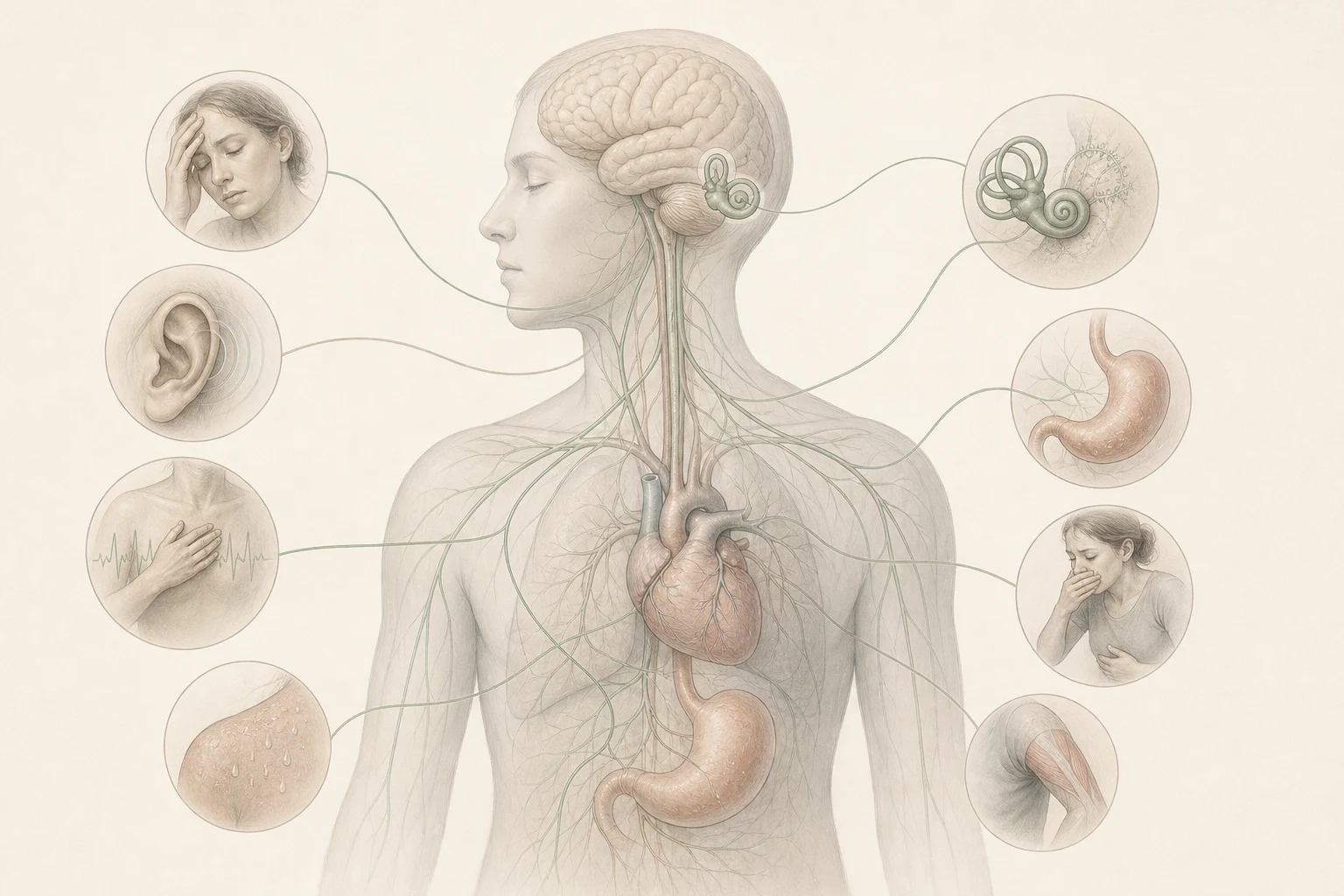
While the systemic response is real, the term 'autonomic nerve' alone does not replace a diagnosis of cardiac, neurological, or endocrine causes.
Photos show daily life scenes where symptoms appear, and explanatory diagrams simplify how reactions in the ears, balance, nerves, and the entire body are connected. They do not represent an individual's diagnostic or treatment results.If you have had these experiences
If throbbing, sweating, body heat, digestion, and sleep all fluctuate together on the same day
Even if you have undergone tests in various departments pulsating·Some are exhausted by the repeated occurrence of dizziness, cold sweats, nausea, and brain fog all at once, not knowing which symptom to mention first. We look at the actual sequence rather than a broad name.
For those whose test results are all normal, but multiple symptoms occur in succession after changes in posture, meals, or exposure to heat
When multiple symptoms recur even after checking for cardiac, neurological, endocrine, or medication-related causes
For those who must take a day off due to lethargy and brain fog even after an episode subsides
When posture, sleep, meals, or overwork consistently align with changes in throbbing, sweating, and body heat
For those who have only been told it is an 'autonomic nervous system' issue without setting specific treatment goals
After an episode brain fog·When returning to daily life is delayed due to lethargy
This is how we approach the medical evaluation
Autonomic dysfunction symptoms: the order in which symptoms begin and the symptoms to check first
'Autonomic dysfunction' is used as a broad term to describe automatic regulation symptoms such as blood pressure, heart rate, digestion, sweating, and body temperature, rather than being a single definitive diagnosis. First, categorize potential causes such as cardiac, neurological, endocrine, or medication effects. If symptoms persist after testing, record the first symptom to appear, subsequent symptoms, and the time it takes to return to a normal state. Chest pain, shortness of breath, fainting, or new neurological symptoms must be evaluated immediately, and treatment for the identified cause should continue. Korean herbal medicine treatment sets recovery goals based on patterns where sleep, digestion, body temperature, and energy levels are simultaneously unstable.
We do not explain everything with a single symptom
We examine which comes first and which follows among throbbing, dizziness, sweating, nausea, body heat, and sleep.
We combine test results into a single timetable
We connect the timing of new symptoms with ECG, blood, hearing, and neurological results obtained from various departments.
Why we monitor both recovery time and lifestyle changes during treatment
We look not only at the frequency of episodes but also at the time it takes to return to normal after going out, showering, eating, or sleeping.
Reasons why it may not heal easily
Body conditions that move together on days when autonomic dysfunction symptoms persist
Autonomic dysfunction is closer to a term used to describe a group of regulatory symptoms across various organs rather than a single definitive diagnosis. While maintaining the investigation into causes such as cardiac, neurological, endocrine, or medication-related factors, we narrow down the symptoms that actually move together and their order of onset.
This is a general term used to group symptoms from multiple organs.
Please list specifically which of the following symptoms you are experiencing: heart rate, blood pressure, sweating, body heat, gastrointestinal, or sleep issues.
Do not delete the cause evaluations for each organ.
Maintain the names and timing of tests performed, such as those for the heart, nerves, endocrine system, medications, and anemia.
New symptoms are categorized separately.
If new symptoms such as chest pain, fainting, one-sided weakness, or speech changes occur, do not dismiss them as familiar autonomic nerve symptoms.

Placing the test name, date of administration, first symptom, accompanying symptoms, and recovery time on the same timeline allows for a more continuous flow of questions during multiple medical evaluations.
Conceptual reference · NICE: Shared decision making · AHRQ: Questions Are the AnswerTest and lifestyle records
How to place test results and lifestyle records on a single timeline
Please provide the list of tests, the order in which symptoms began, and the recovery time all at once.
Identify high-risk causes across multiple organs first.
Chest pain, fainting, and new neurological symptoms are not grouped under general terms.
Distinguish between the initial symptom and subsequent symptoms.
Identify recurring patterns in the timeline.
Adjust based on recovery time and the range of daily activities.
Compare the time it takes to return to a normal state after going out, eating, showering, or sleeping.
Herbal medicine pattern identification for autonomic dysfunction symptoms
If heart palpitations, sweating, body heat, digestion, and sleep are all unstable on the same day, herbal medicine treatment distinguishes between four categories.
Rather than grouping everything under the single term 'autonomic nervous system,' we examine the sequence of heart palpitations,Presyncopedigestion, sweating, and posture. After the necessary cause evaluation, the actual changes in the body's condition are reflected in the prescription.
When energy drops significantly following heart palpitations or insomnia
We check if the heart races even with light activity or if you feel groggy after sleep. We ask about loss of appetite, paleness, forgetfulness, and cold hands and feet. We help recover sleep and activity by stabilizing the mind and body while boosting energy.
When dizziness, nausea, and head heaviness occur together
We check if a floating sensation and nausea are linked to posture or screens. We check for bloating, edema, phlegm, and a feeling of heaviness in the body. We reduce the burden of 'Dam-eum' (phlegm-fluid retention) to alleviate the simultaneous worsening of balance and gastrointestinal symptoms.
When heat rushing to the upper body, heart palpitations, and headaches surge after tension
We check if heart rate and facial heat increase after meetings, conflicts, or lack of sleep. We ask about neck and shoulder tension, sighing, chest tightness, and shallow sleep. We regulate excessive arousal reactions by reducing tension and upper-body heat.
Changes to monitor during treatment
The aspects of daily life you wish to recover first, beyond just the autonomic dysfunction symptoms
By replacing the broad term 'autonomic nervous system' with a specific symptom timetable, we increase the predictability of episodes and the scope of recovery in daily life.
The first symptom to appear, the sequence in minutes, and the duration
In the first consultation, we use these criteria as the current starting point. By replacing the broad term 'autonomic nervous system' with a specific symptom timetable, we increase the predictability of episodes and the scope of recovery in daily life.
EKG, blood, hearing, and neurological tests, and all medications being taken
We adjust treatment priorities by comparing changes over several days rather than relying on a single good day. By replacing the broad term 'autonomic nervous system' with a specific symptom timetable, we increase the predictability of episodes and the scope of recovery in daily life.
Posture, diet, sleep, menstruation, body heat, and the time taken for recovery
We determine the direction of the next medical evaluation based on the lifestyle the patient wishes to return to. By replacing the broad term 'autonomic nervous system' with a specific symptom timetable, we increase the predictability of episodes and the scope of recovery in daily life.
At the crossroads of test results and recovery speed
If palpitations, sweating, body heat, digestion, and sleep all fluctuate on the same day, Korean herbal medicine treatment distinguishes between four categories
Rather than grouping everything under the single term 'autonomic nervous system', we examine the sequence of palpitations, pre-syncope feelings, digestion, sweating, and posture. After the necessary causal evaluation, the actual changes in the body's condition are reflected in the prescription.
Pattern identification is not about grouping various symptoms into a single autonomic nerve issue. While maintaining the causes to be verified in ear, balance, nerve, and heart evaluations, we identify the axis where dizziness, tinnitus, headache, facial movement, sleep, digestion, body heat, and heart rate actually change together to adjust the priority of the prescription.
When energy levels drop significantly after palpitations and insomnia
- Changes observed in the head, ears, and face
- We check if the heart races even with light activity and if there is a feeling of brain fog after sleep.
- Changes observed throughout the body
- We ask about loss of appetite, paleness, forgetfulness, and coldness in the hands and feet.
- Prescription Priority
- We help recover sleep and activity by stabilizing the mind and body while simultaneously boosting energy.
When dizziness, nausea, and head heaviness occur together
- Changes observed in the head, ears, and face
- We check if the floating sensation and nausea are linked to posture or screen use.
- Changes observed throughout the body
- We check for bloating, edema, phlegm, and a feeling of heaviness in the body.
- Prescription Priority
- We reduce the burden of phlegm-fluid (Dam-eum) to decrease the simultaneous worsening of balance and gastrointestinal symptoms.
When upper body heat, palpitations, and headaches surge after tension
- Changes observed in the head, ears, and face
- We check if heart rate and facial heat increase after meetings, conflicts, or lack of sleep.
- Changes observed throughout the body
- We ask about neck and shoulder tension, sighing, chest tightness, and shallow sleep.
- Prescription Priority
- We regulate excessive arousal responses by reducing tension and upper body heat.
When cold sweats, cold hands and feet, and facial flushing occur alternately
- Changes observed in the head, ears, and face
- Observe whether body heat and sweating fluctuate significantly after showering, eating, or changing posture.
- Changes observed throughout the body
- Check the recovery time for menstruation, sleep, digestion, and feelings of exhaustion.
- Prescription Priority
- Reduce exhaustion after an episode by narrowing the fluctuation range of body heat, sweat, and heart rate.
Order of Prescription Adjustment
- First, rule out risk factors from various organs
Chest pain, fainting, or new neurological symptoms are not categorized under general terms.
- Distinguish between the initial symptom and subsequent symptoms
Identify recurring patterns in the timeline.
- Adjust based on recovery time and the range of daily activities
Compare the time it takes to return to a normal state after going out, eating, showering, or sleeping.
- Change one priority at a time and verify through daily functioning
Rather than a single value, compare the duration of continuous activities, such as standing, walking, eating, and going out, with the time it takes to return to the original state after discomfort.
Why consider Korean herbal medicine treatment now?
- When multiple symptoms recur even after checking for cardiac, neurological, endocrine, or medication-related causes
- When changes in posture, sleep, diet, or overwork consistently coincide with throbbing, sweating, and body heat changes
- When returning to daily life is delayed due to brain fog or exhaustion after an episode
What is verified in Korean herbal medicine treatment for this condition
- The first symptom to appear, the sequence in minutes, and the duration
- EKG, blood, hearing, and neurological tests, and all medications currently being taken
- Posture, diet, sleep, menstruation, body heat, and the time taken for recovery
First, rule out cardiac and neurological emergencies
Chest pain, shortness of breath, fainting, persistent arrhythmia, new paralysis, or changes in consciousness are immediately referred for emergency evaluation.
Categorize changes by posture and organ
Identify which functions are actually fluctuating among underlying diseases, medications, orthostatic blood pressure and heart rate, digestion, urination, and sweating.
Track recovery in standing, eating, and sleeping
While maintaining treatment for the confirmed necessary causes, we set limited goals for herbal medicine treatment and monitor whether daily functioning actually improves.
Things to prepare before the consultationPlease prepare the date symptoms began, changes according to posture, meals, or heat, records of blood pressure and heart rate, test results, all prescription medications and health supplements, and information on your bowel movements, meals, and sleep patterns.
If new paralysis, slurred speech, gait disturbance, sudden hearing loss, thunderclap headache, chest pain, dyspnea, or fainting occurs, a prompt medical evaluation is required even if previous tests were normal. After ruling out these exceptions, we focus on herbal medicine treatment for chronic, recurrent, and recovery-phase symptoms.
Consult about autonomic nervous system symptomsDizziness, Ear, Head, and Face Glossary
Additional information to know regarding autonomic dysfunction symptoms
You can check simple definitions before proceeding to detailed explanations.Frequently Asked Questions
Frequently asked questions about autonomic dysfunction symptoms
Which medical department treats autonomic dysfunction?
Depending on the primary symptoms and suspected causes, care may vary across neurology, cardiology, gastroenterology, endocrinology, or urology. First, rule out emergency risks and then select the appropriate care based on the affected functions.
If I feel dizzy, should I consume more water and salt?
This may be helpful for some orthostatic blood pressure issues, but it can be dangerous if you have hypertension, heart or kidney disease, or edema. Please check your orthostatic blood pressure, heart rate, and overall health status to decide with your medical provider.
Is there only one type of medication for autonomic dysfunction?
No. Medications and self-care vary depending on the underlying cause and the affected functions, such as orthostatic blood pressure, arrhythmia, digestion, or urination. Do not use medications prescribed for others.
Can herbal medicine treatment replace autonomic nervous system tests?
It cannot. Acute risks, underlying diseases, and orthostatic, cardiac, and neurological functions must be evaluated first. While maintaining treatment for confirmed necessary causes, we only consult on the goals of herbal medicine treatment for the remaining chronic discomfort.
Are there foods or diets that are good for autonomic dysfunction?
When the autonomic nervous system is sensitive, fasting, overeating, and excessive caffeine or alcohol can worsen throbbing and dizziness. It is better to eat small, regular meals and drink sufficient water throughout the day. In Korean medicine, the approach to food and herbal medicine varies based on combinations of heat and cold sensations, digestion, edema, and fatigue, such as upper-body heat and lower-body cold (sang-yeol-ha-han), phlegm-fluid (dam-eum), or qi deficiency (gi-heo). However, increasing salt intake for orthostatic tachycardia depends on your blood pressure, heart, and kidney status, as well as your medications, and must strictly follow medical guidelines.
What should I record when seeking herbal medicine treatment for autonomic dysfunction symptoms?
Please write down the order in which throbbing, dizziness, sweating, and digestive discomfort began, as well as the posture and duration. Please also prepare heart, thyroid, and blood test results, along with a list of medications you are taking.
Does herbal medicine treatment for autonomic dysfunction replace existing tests or treatments?
Fainting, new chest pain or difficulty breathing, one-sided paralysis, slurred speech, or symptoms that suddenly worsen Tremorrequire a necessary evaluation first. The scope of Korean herbal medicine treatment is determined when symptoms recur even after acute causes have been identified.
Do I need to bring my records again even if the autonomic dysfunction test results were normal?
Even if tests were normal, a re-evaluation is necessary if fainting, chest pain, or new neurological symptoms occur. Please inform us whether autonomic nervous system symptoms were present at the time of the test and any changes since then.
How is the progress of herbal medicine treatment for autonomic dysfunction determined?
We do not look at a single symptom score. We compare the frequency and duration of attacks, activities you can perform again, such as sleeping, eating, walking, using screens, or working, and the time it takes to return to your original state after an attack.
Evidence and Update Information
This content was compiled by Korean medicine doctor Choi Yeon-seung based on the official professional materials and disease-specific clinical data below, and was updated on 2026-08-26.
- American Heart Association: Arrhythmia symptoms and monitoringConnection between palpitations, dizziness, fainting and ECG/symptom records
- American Heart Association: Heart attack symptomsEmergency evaluation boundaries for chest pain, shortness of breath, cold sweats, and nausea
- MedlinePlus: Heart palpitationsCommon accompanying symptoms of palpitations and record items to prepare for consultation
- NHS: Feeling sick (nausea)Common situations for nausea and clinical guidance needed for dehydration or progressing symptoms
- NINDS: TremorMaterials explaining the area, situation, neurological evaluation, and treatment scope of tremors
- CDC: Stroke signs and symptomsEmergency criteria for sudden one-sided weakness or speech changes that must be distinguished from tremors or lethargy
- NICE: Transient loss of consciousnessClinical criteria for branching between fainting/near-fainting sensations and cardiac/neurological evaluations
- Johns Hopkins Medicine: POTSDescription of a patient group where heart rate, dizziness, brain fog, and lethargy are linked after postural changes