Differential Diagnosis of Palpitations
Why do palpitations and dizziness recur even when the ECG is normal?
We categorize intermittent heart rhythm, orthostatic reactions, thyroid function, anemia, blood sugar, panic, and hyperarousal in the necessary order; any remaining palpitations, dizziness, or cold sweats after testing are treated with Korean herbal medicine and acupuncture based on Qi and Blood deficiency, Phlegm-fluid, Qi stagnation, or Upper-heat.
An in-clinic ECG shows the heart rhythm for only a few seconds during the measurement. If symptoms were not present at that time, intermittent arrhythmia may not be captured; conversely, even if the heart rhythm is normal, reactions to posture, heat, meals, or anxiety Autonomic nerves can cause palpitations.
| Related Category | Prominent Symptoms | What to Check |
|---|---|---|
| Intermittent Arrhythmia | Suddenly irregular pulse or attacks during exercise | Rhythm during attacks, ambulatory ECG |
| Orthostatic/Autonomic Nerve Response | Heart rate and dizziness after standing, heat, or standing for a long time | Pulse and blood pressure by position, dehydration, and medications |
| Systemic Causes | General tremors, fatigue, weight changes, or cold sweats | Thyroid function, anemia, blood glucose, etc. |
| Panic and Hyperarousal | Body alarm and fear surge together within a few minutes | Anticipatory anxiety, avoidance, and physical symptoms |
A normal ECG means the rhythm was confirmed at the moment of the test
An ECG shows the electrical signals and rhythm of the heart, but it cannot always capture episodes that occur outside the short testing window. pulsatingDepending on whether these occur several times a day or once a month, the method for capturing episodes differs, such as using an ambulatory ECG (Holter monitor) or an event recorder.
A normal result provides information that there were no persistent arrhythmias or various electrical abnormalities at the time of the test. By adding the time condition that symptoms are intermittent, we determine if further evaluation is necessary.
If the pulse changes suddenly and is linked to exercise or fainting, the heart rhythm is examined first
If the pulse suddenly becomes very fast or irregular while at rest, has a clear start and end, and is accompanied by chest pain or shortness of breath during exercise,Presyncopethere is a strong reason to check for intermittent arrhythmia. Even if the episode is short, accompanying symptoms increase the priority of the evaluation.
If there is new severe chest pain, actual fainting, or difficulty breathing, we do not wait and assume it is a familiar autonomic nervous system symptom. On the other hand, if a cardiac evaluation has been completed and short bouts of palpitations of the same pattern recur, we can look at non-cardiac causes and the body's recovery together.
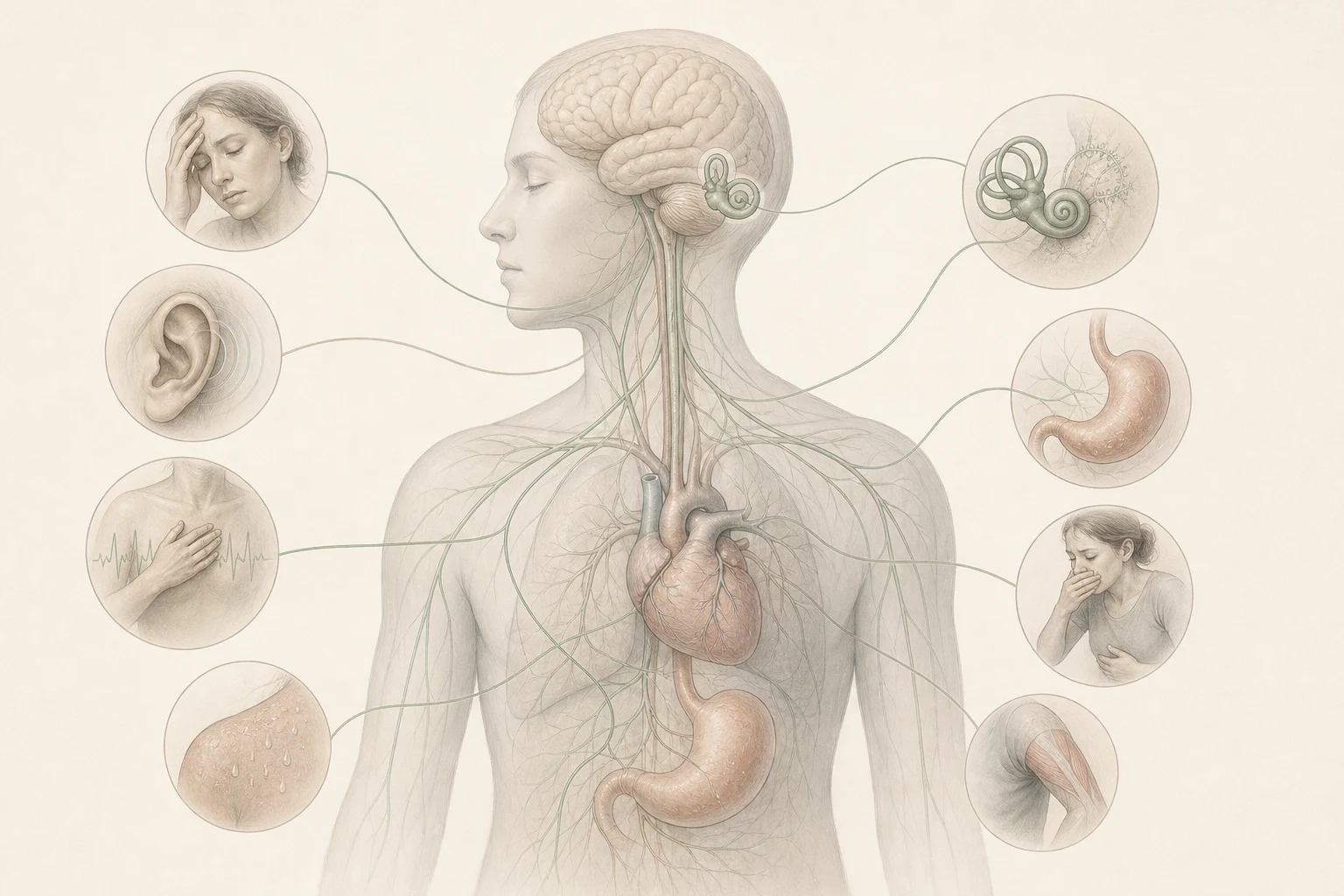
While the systemic response is real, the term 'autonomic nerve' alone does not replace a diagnosis of cardiac, neurological, or endocrine causes.
If symptoms worsen upon standing, in heat, or after meals, we examine circulation and autonomic nervous system adaptation
If the heart rate increases and you feel dizzy or weak when standing up from a lying position, after a hot shower, or when standing for a long time, we check the process of how circulation adapts to postural changes. Dehydration, anemia, medications, and orthostatic reactions can influence each other.
If the heart races along with a feeling of blockage in the solar plexus, nausea, and cold sweats after a meal, there is a strong link between gastrointestinal irritation and the autonomic nervous system. Since coffee, alcohol, lack of sleep, thyroid function, and blood sugar can also increase palpitations, we do not conclude all possibilities with a single heart test.
Panic and hyperarousal examine whether the body's alarm remains even between episodes
If palpitations, shortness of breath,Tremorcold sweats, and a surge of fear of dying occur together within a few minutes, and you avoid certain places or activities for fear of another episode, we examine the pattern of panic. It cannot be distinguished by a single sentence whether the heart or the anxiety came first.
Even after checking the heart, thyroid, and blood sugar as necessary, if the entire body sounds an alarm at small changes in heart rate and this is followed by anticipatory anxiety and insomnia, the hyperarousal itself is the target of treatment. We specifically address the chain of heart rate, breathing, digestion, and sleep that remains after testing.
Korean herbal medicine and acupuncture categorize the body's combinations associated with palpitations
Different prescriptions are used for: Qi and Blood Deficiency (easily fatigued, dizzy when standing, cold sweats), Phlegm-Fluid (blockage in the solar plexus, nausea, heavy head), and Qi Stagnation/Upper Heat (heat rising to the chest and face after stress). Yin Deficiency (heart racing after poor sleep, dry mouth, slow recovery) is also treated separately.
Acupuncture regulates the reaction where heart rate and breathing surge together by reducing tension in the chest, diaphragm, and neck. Rather than aiming to forcibly slow down the heart, Korean herbal medicine restores digestion, absorption, sleep, body heat, and energy to widen the body's capacity to adapt to posture, meals, and tension.
Recovery is a state where dizziness and fear follow palpitations less frequently
In the early stages of treatment, even if the frequency of noticing the heart rate remains similar, dizziness, cold sweats, and shortness of breath may be less linked, and the time it takes to calm down may shorten. If you can go out and use stairs without avoidance and continue your activities after meals, it is a process of the body's adaptability returning.
Baekrokdam first maintains the improvements in sleep, digestion, and orthostatic adaptation, then adjusts prescriptions to match the remaining patterns of pulsating sensations. While continuing necessary cardiac follow-ups, the goal is to reach a state where a single episode does not prematurely restrict your daily activities.
A normal ECG is a result that confirms the rhythm at the moment of the test; intermittent arrhythmia, orthostatic reactions, thyroid and blood glucose levels, and panic must be differentiated by time and context. Baekrokdam identifies Qi and Blood deficiency, Phlegm-fluid, Qi stagnation, and Upper-heat to reduce both the dizziness and delayed recovery following pulsating sensations through Korean herbal medicine and acupuncture.
Evidence and Update Information
This content was organized by Korean medicine doctor Choi Yeon-seung based on the materials below and was updated on 2026-08-31.
- American Heart Association: Arrhythmia symptoms and monitoringConnection between palpitations, dizziness, fainting and ECG/symptom records
- American Heart Association: Heart attack symptomsEmergency evaluation boundaries for chest pain, shortness of breath, cold sweats, and nausea
- MedlinePlus: Heart palpitationsCommon accompanying symptoms of palpitations and record items to prepare for consultation
- NHS: Feeling sick (nausea)Common situations for nausea and clinical guidance needed for dehydration or progressing symptoms
- NINDS: TremorMaterials explaining the area, situation, neurological evaluation, and treatment scope of tremors
- CDC: Stroke signs and symptomsEmergency criteria for sudden one-sided weakness or speech changes that must be distinguished from tremors or lethargy
- NICE: Transient loss of consciousnessClinical criteria for branching between fainting/near-fainting sensations and cardiac/neurological evaluations
- Johns Hopkins Medicine: POTSDescription of a patient group where heart rate, dizziness, brain fog, and lethargy are linked after postural changes