
Tremors and lethargy: Read in the order of your curiosity
Before grouping symptoms under a single name
Tremors and weakness are distinguished by the sequence of onset and changes in consciousness or gait
Hand tremor is a symptom where the hands shake rhythmically. You must first determine when it is most severe: when hands are resting on the knees, when maintaining a posture with arms extended, or when holding a cup, spoon, or pen. Visible Tremortremors should be distinguished from subjective shakiness and actual muscle weakness. Record the sequence in relation to fasting, posture, medications taken, and throbbing. If accompanied by sudden one-sided weakness, speech changes, gait abnormalities, or fainting, do not assume it is a recurring tremor and seek immediate neurological or emergency evaluation.
Symptom Presentation and Next Medical Evaluation
Points to check for hand tremors by situation
| Situation | First Step | Next Step |
|---|---|---|
| Temporary tremors following caffeine or fatigue | Reduce triggers and keep a record | Check for persistence |
| Repeated tremors during bilateral hand movements | Neurological examination | Differential diagnosis (e.g., essential tremor) |
| Resting tremor or slow movement | Neurology consultation | Parkinsonism evaluation |
| Persistent daily discomfort after diagnosis | Record function and sleep | Baekrokdam supportive consultation |
When to seek medical attention first
Symptoms of hand tremors requiring prompt medical evaluation
If the following changes occur, prioritize related medical care or emergency evaluation over waiting for a herbal medicine consultation or a scheduled outpatient visit.
- Sudden tremors accompanied by one-sided paralysis, speech difficulties, or visual disturbances
- New inability to walk, severe dizziness, changes in consciousness, or seizures
- High fever, severe agitation, palpitations, and exposure to drugs or toxins
- Rapidly worsening muscle weakness, difficulty swallowing, or breathing difficulties
Tremors and loss of strength are not considered the same thing
If generalized tremors or weakness recur after dizziness or palpitations and recovery is slow
It is necessary to distinguish whether the tremor is actual hand movement, muscle weakness, or chills and cold sweats occurring just before fainting. First, check for new one-sided weakness, changes in speech or gait, and causes related to hypoglycemia, thyroid issues, medication, or neurological factors.
Distinguish between visible tremors and subjective tremors
Record which part, hands, jaw, or legs, moved and whether it was visible to others.
Identify the functional impact of the loss of strength
Specify whether you dropped an object, were unable to climb stairs, or momentarily collapsed.
Align the sequence with fasting status, posture, and heart rate
Observe when the tremors occurred relative to cold sweats, palpitations, or nausea, and how much recovery took place.
Treatment GoalWhile ensuring neurological and metabolic risks are not overlooked, we aim to reduce the time spent collapsing or giving up activity after tremors and help restore energy.
Consult about tremors and weakness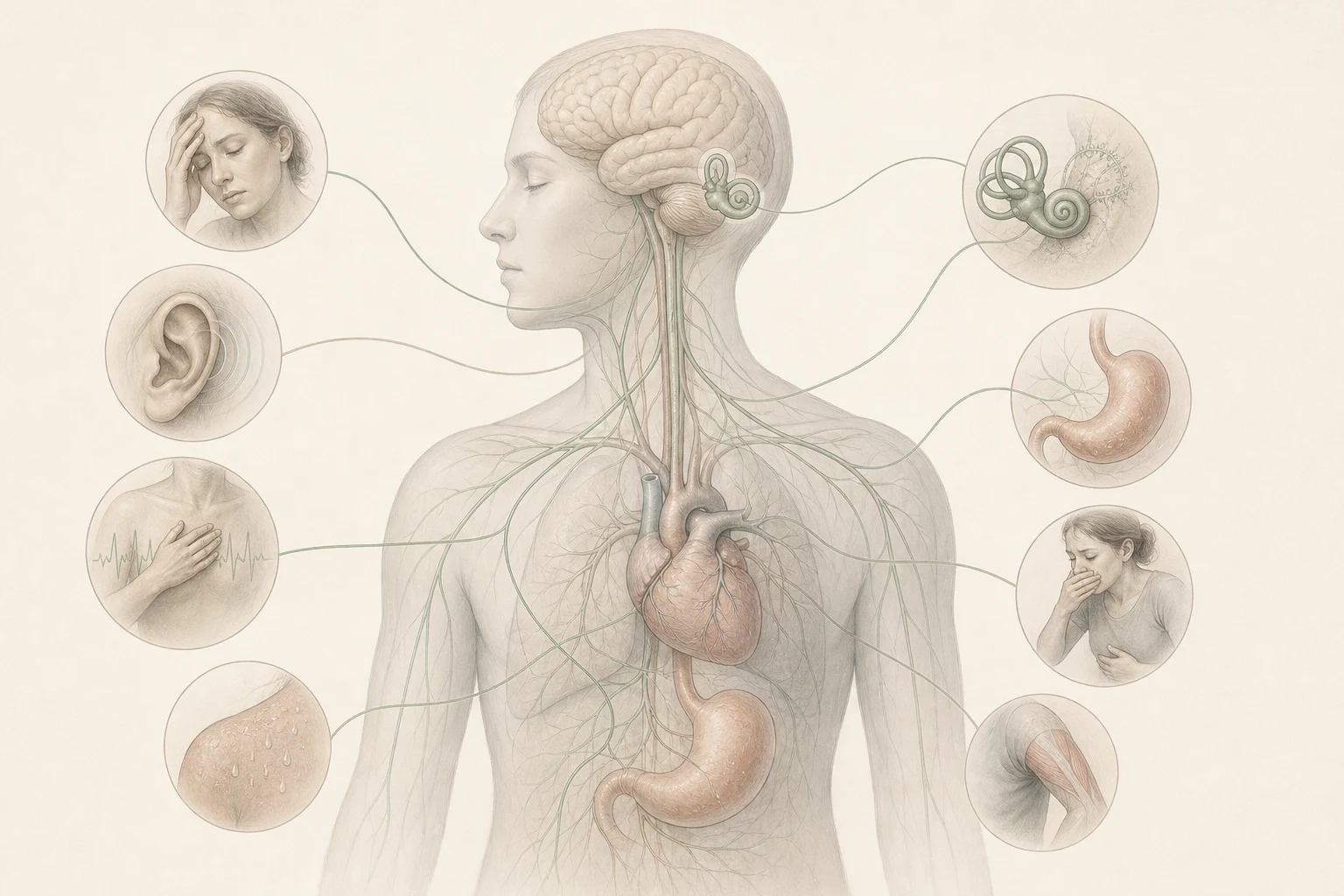
While the systemic response is real, the term 'autonomic nerve' alone does not replace a diagnosis of cardiac, neurological, or endocrine causes.
Photos show daily life scenes where symptoms appear, and explanatory diagrams simplify how reactions in the ears, balance, nerves, and the entire body are connected. They do not represent an individual's diagnostic or treatment results.If you have had these experiences
If systemic tremors and weakness recur after dizziness or throbbing and recovery is slow
Some patients experience tremors in their hands or throughout their body and feel a loss of strength, but these symptoms subside by the time they arrive at the clinic, leaving them unsure of what to explain. We distinguish between visible tremors, subjective tremors, and actual muscle strength decline.
For those who experience a sudden onset of tremors and weakness after fasting, showering, or going outdoors
When symptoms recur even after checking for neurological, thyroid, blood sugar, anemia, or medication-related causes
For those who collapse and take a long time to recover after throbbing, cold sweats, or nausea
Dizzinesspulsatingand cold sweats, followed by prolonged systemic tremors and weakness
For those who have no symptoms during examinations and require video or time logs
When the timing of symptoms repeatedly coincides with lack of sleep, fasting, or overwork
This is how we approach the medical evaluation
Tremors and weakness: the sequence of symptom onset and symptoms to check first
Hand tremors are characterized by rhythmic shaking; it is important to first distinguish whether they are more severe when hands are resting on the knees, when maintaining a posture with arms extended, or when holding a cup, spoon, or pen. Distinguish between visible tremors, subjective shakiness, and actual loss of muscle strength, and record the sequence in relation to fasting, posture, medications, and pulsating sensations. If accompanied by sudden one-sided weakness, speech changes, gait abnormalities, or fainting, do not dismiss it as a recurring tremor and seek immediate neurological or emergency evaluation.
Distinguishing between visible tremors and subjective tremors
We record which part, hands, jaw, or legs, moved and whether it was visible to others.
Evaluating the functional aspect of strength loss
We specify whether you dropped an object, were unable to climb stairs, or momentarily collapsed.
Matching the sequence with fasting state, posture, and heart rate
We observe when the tremors occurred before or after cold sweats, throbbing, or nausea, and the extent of recovery.
Reasons why it may not heal easily
Body conditions that coincide on days when tremors and weakness persist
It is necessary to distinguish whether tremors are actual hand movements, a decline in muscle strength, or chills and cold sweats just before fainting. We first check for new one-sided weakness, changes in speech or gait, and causes related to hypoglycemia, thyroid issues, medication, or neurological factors.
Distinguishing the first symptom from the following symptoms
Record which occurred first among throbbing, dizziness, cold sweats, nausea, tremors, or brain fog, and what followed after several minutes.
Observe the timing relative to posture, meals, and sleep
Keep only the recurring connections, noting how many minutes or hours after standing up, showering, fasting, eating, or staying up all night the symptoms began.
Measure the recovery time after an episode ends
Observe how long it takes for energy, concentration, and walking to return to normal, even after heart rate or nausea have subsided.

Placing the test name, date of administration, first symptom, accompanying symptoms, and recovery time on the same timeline allows for a more continuous flow of questions during multiple medical evaluations.
Conceptual reference · NICE: Shared decision making · AHRQ: Questions Are the AnswerTest and lifestyle records
How to place test results and lifestyle records on a single timeline
Please provide a video of the tremors, the situation immediately preceding them, and the time it took to recover.
Distinguishing between actual muscle weakness and symptoms requiring prompt medical evaluation
One-sided weakness, changes in speech, or changes in gait are evaluated immediately.
Examining the location, situation, and sequence of tremors
Matching actual movements with fasting status, posture, and heart rate.
Adjusting based on recovery time after activity
Comparing standing, walking, and work activities with the following day's fatigue.
Korean herbal medicine pattern identification for tremors and lethargy
If systemic tremors and lethargy recur after dizziness or throbbing and recovery is slow, Korean herbal medicine treatment distinguishes between four patterns
We observe when tremors are most prominent, during posture, movement, or tension, and first check for medication, thyroid, or neurological causes. Autonomic nervous system Whether discomfort and throbbing change together is also reflected in the Korean herbal medicine prescription.
When tremors and loss of strength occur upon standing or slight movement
We check if the whole body shakes and if standing for long periods is difficult. We ask about pallor, food intake, dizziness, and coldness in the hands and feet. We supplement Qi and Blood to help recover from lethargy after posture and activity.
When visible tremors in the hands or face increase due to tension
We observe whether tremors occur during rest or movement, and whether they are one-sided or bilateral. We check for lack of sleep, neck tension, heat sensations in the upper body, and headaches. We reduce excessive tremors and tension while maintaining neurological evaluation.
When tremors occur with head heaviness, throbbing, or nausea
We check if dizziness, nausea, and chest tightness occur before the tremors. We ask about bloating, phlegm, facial heat, and shallow sleep. We control accompanying symptoms by reducing phlegm-heat and upper-body hypersensitivity.
Changes to monitor during treatment
The quality of life you wish to regain before addressing tremors and lethargy
While ensuring neurological and metabolic risks are not overlooked, we help recover energy and reduce the time spent collapsing or giving up on activities after tremors.
Tremor location, whether it occurs during rest or movement, and a short video
In the first consultation, these criteria serve as the current starting point. While ensuring neurological and metabolic risks are not overlooked, we help recover energy and reduce the time spent collapsing or giving up on activities after tremors.
Actual muscle weakness, changes in gait or speech, and test results
We adjust treatment priorities by comparing changes over several days rather than relying on a single good day. While ensuring neurological and metabolic risks are not overlooked, we aim to reduce the time spent collapsing or giving up on activities after tremors and help restore energy.
Sequence of fasting, posture, heart rate, cold sweats, and nausea
The direction of the next medical evaluation is determined based on the lifestyle the patient wishes to return to. While ensuring neurological and metabolic risks are not overlooked, we aim to reduce the time spent collapsing or giving up on activities after tremors and help restore energy.
At the crossroads of test results and recovery speed
If systemic tremors and weakness recur after dizziness or throbbing and recovery is slow, Korean herbal medicine treatment distinguishes between four categories
We first check for medication, thyroid, or neurological causes by observing when tremors are most prominent, during posture, movement, or tension. Whether autonomic nervous system discomfort and throbbing change together is also reflected in the Korean herbal medicine prescription.
Pattern identification is not about grouping various symptoms into a single autonomic nerve issue. While maintaining the causes to be verified in ear, balance, nerve, and heart evaluations, we identify the axis where dizziness, tinnitus, headache, facial movement, sleep, digestion, body heat, and heart rate actually change together to adjust the priority of the prescription.
When tremors and weakness occur upon standing or moving slightly
- Changes observed in the head, ears, and face
- We check if the whole body shakes and if it is difficult to stand for long periods.
- Changes observed throughout the body
- We ask about paleness, food intake, dizziness, and coldness in the hands and feet.
- Prescription Priority
- We supplement Qi and blood to help recover from weakness after posture and activity.
When visible hand or facial tremors increase with tension
- Changes observed in the head, ears, and face
- We observe whether tremors occur during rest or movement, and whether they affect one side or both sides.
- Changes observed throughout the body
- We check for lack of sleep, neck tension, heat sensations in the upper body, and headaches.
- Prescription Priority
- We reduce excessive tremors and tension while maintaining neurological evaluation.
When tremors occur with head heaviness, throbbing, and nausea
- Changes observed in the head, ears, and face
- We check if dizziness, nausea, and chest tightness occur before the tremors.
- Changes observed throughout the body
- We ask about bloating, phlegm, facial heat, and shallow sleep.
- Prescription Priority
- We manage accompanying symptoms by reducing phlegm-heat and upper-body hypersensitivity.
When cold sweats, chills, and heat sensations change rapidly
- Changes observed in the head, ears, and face
- We observe how long sweating, tremors, and weakness last after fasting or an episode.
- Changes observed throughout the body
- We check menstruation, sleep, diet, and coldness in the hands and feet.
- Prescription Priority
- Reduces fluctuations in body heat, sweating, and heart rate responses.
Order of Prescription Adjustment
- Distinguishes between actual muscle weakness and symptoms requiring prompt medical evaluation
One-sided weakness, speech changes, or gait changes are evaluated immediately.
- Observes the location, situation, and sequence of tremors
Aligns fasting state, posture, and heart rate with actual movements.
- Adjusts based on recovery time after activity
Compares standing, walking, and work with the following day's fatigue.
- Change one priority at a time and verify through daily functioning
Observes not only the magnitude of the tremor, but also whether tasks such as writing, eating, and holding a cup have become easier, and whether recovery time after tension has decreased.
Why consider Korean herbal medicine treatment now?
- When symptoms recur even after checking for neurological, thyroid, blood sugar, anemia, or medication-related causes
- When systemic tremors and a sense of exhaustion persist for a long time after dizziness, palpitations, or cold sweats
- When the timing of symptoms repeatedly coincides with lack of sleep, fasting, or overwork
What is verified in Korean herbal medicine treatment for this condition
- The area of tremor, whether it occurs during rest or movement, and a short video
- Actual muscle weakness, changes in gait or speech, and test results
- The sequence of fasting, posture, heart rate, cold sweats, and nausea
Identify symptoms that have suddenly changed and require prompt medical evaluation
Sudden tremors and changes such as one-sided paralysis, speech difficulties, or visual abnormalities prioritize immediate related medical evaluation.
Review the timing and circumstances when symptoms occurred
Observes whether the tremor occurs when hands are placed comfortably on the knees and decreases during movement.
Determine the changes to be measured in daily life
Records palms up/down, arm extension, holding a cup, and writing under the same conditions.
Things to prepare before the consultationBringing the symptom onset time, recurring scenarios, test results, and a full list of prescribed medications, Korean herbal medicine, and supplements allows the consultation to distinguish between the need for re-examination and supportive Korean herbal medicine treatment.
If new paralysis, slurred speech, gait disturbance, sudden hearing loss, thunderclap headache, chest pain, dyspnea, or fainting occurs, a prompt medical evaluation is required even if previous tests were normal. After ruling out these exceptions, we focus on herbal medicine treatment for chronic, recurrent, and recovery-phase symptoms.
Consult about tremors and exhaustionDizziness, Ear, Head, and Face Glossary
Additional information regarding tremors and exhaustion
You can check simple definitions before proceeding to detailed explanations.Frequently Asked Questions
Frequently Asked Questions about tremors and exhaustion
Is hand tremor an early symptom of Parkinson's disease?
Some may be related, but since essential tremors and causes related to medication or metabolism are more diverse, it is difficult to determine the cause based on outward appearance alone.
Can coffee cause hand tremors?
Caffeine can enhance physiological tremors, so you may want to record your intake amount and any changes that occur afterward.
Is it helpful to bring a video of the tremors?
Yes. Since tremors may not appear during the consultation, it is helpful to prepare videos of yourself at rest, with arms extended, and while holding an object.
Why do my hands shake only when I am nervous or drink coffee?
Nervousness, fatigue, and caffeine can amplify the subtle physiological tremors that everyone has. If this happens repeatedly, persists normally, or interferes with daily life, other causes must be identified.
Can essential tremor and Parkinson's disease be distinguished at home?
A diagnosis cannot be determined solely by whether both hands shake during movement, or if one hand shakes at rest accompanied by slowness and stiffness. Since patterns can overlap, please prepare videos and records and confirm through a neurological examination.
If my hands shake after taking medication, should I stop taking it immediately?
Do not discontinue medication on your own. Note the names and dosages of prescription drugs, over-the-counter drugs, and supplements, as well as the date you started or increased the dose and the date the tremors began, then coordinate with your prescribing healthcare provider.
Can I consult about hand tremors at Baekrokdam?
It is first a priority to visit a neurology department to check for essential tremor, Parkinson's disease, or medication and metabolic causes. While maintaining diagnosis and standard treatment, you can consult on the scope of sleep, tension, and fatigue management, as well as supportive Korean medicine care.
What should I record when seeking herbal medicine treatment for tremors and weakness?
Please note whether the hand tremors occur at rest or when holding an object, and whether they affect one side or both. Also, prepare information on caffeine, medications, pulsating sensations, and thyroid or neurological test results.
Does herbal medicine treatment for tremors and weakness replace existing tests or treatments?
Fainting, new chest pain or shortness of breath, one-sided paralysis, slurred speech, or suddenly worsened tremors require necessary medical evaluation first. The scope of herbal medicine treatment is determined when symptoms recur after acute causes have been identified.
Do I need to bring my records again even if the test results for tremors and weakness were normal?
If tremors suddenly worsen after testing, or if weakness, slurred speech, or changes in walking occur, a re-evaluation is necessary. Please provide the test date and videos of the situations where tremors occur.
Evidence and Update Information
This content was compiled by Korean medicine doctor Choi Yeon-seung based on the official professional materials and disease-specific clinical data below, and was updated on 2026-08-26.
- American Heart Association: Arrhythmia symptoms and monitoringConnection between palpitations, dizziness, fainting and ECG/symptom records
- American Heart Association: Heart attack symptomsEmergency evaluation boundaries for chest pain, shortness of breath, cold sweats, and nausea
- MedlinePlus: Heart palpitationsCommon accompanying symptoms of palpitations and record items to prepare for consultation
- NHS: Feeling sick (nausea)Common situations for nausea and clinical guidance needed for dehydration or progressing symptoms
- NINDS: TremorMaterials explaining the area, situation, neurological evaluation, and treatment scope of tremors
- CDC: Stroke signs and symptomsEmergency criteria for sudden one-sided weakness or speech changes that must be distinguished from tremors or lethargy
- NICE: Transient loss of consciousnessClinical criteria for branching between fainting/near-fainting sensations and cardiac/neurological evaluations
- Johns Hopkins Medicine: POTSDescription of a patient group where heart rate, dizziness, brain fog, and lethargy are linked after postural changes