Vestibular Migraine
Can it be vestibular migraine even if only dizziness repeats without a headache?
Diagnosis is not determined by the presence of a headache alone; it considers whether attacks last from 5 minutes to 72 hours, whether there is a history and characteristics of migraine, and whether the symptoms are not better explained by BPPV, Meniere's disease, or persistent postural-perceptual dizziness. Korean medicine treatment identifies phlegm-fluid (dam-eum), upper-body heat, qi and blood deficiency, and neck tension to address both the attack and the recovery time.
Vestibular Migraineis not a condition that requires a headache every time. If recurring vertigo, a floating sensation, or visually induced dizziness overlap with migraine characteristics, such as a history of migraines, sensitivity to light and sound, or visual aura, to a certain extent, attacks without headaches can also be included in the diagnosis.
| Category | Duration and Triggering Scenarios | Associated Characteristics |
|---|---|---|
| Vestibular migraine | Attacks lasting 5 minutes to 72 hours, may worsen with movement or visual stimuli | History of migraines, sensitivity to light and sound, aura |
| BPPV (Benign Paroxysmal Positional Vertigo) | A spinning sensation lasting a few seconds to around 1 minute after specific head positions | Typical nystagmus during positional testing |
| Meniere's disease | Rotational attacks lasting 20 minutes to 12 hours | Fluctuating hearing loss, tinnitus, and a feeling of fullness in the ear |
| Persistent Postural-Perceptual Dizziness | Persists most days for 3 months or longer | Cumulative worsening during standing, movement, or when viewing complex screens |
Vestibular migraine is diagnosed by a combination of attacks rather than just headaches
International diagnostic criteria look for moderate or severe vestibular symptoms that repeat 5 times or more, with a single attack lasting from 5 minutes to 72 hours, and a current or past history of migraine. In more than half of the attacks, at least one of the following must occur: migraine-type headache, sensitivity to light and sound, or visual aura.
Therefore, a headache does not have to accompany every dizzy attack. On some days, you may only experience severe sensitivity to light and sound or nausea, while the headache may appear during a different attack. If the possibility of migraine is ruled out simply because there is no headache, the pattern of recurrent dizziness may be missed.
Includes not only a spinning sensation but also dizziness after screen use or head movement
Vestibular migraine can manifest as spontaneous spinning even while staying still vertigo, a sensation of rotation when changing positions, dizziness triggered by large visual movements such as supermarket aisles or fast-moving screens, or a disruption in spatial awareness accompanied by nausea when moving the head.
Some people find that even after the core dizziness of an attack subsides, brain fog, visual sensitivity, and neck tension remain for several days. The duration of the attack and the time to full recovery must be viewed separately so that treatment leads from suppressing attacks to returning to daily life.

Record not only the location of pain but also the sensitivity to light and sound, and the order in which nausea and dizziness began.
Distinguishing overlapping points with BPPV, Meniere's disease, and PPPD
If the same spinning sensation is reproduced for several dozen seconds immediately after turning the head in a specific direction, BPPVwe first examine BPPV. If rotational attacks last for more than 20 minutes and are accompanied by fluctuating tinnitus, a feeling of fullness in the ear, and hearing loss, an evaluation for Meniere's disease is necessary.
If dizziness persists for most days for 3 months or more even between attacks and accumulates while standing, walking, riding in a vehicle, or viewing complex screens, Persistent Postural-Perceptual Dizziness (PPPD) may coexist. Vestibular migraine, BPPV,Meniere's diseaseand PPPD are not mutually exclusive; the order of treatment is determined by which pattern most significantly hinders current daily life.
Sleep, menstruation, diet, and sensory overload lower the attack threshold
The day after poor sleep, before or after menstruation, prolonged fasting and dehydration, strong lights, smells, noise, or extended screen work can lower the threshold at which the migraineous nervous system tolerates stimulation. Since banning all triggers only narrows one's life, we first adjust a few key factors that hinder recovery.
During an attack, avoid driving and high places, rest in a quiet and dark environment, and recover hydration and nutrition. After the attack subsides, do not push through screen use, walking, and head movements all at once, but rather Vestibular Rehabilitationgradually expand the range of accepting daily stimuli along with necessary care.
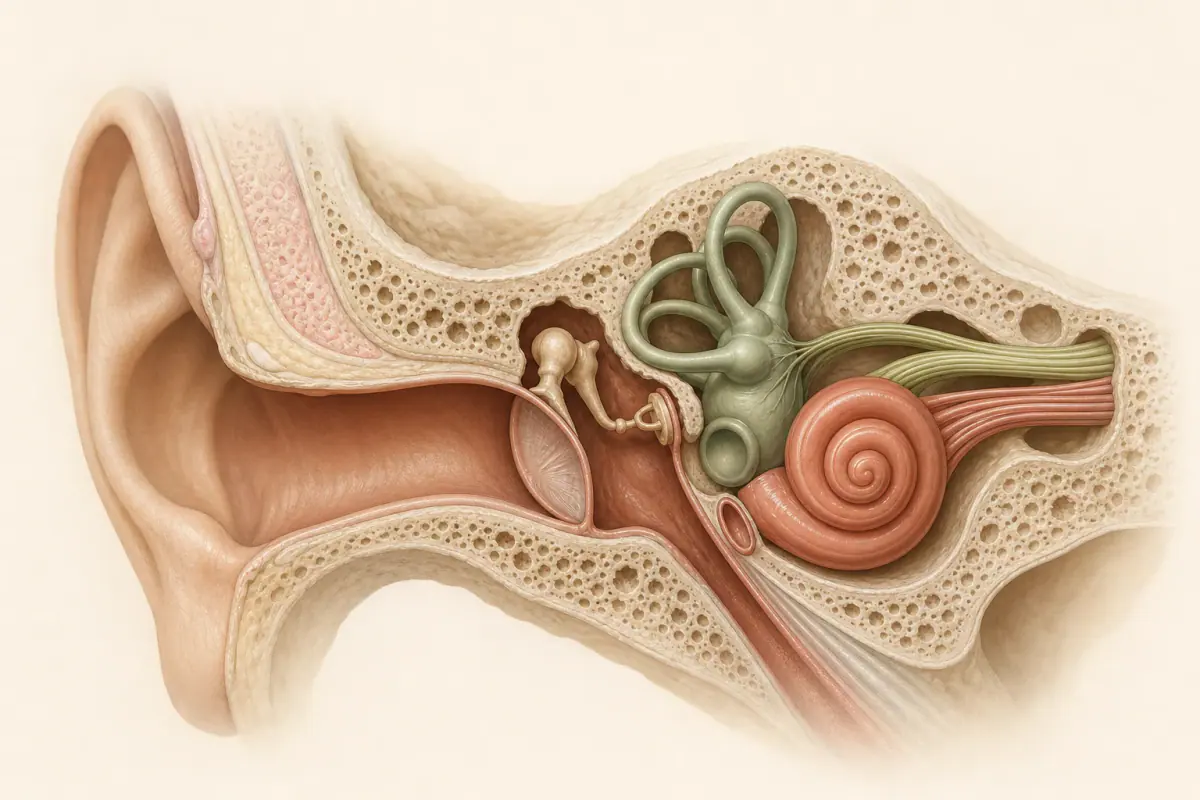
Although the auditory and balance organs are located close to each other, tinnitus, muffled ears, and dizziness must be evaluated through a combination of ear examinations and hearing and balance assessments.
Korean medicine treatment looks at combinations of Dam-eum, Sang-yeol, and deficiency rather than just the name 'migraine'
If dizziness overlaps with nausea, head heaviness, and abdominal bloating, we focus on Dam-eum (phlegm-fluid retention). If facial heat, glare sensitivity, headache, and insomnia are prominent, we look more at Sang-yeol (upper-body heat) and the surging of Liver-Yang. If energy drops after menstruation or overwork, causing dizziness and slow recovery, we increase the proportion of Qi and Blood deficiency when composing Korean herbal medicine.
If stiffness in the neck and jaw is accompanied by occipital pain, acupuncture is used to simultaneously reduce muscle tension and sensory hypersensitivity. Baekrokdam is not approached as a replacement for headache medication; instead, while continuing existing migraine treatments and vestibular rehabilitation, Korean medicine treatment is used to adjust the factors lowering the attack threshold, such as sleep, digestion, body heat, and neck tension.
The goal of treatment is to change both the frequency of attacks and the recovery process the following day.
If attacks decrease from four times a month to once, or if they no longer peak even with light or sound stimulation, the seizure threshold is changing. For a full recovery of daily life, the time spent lying down after an attack must shorten, and the speed of returning to activities such as visiting supermarkets, driving, or screen-based work must increase.
New symptoms such as one-sided paralysis, changes in speech, severe gait instability, or sudden hearing loss are re-evaluated immediately, even if they seem similar to previous migraines. If there are no such changes, we first maintain the achieved reduction in attacks and then shift the goals of the next Korean herbal medicine and acupuncture treatments to address remaining nausea, brain fog, neck tension, and sleep.
Vestibular migraine can recur even without a headache; we evaluate the history of migraine, sensitivity to light and sound, visual aura, and vestibular attacks lasting 5 to 72 hours together. Baekrokdam categorizes symptoms into Phlegm-Fluid (Dameum), Upper-Heat (Sangyeol), Qi and Blood Deficiency (Gi-hyeol-heo), and neck tension to change both the attack threshold and the time required to return to daily life through Korean herbal medicine and acupuncture.
Evidence and Update Information
This content was organized by Korean medicine doctor Choi Yeon-seung based on the materials below and was updated on 2026-08-31.
- Bárány Society·IHS: Vestibular migraine criteria updateDiagnostic criteria for vestibular migraine: 5 episodes, 5 minutes to 72 hours, and migraine characteristics
- ICHD-3: Vestibular migraineThe range of vestibular symptoms triggered by head movement or visual stimuli, and attacks without headache
- Bárány Society: PPPD diagnostic criteriaPPPD criteria: persisting for 3 months or more and worsening with posture, movement, or visual stimulation
- NIDCD: Ménière’s DiseaseDistinguishing between episodic dizziness and fluctuating hearing loss, tinnitus, or ear fullness
- PubMed: Acupuncture and migraine quality of lifeResults of a randomized trial on acupuncture for migraine regarding attacks and quality of life