
Migraine: Read in the order of your curiosity
Before grouping symptoms under a single name
Migraines are evaluated based on pain along with light, sound, nausea, and recovery time
MigraineMigraine is not a disease confirmed by a single blood test or MRI, but is clinically diagnosed by synthesizing recurring headache patterns, nausea, sensitivity to light and sound, aura, and physical and neurological examinations. If the typical migraine pattern is stable and the examination is normal, brain imaging is not always necessary. CT or MRI is selected to find other causes if the pain starts suddenly and severely, changes rapidly, or if there are new headaches, neurological abnormalities, or persistent atypical aura after age 50.
Selecting migraine tests
The purpose of testing is to exclude other causes rather than simply confirming a migraine
The appearance of the headache and the examination results determine the necessity and type of imaging tests.
| Situation | Test Determination | Next Step |
|---|---|---|
| Typical pattern, normal neurological exam, stable appearance | Imaging is generally not essential | Track headache diary and treatment response |
| Sudden reach to maximum intensity | Exclude emergency causes such as hemorrhage | Emergency evaluation and CT scans as appropriate for the situation |
| Neurological abnormalities or new atypical signs | Evaluation of structural or vascular causes | Neurological examination and selection of MRI, etc. |
| New headache after age 50, cancer, or immunocompromised state | Increased risk of secondary headache | Blood and imaging tests tailored to the clinical context |
When to seek medical attention first
Symptoms requiring emergency care before migraine testing
For the following symptoms, do not self-diagnose as a familiar migraine; you must promptly check for cerebrovascular issues, infections, or hypertensive complications.
- Sudden, worst-ever headache that reaches its peak within 1 minute
- One-sided paralysis, slurred speech, new vision loss, changes in consciousness, or seizures
- Fever, neck stiffness, severe vomiting, and a rapidly worsening headache
- New severe headache during pregnancy or postpartum, or worsening after head trauma
Migraine care that examines the day before and after the pain
If light, sound, nausea, and brain fog last longer than the headache
Migraine is not a disease of head pain alone. It can involve auras, dizziness, nausea, and sensory hypersensitivity before and after the headache, brain fogso we record the periods before, during, and after an attack separately.
Record attacks even without a headache
Even on days when visual symptoms, dizziness, or nausea recur but the head does not ache, please record them in the attack log.
Do not create a 'forbidden list' of triggers
Identify only the items among sleep, fasting, menstruation, light, and smell that actually coincide multiple times.
Recovery time after an attack is a change to monitor during treatment
We track the duration of time after the pain subsides when you are unable to look at screens, experience slowed speech, or feel a loss of energy.
Treatment GoalWhile reducing the number of attack days and days of acute medication use, we aim to shorten the recovery time for sensory hypersensitivity and brain fog that linger after the pain.
Consult about migraine progress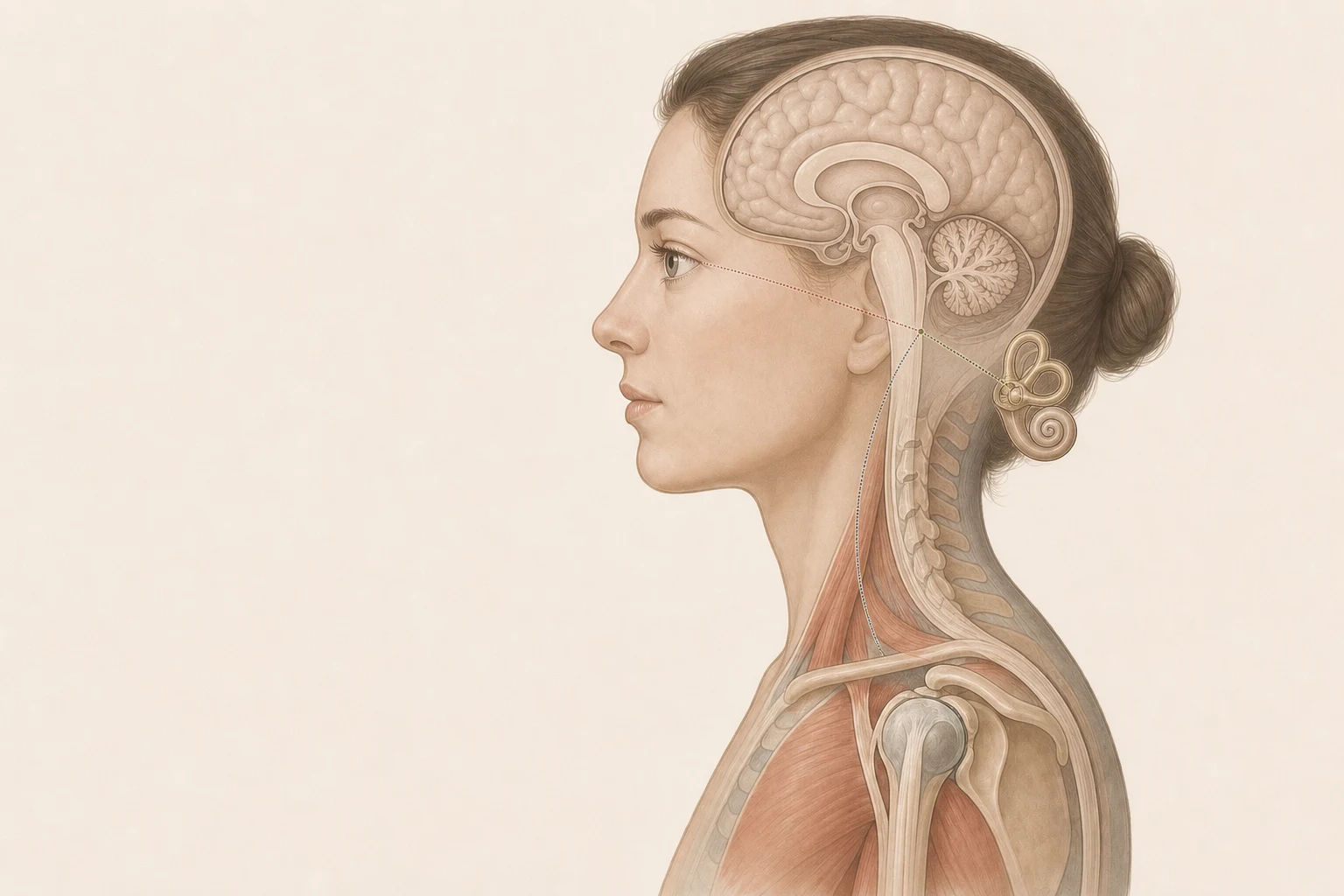
Balance is maintained not only by information from the ears but by processing visual, vestibular, and somatic sensory information together.
Photos show daily life scenes where symptoms appear, and explanatory diagrams simplify how reactions in the ears, balance, nerves, and the entire body are connected. They do not represent an individual's diagnostic or treatment results.If you have had these experiences
If you have migraines where light, sound, nausea, and grogginess last longer than the headache
Some people find that even after the pain subsides, light and sound remain bothersome, nausea persists, and the head feels groggy, eventually resulting in losing an entire day or two. For migraines, one must look at the time it takes to return to daily life after an attack.
Those who experience prolonged sensitivity to light and sound and nausea even after taking acute medication
When attack days and delayed recovery are frequent despite a migraine diagnosis and acute treatment
Those who are exhausted from trying to figure out what to avoid when attacks recur following menstruation, sleep changes, or fasting
When dizziness, light sensitivity, and nausea recur without a headache
Those who have reduced their activities and exercise due to worry about the next attack even on pain-free days
When the timing of attacks clearly coincides with changes in sleep, menstruation, digestion, or body heat
This is how we approach the medical evaluation
Migraines: The sequence of symptom onset and symptoms to check first
Migraine is not a disease of head pain alone. It can lead from aura, dizziness, nausea, and sensory hypersensitivity to brain fog after the headache, so we record the stages before, during, and after an attack separately.
Record attacks that occur without a headache
Days when visual symptoms, dizziness, and nausea recur but the head does not ache should also be noted in the attack log.
We do not create a 'forbidden list' of triggers
We only identify items among sleep, fasting, menstruation, light, and smell that have actually coincided multiple times.
Recovery time after an attack as a change to monitor during treatment
We track the duration of time after the pain subsides when you are unable to look at screens, experience slowed speech, or feel a loss of energy.
Reasons why it may not heal easily
Body conditions that fluctuate together on days when migraines linger
Migraines are not just about head pain. They can involve auras, dizziness, nausea, sensory hypersensitivity, and even brain fog after the headache, so we record symptoms separately for before, during, and after an attack.
Auras may occur before the headache
We distinguish the start time to determine if flashes, blind spots, or sensory changes spread gradually or if they are sudden neurological symptoms.
Why we monitor sensory hypersensitivity during an attack
We record how much light, sound, smell, movement, and nausea intensify the pain.
Daze and lethargy may remain during the recovery phase
Note the time it takes for reading, speaking, screen use, and eating to return to normal after the pain stops.

Placing the test name, date of administration, first symptom, accompanying symptoms, and recovery time on the same timeline allows for a more continuous flow of questions during multiple medical evaluations.
Conceptual reference · NICE: Shared decision making · AHRQ: Questions Are the AnswerTest and lifestyle records
How to place test results and lifestyle records on a single timeline
Please let us know about the sensations before and after the attack, as well as the time it took to recover.
Dividing the attack into before, during, and after
The core symptoms of the aura, pain, and recovery phases are recorded separately.
Only repeatedly confirmed triggers are reflected
We do not treat a single coincidence as a cause.
Adjustments are made by reviewing attack dates and recovery times
We compare the days acute medication was used, work interruptions, and next-day brain fog.
Korean herbal medicine pattern identification for migraines
For migraines where light, sound, nausea, and brain fog last longer than the headache, Korean herbal medicine treatment distinguishes between four patterns
Migraines involve pain and light hypersensitivity·nausea, migraine signs, and changes in menstruation or sleep within a single record. We set Korean herbal medicine treatment goals while respecting the use of acute medication and preventive treatments.
When throbbing pain and sensitivity to light and sound spike
We check if throbbing in one temple and worsening with movement are the primary symptoms. We ask about facial heat, neck tension, shallow sleep, and worsening after anger. We control the peak and duration of attacks by reducing upper-body heat and sensory hypersensitivity.
Attacks with significant dizziness, nausea, and head heaviness
We check if vertigo, motion sickness, or vomiting hinder daily life more than the pain does. We look for bloating, phlegm, andpulsatingWe check for sleep disturbances. We reduce the combined burden of vestibular and gastrointestinal symptoms by lowering phlegm-fluid (Dameum) and rebellious stomach qi (Wigisangyeok).
When attacks and lethargy persist after menstruation or overwork
We check if vision becomes blurred and energy fails to return after a headache. We ask about food intake, paleness, dizziness, and coldness in the hands and feet. We help the recovery and establish a foundation for prevention after an attack by supplementing qi and blood.
Changes to monitor during treatment
The quality of life you wish to reclaim more than just relief from migraines
While reducing the number of attack days and days of acute medication use, we shorten the recovery time for sensory hypersensitivity and brain fog that remain after the pain.
Monthly attack days, headache days, and acute medication use days
In the first consultation, these criteria serve as the current starting point. While reducing the number of attack days and days of acute medication use, we shorten the recovery time for sensory hypersensitivity and brain fog that remain after the pain.
The sequence of aura, light, sound, smell, dizziness, and nausea
We adjust treatment priorities by comparing changes over several days rather than a single good day. While reducing the number of attack days and days of acute medication use, we shorten the recovery time for sensory hypersensitivity and brain fog that remain after the pain.
Post-attack grogginess, lethargy, and time to return to work
We determine the direction of the next visit based on the lifestyle the patient wishes to resume. While reducing the number of attack days and days of acute medication use, we shorten the recovery time for sensory hypersensitivity and brain fog that remain after the pain.
At the crossroads of test results and recovery speed
For migraines where light, sound, nausea, and grogginess last longer than the headache, Korean herbal medicine treatment distinguishes between four categories
Migraines involve pain, light hypersensitivity, nausea, migraine auraand changes in menstruation and sleep, all viewed in one record. We set Korean herbal medicine treatment goals while respecting acute medication and preventive treatments.
Pattern identification is not about grouping various symptoms into a single autonomic nerve issue. While maintaining the causes to be verified in ear, balance, nerve, and heart evaluations, we identify the axis where dizziness, tinnitus, headache, facial movement, sleep, digestion, body heat, and heart rate actually change together to adjust the priority of the prescription.
When pulsating pain and sensitivity to light and sound surge
- Changes observed in the head, ears, and face
- We check if throbbing in one temple and worsening with movement are the primary symptoms.
- Changes observed throughout the body
- We ask about facial heat, neck tension, shallow sleep, and worsening after anger.
- Prescription Priority
- We control the peak and duration of attacks by reducing upper-body heat and sensory hypersensitivity.
Attacks with significant dizziness, nausea, and head heaviness
- Changes observed in the head, ears, and face
- We check if vertigo, motion sickness, and vomiting obstruct daily life more than the pain does.
- Changes observed throughout the body
- We check for bloating, phlegm, pulsating sensations, and sleep disturbances.
- Prescription Priority
- We reduce the combined burden of vestibular and gastrointestinal symptoms by lowering Da-eum (phlegm-fluid accumulation) and Wi-gi-sang-yeok (reversal of stomach qi).
When attacks and lethargy persist after menstruation or overwork
- Changes observed in the head, ears, and face
- We check if vision becomes blurred and energy fails to return after a headache.
- Changes observed throughout the body
- We ask about food intake, paleness, dizziness, and coldness in the hands and feet.
- Prescription Priority
- We supplement Qi and Blood to support recovery after an attack and build a foundation for prevention.
Attacks characterized by facial flushing and cold hands and feet
- Changes observed in the head, ears, and face
- We check if sensations of heat, cold sweats, or chills shift before and after a headache.
- Changes observed throughout the body
- We check the relationship between body heat and menstruation, early morning awakening, or digestive stagnation.
- Prescription Priority
- We regulate autonomic responses and body heat that fluctuate significantly during attacks.
Order of Prescription Adjustment
- Divide the attack into before, during, and after
The primary symptoms of the prodrome, pain, and recovery phases are recorded separately.
- Only repeatedly confirmed triggers are reflected
A single coincidental occurrence is not treated as the cause.
- Adjust based on attack dates and recovery time
We compare the dates of acute medication use, work interruptions, and next-day brain fog.
- Change one priority at a time and verify through daily functioning
We check if the number of headache days, days of acute medication use, and time spent resting due to light or sound have decreased.
Why consider Korean herbal medicine treatment now?
- When attack days and delayed recovery are frequent despite a migraine diagnosis and acute treatment
- When dizziness, light sensitivity, and nausea recur without a headache
- When the timing of attacks clearly coincides with changes in sleep, menstruation, digestion, or body heat
What is verified in Korean herbal medicine treatment for this condition
- Monthly attack days, headache days, and acute medication use days
- The sequence of prodrome, light, sound, smell, dizziness, and nausea
- Post-attack brain fog, lethargy, and time taken to return to work
Check for changes from previous symptoms
We will review any changes in the appearance, aura, or neurological symptoms compared to your existing headaches, as well as the specific reasons why an MRI or CT scan was recommended.
Distinguishing normal imaging from migraine
Even if no structural abnormalities are found, we continue with acute and preventive treatments tailored to the clinical diagnosis and the number of headache days per month.
Counting headache days and medication use
Following the preventive treatment and Korean herbal medicine consultation, we check for changes in the number of monthly headache days, nausea, time spent away from daily activities, and the number of days acute medication is taken.
Things to prepare before the consultationIf you bring a headache diary, the sequence and duration of auras, MRI/CT readings, and your response to existing acute or preventive medications, we can distinguish between the need for neurological re-evaluation and supportive care during the consultation.
If new paralysis, slurred speech, gait disturbance, sudden hearing loss, thunderclap headache, chest pain, dyspnea, or fainting occurs, a prompt medical evaluation is required even if previous tests were normal. After ruling out these exceptions, we focus on herbal medicine treatment for chronic, recurrent, and recovery-phase symptoms.
Consult about migraine progressDizziness, Ear, Head, and Face Glossary
Additional information regarding migraines
You can check simple definitions before proceeding to detailed explanations.Frequently Asked Questions
Frequently Asked Questions about Migraines
Which department should I visit for migraine tests?
You can receive a medical history review and neurological examination at a primary care clinic or a neurology department. Blood tests or imaging are then selected based on symptoms that need priority verification and the necessity of treatment.
For migraines, which is better: CT or MRI?
It is not a matter of one test being superior. CT is faster for detecting emergency bleeding, while MRI can be more useful for detailed structures and vascular issues; the choice depends on the purpose of the exam.
Does a headache diary help with the examination?
Yes. The number of monthly headache days, duration, presence of aura, nausea, sensitivity to light and sound, and the number of days medication is taken are key data points for diagnosing migraines and determining the need for preventive treatment.
What should I record when seeking Korean herbal medicine treatment for migraines?
Please record the start time of the migraine, whether you experienced light sensitivity, nausea, or a migraine aura, and the acute medications taken along with their effectiveness in your headache diary.
Does Korean herbal medicine treatment for migraines replace existing tests or treatments?
Sudden paralysis, slurred speech, vision changes, or severe headaches that start like a thunderclap require a neurological evaluation before Korean herbal medicine treatment. Once acute causes are ruled out, we determine goals for concurrent treatment if pain, spasms, or fatigue remain.
Do I need to bring my records again even if the migraine test results were normal?
If the pain pattern or migraine aura has changed since the test, please provide the new dates and symptoms. Sudden, worst-ever headaches or neurological symptoms require immediate re-evaluation.
How is the progress of Korean herbal medicine treatment for migraines determined?
We do not look at a single symptom score. We compare the frequency and duration of attacks, activities you can perform again, such as sleeping, eating, walking, using screens, or working, and the time it takes to return to your original state after an attack.
Evidence and Update Information
This content was compiled by Korean medicine doctor Choi Yeon-seung based on the official professional materials and disease-specific clinical data below, and was updated on 2026-08-26.
- International Headache Society: ICHD-3International classification distinguishing migraines, tension-type headaches, chronic headaches, and secondary headaches
- ICHD-3: Vestibular migraineCriteria for when dizziness, nausea, and visual sensitivity can appear without a headache
- NICE: Headaches in over 12sEvaluation and tracking criteria for migraines, tension-type headaches, and medication-overuse headaches
- WHO: Migraine and other headache disordersOverview of the recurrence of headache disorders, functional loss, and appropriate medical approaches
- American Migraine Foundation: Headache diaryHeadache recording methods that include attack dates, trigger situations, medications taken, and lifestyle impairment
- CDC: Signs and Symptoms of StrokeEmergency pathways when accompanied by sudden weakness in the face or arms and changes in speech or gait
- NINDS: HeadachePrimary and secondary headaches: Patient guide on symptoms that should not be ignored and the diagnostic process