
Dizziness: Read in the order of your curiosity
Before grouping symptoms under a single name
Dizziness must be divided into a spinning sensation, staggering, and feeling as if one might faint
Vertigo manifests as a feeling that you or your surroundings are spinning, or a feeling that your body is tilting or about to fall. staggering·Nausea, vomiting, blurred vision, and a decreased sense of direction may accompany this. Record whether it repeats briefly when changing head position, continues even while still, or is accompanied by muffled hearing in one ear, tinnitus, or hearing loss. If sudden slurred speech, weakness in the face, arms, or legs, double vision, severe headache, or inability to walk occurs, do not wait for a diagnosis of ear-related dizziness and seek emergency evaluation immediately.
Categorizing Symptoms
Next steps are determined by the onset, duration, and ear or neurological symptoms
Symptoms that occurred along with the spinning sensation and the decline in daily functioning are viewed separately.
| Symptom scenario | Things to check together | Priority Action |
|---|---|---|
| Short sensation of spinning when changing posture | Triggering posture, nausea | Otolaryngology (ENT) medical records |
| Persistent vertigo even while staying still | Walking, vomiting, eye movement | Prompt evaluation of the cause |
| Accompanied by ear fullness, tinnitus, or hearing loss | Which ear, duration of attack | Hearing evaluation |
| Changes in speech, face, arms, or vision | Inability to walk, severe headache | Emergency room immediately |
When to seek medical attention first
Vertigo symptoms that require immediate medical evaluation without waiting
The following are used to first check for emergency neurological or hearing-related causes.
- Slurred speech, facial drooping, weakness in one side of the arms or legs
- Double vision, sudden changes in vision, or severe headache
- Unable to stand or walk alone and experiencing confusion
- Accompanied by a sudden loss of hearing in one ear
Starting from the most difficult moments of daily life rather than the name of the test
If the spinning attacks have ended but walking and looking at screens remain unstable for a long time
Dizziness does not end simply because the sensation of spinning has decreased. We examine whether lingering instability, a floating feeling, sensitivity to visual stimuli, and nausea after an attack lead you to avoid driving, visiting supermarkets, looking at screens, or working.
Distinguishing between the spinning sensation and the feeling of about to collapse
The causes to be checked first and the treatment goals vary depending on whether you spin for a few seconds when turning your head, feel floating while standing, or experience darkness before your eyes when standing up.
Measuring remaining imbalance through daily life scenarios after testing
We record how much discomfort remains when changing directions, walking on dark roads, or looking at supermarket shelves and mobile phone screens.
Observing the sequence of nausea, pulsating sensations, and cold sweats
Rather than deciding whether the body's reaction came first or followed, we continuously check at what point before or after the dizziness it begins and how long it takes to subside.
Treatment GoalBeyond simply reducing the number of attacks, we expand the range of daily activities you have avoided, such as walking alone, looking at screens, going out, and driving.
Consult about dizziness progress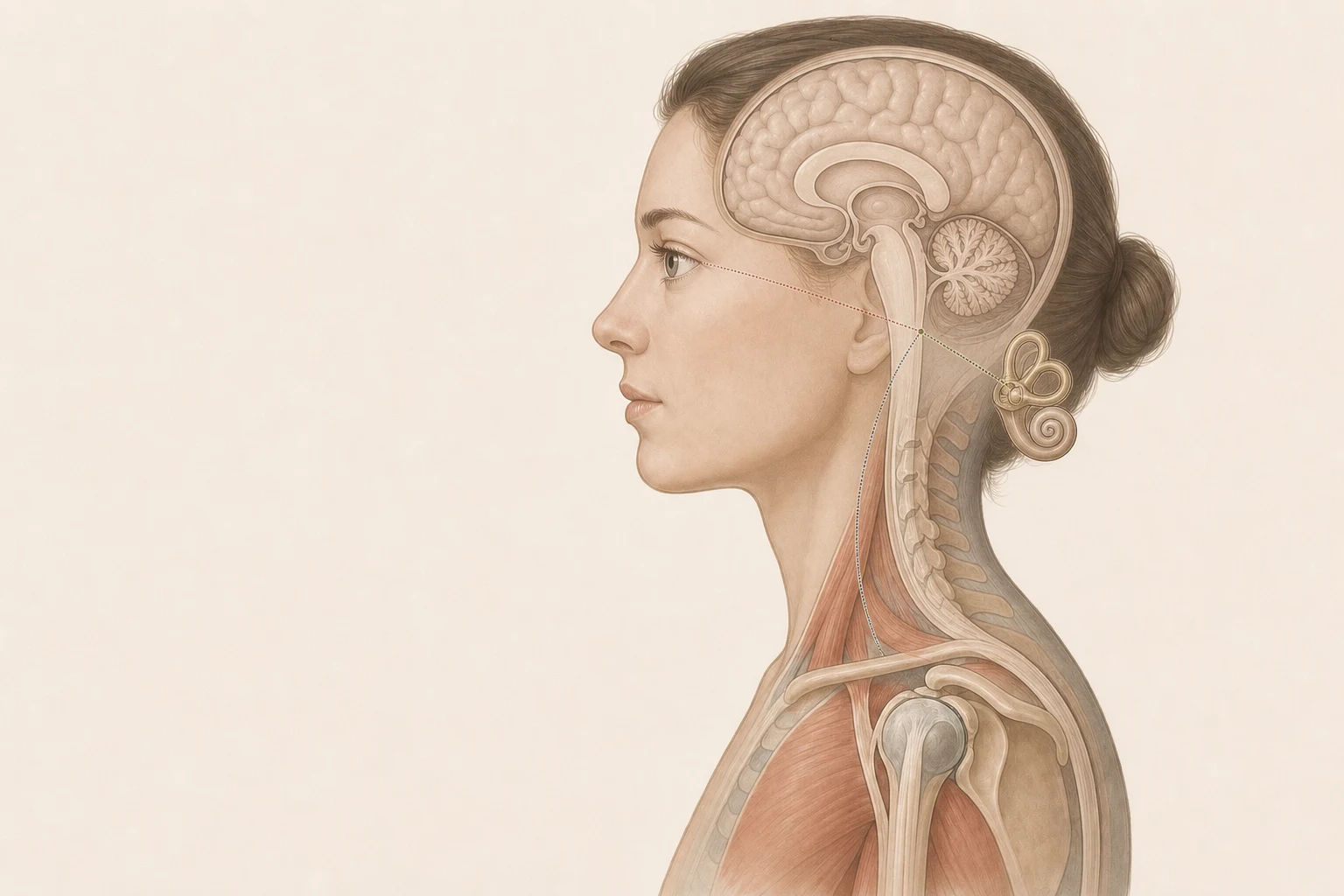
Balance is maintained not only by information from the ears but by processing visual, vestibular, and somatic sensory information together.
Photos show daily life scenes where symptoms appear, and explanatory diagrams simplify how reactions in the ears, balance, nerves, and the entire body are connected. They do not represent an individual's diagnostic or treatment results.If you have had these experiences
If the spinning attacks have ended but walking and looking at screens remain unstable for a long time
Some people have completed tests and acute treatment, but still experience instability and motion sickness after the spinning sensation, leading them to avoid supermarkets, screens, and driving. In such cases, rather than assigning a new diagnosis, a medical evaluation to see what is delaying recovery is necessary.
Those whose symptoms subside briefly with dizziness medication but feel unstable again on days they are tired or have slept poorly
When instability recurs despite confirming causes related to the ears, nerves, or blood pressure and receiving necessary treatment
Those whose spinning sensation has decreased after a canalith repositioning procedure, but who feel unstable while walking or looking at screens
Canalith repositioning procedureor when discomfort with screens, walking, and nausea persists after acute phase treatment
For those experiencing prolonged nausea, pulsating sensations, cold sweats, and weakness following dizziness
When the recurrence of dizziness clearly overlaps with lack of sleep, overwork, or digestive discomfort
This is how we approach the medical evaluation
Dizziness: The sequence of symptom onset and symptoms to check first
Dizziness does not end simply because the spinning sensation has decreased. We observe whether instability, a floating feeling, sensitivity to visual stimuli, and nausea remain after an attack, leading to the avoidance of driving, supermarkets, screens, or work.
Distinguishing between a spinning sensation and a feeling of fainting
The primary cause to check and the treatment goal vary depending on whether the spinning lasts for a few seconds when turning the head, whether there is a floating feeling while standing, or whether vision goes dark when standing up. If you wish to categorize more specifically whether the attack lasts for a few seconds or more than several dozen minutes, and how ear symptoms or light sensitivity are linked, the 'BPPV· Meniere's disease · Vestibular migraine' article, which explains differences in duration and accompanying symptoms, will be helpful for the following judgment.
Measuring remaining imbalance through daily life scenarios after examination
Record how much discomfort remains when changing directions, walking on dark paths, or looking at supermarket shelves or a mobile phone screen.
Observing the sequence of nausea, pulsating sensations, and cold sweats
Rather than deciding whether the body's reaction came first or followed, continuously check at what point before or after the dizziness it begins and how long it takes to subside.
Reasons why it may not heal easily
Physical conditions that fluctuate on days when dizziness persists
Dizziness does not end simply because the spinning sensation has decreased. We observe whether instability, a floating feeling, sensitivity to visual stimuli, and nausea remain after an attack, leading to the avoidance of driving, supermarkets, screens, or work.
Separating the first 10 minutes from the following day
Record the exact time when the strong sensation of spinning stopped, as well as when your walking, screen use, and nausea returned to their original levels.
Use the movements you have been avoiding as functional indicators
Observe which activities you began reducing first, such as turning your head, walking on dark paths, visiting supermarkets, driving, or using public transportation, and track when these become possible again.
Record the response after rehabilitation
Vestibular Rehabilitationor record how much the symptoms increase after movement and how many minutes or hours it takes for them to subside.

Placing the test name, date of administration, first symptom, accompanying symptoms, and recovery time on the same timeline allows for a more continuous flow of questions during multiple medical evaluations.
Conceptual reference · NICE: Shared decision making · AHRQ: Questions Are the AnswerTest and lifestyle records
How to place test results and lifestyle records on a single timeline
Please inform us of any remaining dizziness after the examination and the specific situations you have been avoiding.
Identify the first sensation that occurred
Determine which symptom started first among the sensation of spinning, staggering, or feeling like you might faint, and first rule out risks related to the ears, nerves, or heart.
Connect only the changes in body condition that occurred on the same day
Nausea,pulsatingsweating, sleep, or digestion, identify which changes actually coincided with the recurrence.
Adjust the prescription based on the recovered range of daily activities
Compare the number of episodes, the duration of walking, screen use, and outings, as well as the fatigue remaining until the following day.
Pattern identification for dizziness in Korean herbal medicine
If the spinning episodes have ended but walking and using screens remain unstable for a long time, Korean herbal medicine distinguishes between four patterns
vertigoFirst, distinguish between a sense of imbalance and a pre-syncope feeling, and observe the sequence leading to ear issues, headaches, or pulsating sensations. After the necessary evaluation, Korean herbal medicine addresses the remaining dizziness and the recovery of digestion and sleep.
When the head feels heavy and floating, accompanied by nausea
Observe whether feelings of swaying, heaviness, or motion sickness persist longer than the sensation of spinning. Ask if bloating, phlegm, edema, and heaviness on rainy days occur together. The goal is to reduce nausea and body heaviness first, lowering the burden of delayed recovery after balance stimulation.
When you feel dizzy upon standing and quickly lose strength
We check if your vision darkens when rising from a lying position or if you find it difficult to stand for long periods. We also check for easy fatigue, paleness, loss of appetite, and whether you feel unrefreshed even after sleeping. The goal is to reinforce your overall energy while increasing your stability during walking and your ability to recover after changes in posture.
When symptoms surge upward along with headache, tinnitus, and neck tension
We check if temple throbbing, sensitivity to light and sound, and facial flushing occur alongside dizziness. We ask if neck and shoulder stiffness increases and symptoms worsen after lack of sleep, anger, or overwork. The goal is to reduce the heat and tension concentrating in the upper body and to control the simultaneous worsening of headachetinnitusand controls the simultaneous worsening of dizziness.
Changes to monitor during treatment
The aspects of daily life you wish to reclaim more than just the absence of dizziness
Rather than simply reducing the frequency of attacks, we aim to expand the scope of your daily activities that you have been avoiding, such as walking alone, looking at screens, going out, and driving.
The sensation closest to vertigo, floating, or lightheadedness, and the duration of a single episode
In the first consultation, these criteria serve as the current starting point. Rather than simply reducing the frequency of attacks, we aim to expand the scope of your daily activities that you have been avoiding, such as walking alone, looking at screens, going out, and driving.
Situations where symptoms worsen, such as moving the head, walking, looking at screens, visiting supermarkets, or driving
We adjust treatment priorities by comparing changes over several days rather than focusing on a single good day. Rather than simply reducing the frequency of attacks, we aim to expand the scope of your daily activities that you have been avoiding, such as walking alone, looking at screens, going out, and driving.
Tinnitus, headache, nausea, pulsating sensations, and the time taken to recover
The direction of subsequent medical evaluations is determined based on the lifestyle the patient wishes to resume. Rather than simply reducing the frequency of attacks, we aim to expand the scope of your daily activities that you have been avoiding, such as walking alone, looking at screens, going out, and driving.
At the crossroads of test results and recovery speed
If the spinning attacks have ended but walking and looking at screens remain unstable for a long time, Korean herbal medicine treatment distinguishes between four categories
We first distinguish between vertigo and a sense of imbalancePresyncopeand observe the sequence in which they connect with ear symptoms, headaches, or pulsating sensations. After the necessary evaluation, Korean herbal medicine treatment addresses the remaining dizziness and the recovery of digestion and sleep.
Pattern identification is not about grouping various symptoms into a single autonomic nerve issue. While maintaining the causes to be verified in ear, balance, nerve, and heart evaluations, we identify the axis where dizziness, tinnitus, headache, facial movement, sleep, digestion, body heat, and heart rate actually change together to adjust the priority of the prescription.
When a heavy head and floating sensation overlap with nausea
- Changes observed in the head, ears, and face
- We check if sensations such as swaying, heaviness, or motion sickness linger longer than the spinning sensation.
- Changes observed throughout the body
- We ask if bloating, phlegm, edema, and a feeling of heaviness on rainy days occur together.
- Prescription Priority
- We first reduce the burden of nausea and body heaviness, and the difficulty of slow recovery after balance stimulation.
When you feel lightheaded and quickly lose strength upon standing
- Changes observed in the head, ears, and face
- We check if your vision darkens when rising from a lying position or if you find it difficult to stand for long periods.
- Changes observed throughout the body
- We check for easy fatigue, paleness, loss of appetite, and whether you feel unrefreshed even after sleeping.
- Prescription Priority
- The goal is to reinforce overall energy while improving recovery after changes in posture and expanding the range of stable walking.
When symptoms surge upward along with headache, tinnitus, and neck tension
- Changes observed in the head, ears, and face
- We check if temple throbbing, sensitivity to light and sound, and facial flushing occur together with dizziness.
- Changes observed throughout the body
- We ask if neck and shoulder stiffness occurs and symptoms worsen following lack of sleep, anger, or overwork.
- Prescription Priority
- We lower the heat and tension concentrating in the upper body and manage the simultaneous worsening of headache, tinnitus, and dizziness.
When prolonged exhaustion follows throbbing and cold sweats
- Changes observed in the head, ears, and face
- We check if heart racing, cold extremities, or sweating occurs during moments of dizziness, followed by a feeling of lethargy.
- Changes observed throughout the body
- We check for overlapping symptoms such as sensitivity before sleep, early morning awakening, digestive stagnation, and changes in body temperature.
- Prescription Priority
- We adjust the treatment to calm heart rate, sweating, and body temperature responses, and to reduce recovery time after an episode.
Order of Prescription Adjustment
- Identify the first sensation that occurred
Determine which symptom started first among vertigo, instability, or feeling of fainting, and first rule out risks related to the ears, nerves, or heart.
- Connect only the changes in body condition that occurred on the same day
Identify which changes among nausea, throbbing, sweating, sleep, and digestion actually coincided with the recurrence.
- Adjust the prescription based on the recovered range of daily activities
Compare the frequency of episodes, time spent walking, viewing screens, or going outdoors, and the fatigue remaining until the next day.
- Change one priority at a time and verify through daily functioning
Rather than a dizziness score, we check if walking, viewing screens, using public transportation, and going out alone are possible, and if recovery time after an episode has decreased.
Why consider Korean herbal medicine treatment now?
- When instability recurs despite confirming causes related to the ears, nerves, or blood pressure and receiving necessary treatment
- When discomfort with screens or walking and nausea persist long after a canalith repositioning procedure or acute phase treatment
- When the timing of dizziness recurrence clearly overlaps with lack of sleep, overwork, or digestive discomfort
What is verified in Korean herbal medicine treatment for this condition
- The sensation closest to vertigo, floating, or lightheadedness, and the duration of a single episode
- Situations where symptoms worsen, such as moving the head, walking, viewing screens, visiting a mart, or driving
- Tinnitus, headache, nausea, throbbing, and the time taken to recover
Rule out neurological and hearing emergencies
First, check for neurological symptoms, severe headache, inability to walk, and sudden hearing loss.
Connect the onset with ear symptoms
Record the duration of the spinning sensation, its relationship to posture, and any concurrent tinnitus, fullness in the ear, or changes in hearing.
Consult only for recurring discomfort
When chronic or recurring discomfort remains after cause evaluation and treatment of the identified cause, the scope of Baekrokdam Korean herbal medicine treatment is determined.
Things to prepare before the consultationPlease prepare information regarding the onset time and duration of vertigo, triggering postures, walking ability, vomiting, hearing, tinnitus, and any changes in speech, facial expression, limbs, or vision.
If new paralysis, slurred speech, gait disturbance, sudden hearing loss, thunderclap headache, chest pain, dyspnea, or fainting occurs, a prompt medical evaluation is required even if previous tests were normal. After ruling out these exceptions, we focus on herbal medicine treatment for chronic, recurrent, and recovery-phase symptoms.
Consult about the progress of dizzinessDizziness, Ear, Head, and Face Glossary
Additional information to know regarding dizziness
You can check simple definitions before proceeding to detailed explanations.Frequently Asked Questions
Frequently Asked Questions About Dizziness
What does vertigo feel like?
Typical sensations include the feeling that you or your surroundings are spinning, a feeling of tilting or as if you are about to fall, and staggering.
Are nausea and vomiting also symptoms of vertigo?
They can accompany vertigo. If you cannot keep fluids down or become severely lethargic, dehydration and the underlying cause are promptly evaluated.
What should I record if my ears feel muffled?
Record which ear is affected, whether tinnitus or hearing loss occurs simultaneously with the vertigo, and the duration of the episodes.
Which types of dizziness are emergencies?
If accompanied by new changes in speech, face, limbs, or vision, severe headache, or inability to walk, seek emergency evaluation immediately.
Are the foods that are good for dizziness the same regardless of the cause?
No. Because the causes vary, such as BPPV, vestibular neuritis,Meniere's diseaseor migraines, a single specific food cannot be recommended as a universal treatment. The diagnosed cause should be treated first; only in the case of Meniere's disease may medical staff recommend dietary changes tailored to the individual's condition. Please seek prompt evaluation for new neurological symptoms, sudden severe headaches, or one-sided hearing loss.
What is the most common cause of dizziness?
Inner ear problems are common, but the cause varies depending on posture, duration, ear symptoms, blood pressure, medication, and sudden neurological symptoms.
If I feel spinning when I turn my head, is it BPPV?
While this can be a common characteristic of BPPV, it is distinguished from other causes by checking eye movements and performing posture-induced tests.
What should I record when visiting for herbal medicine treatment for dizziness?
Please note whether you experience spinning vertigo, a staggering sense of imbalance, or a pre-syncope (feeling as if you will faint) sensation. Also, prepare information on posture, duration, and the sequence in which ear symptoms, headaches, or pulsating sensations occurred.
Does herbal medicine treatment for dizziness replace existing tests or treatments?
sudden hearing loss, if there is slurred speech, one-sided paralysis, or a severe new headache, do not wait for herbal medicine treatment. Herbal medicine treatment goals are set when dizziness and ear symptoms recur or recovery is slow even after necessary acute treatment.
Do I need to bring my records again even if the dizziness test results were normal?
Even if tests were normal, you should be evaluated again if the type of dizziness changes or if hearing loss, neurological symptoms, or fainting occur. Please provide the test date and the symptoms experienced during the episode.
Evidence and Update Information
This content was compiled by Korean medicine doctor Choi Yeon-seung based on the official professional materials and disease-specific clinical data below, and was updated on 2026-08-26.
- NIDCD: Balance DisordersSensations of dizziness and imbalance: Basic pathways for equilibrium system evaluation and rehabilitation
- Bárány Society: Classification of vestibular symptomsDistinguish between rotational and non-rotational dizziness, as well as symptoms triggered by posture or vision, through verbal description.
- NICE: Suspected neurological conditionsCriteria for prioritizing neurological evaluation in cases of dizziness accompanied by new gait disturbances, speech difficulties, or one-sided weakness.
- AAFP: Dizziness: Evaluation and ManagementA primary care approach to categorizing dizziness by onset timing, duration, and clinical findings.
- MedlinePlus: Dizziness and VertigoPatient guidance on rotational sensations, imbalance, feelings of near-fainting, and accompanying symptoms that require medical attention.
- JAMA: Approach to dizzinessA review for differentiating dizziness by focusing on the timing and triggering factors rather than the patient's description of symptoms.
- NHS: DizzinessPatient criteria explaining persistent or recurring dizziness and symptoms that require prompt medical evaluation.