Tension-type headaches: Read in order of your curiosity
Before grouping symptoms under a single name
Tension-type headaches involve recurring tightening pain accompanied by neck and shoulder tension
Tension-type headaches usually feel like a band tightening or pressing around both sides of the head, face, and neck. The pain is mild to moderate and does not significantly worsen with daily activities such as walking or climbing stairs. Nausea and vomiting are not typical; however, if you are severely sensitive to both light and sound, Migraine Other types of headaches must also be considered. Sudden, severe headaches, or those accompanied by paralysis, speech impairment, changes in consciousness, high fever, and neck stiffness require immediate emergency evaluation.
Distinguishing Headache Patterns
Check for pressure, response to activity, and accompanying symptoms
Rather than whether it is one-sided or both-sided, check the sensation of pain, response to daily activities, and any ocular, gastrointestinal, or neurological symptoms.
| Headache Pattern | Possible Cause | Next action |
|---|---|---|
| Pressure on both sides or a band-like tightening; activity is possible | Possible typical pattern of tension-type headache | Record time, intensity, and neck tenderness in a headache diary |
| Throbbing pain that worsens with movement; sensitivity to nausea, light, and sound | Possibility of migraine | Consult a neurologist, distinguishing days that overlap with tension-type headaches |
| Severe pain around one eye with tearing and nasal congestion | Possibility of other headaches, such as cluster headaches | Record the frequency and eye/nose symptoms for medical evaluation |
| Sudden worst-ever headache with paralysis, speech impairment, or high fever | Possible emergency causes such as cerebrovascular issues or meningitis | Do not wait; call 119 or go to the emergency room immediately |
When to seek medical attention first
Symptoms Requiring Immediate Medical Evaluation That Should Not Be Dismissed as Tension Headaches
The following symptoms may indicate secondary headaches, such as cerebrovascular issues or severe infections; therefore, immediate emergency evaluation takes priority over a consultation at Baekrokdam.
- The worst headache of your life that started suddenly and intensified rapidly
- Paralysis of the face or limbs, slurred speech, loss of vision, or changes in consciousness
- High fever with neck stiffness, severe headache, or a skin rash that does not disappear
- Headaches that gradually worsen or repeated vomiting after a head injury
Headaches that were delayed further because they were tolerable
If a tightening pressure in the head and tension in the neck and shoulders have become a daily occurrence
Tension-type headaches can significantly impair concentration and sleep over time, even if the intensity is low. We examine the point at which symptoms recur despite relaxing the neck and shoulders, habits such as clenching the jaw, screen/work posture, and decreased energy levels.
Distinguish between pressure and pulsating pain
We determine whether it is a bilateral pain that feels like a tightening band or if it has characteristics of a migraine.
We do not limit the cause to muscle issues alone
We observe whether lack of sleep, eye fatigue, jaw clenching, anxiety, or skipping meals are associated with the pain.
We look at impaired function rather than the duration of endurance
Record how much concentration decreased during meetings, reading, or driving, and how much rest was required.
Treatment GoalWe aim to increase the time spent without headaches and reduce the frequency with which neck/shoulder tension and decreased concentration interfere with daily life.
Consult about tension-type headaches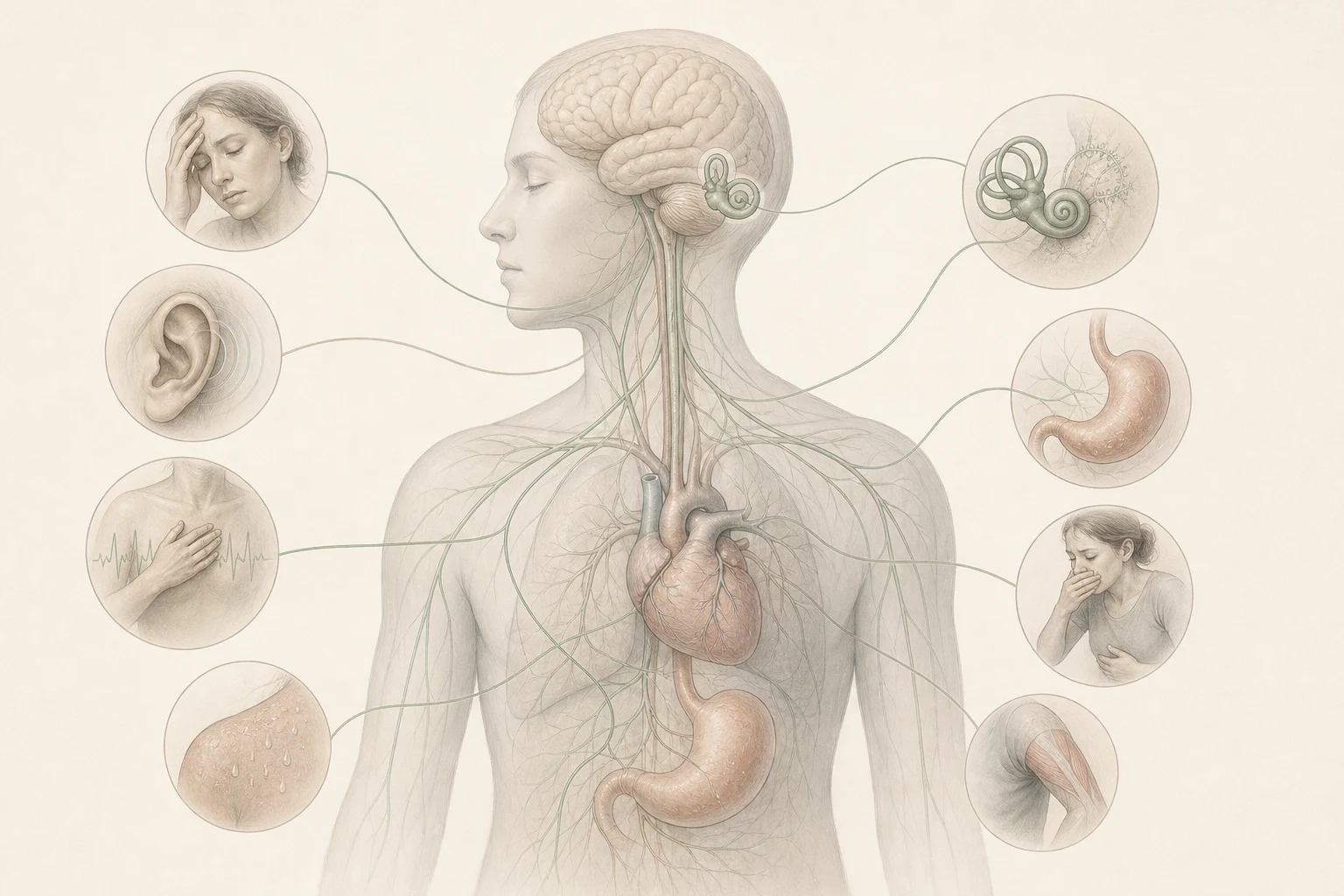
Although the systemic response is real, simply referring to the autonomic nervous system does not replace diagnosing cardiac, neurological, or endocrine causes.
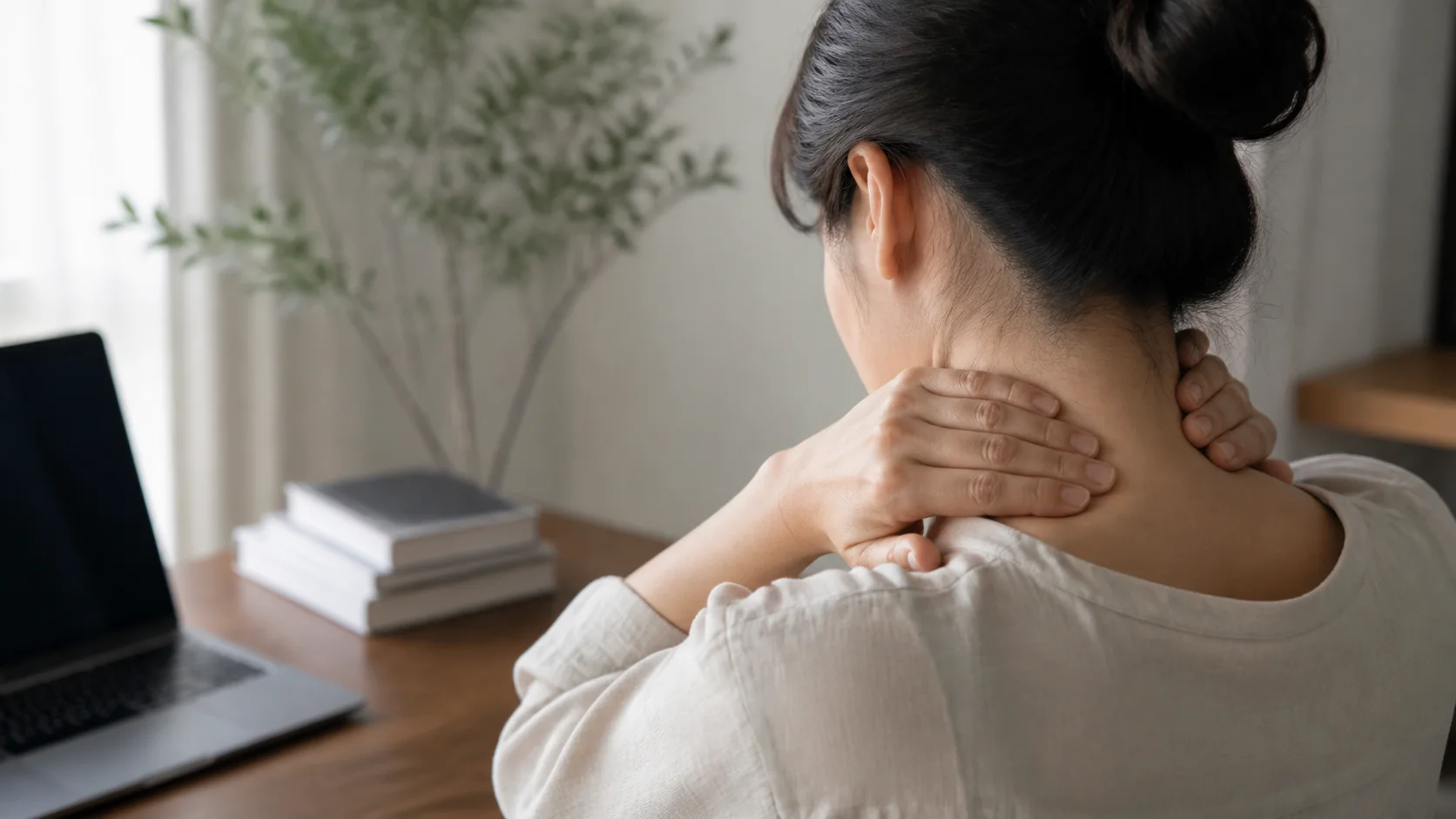
Photos show daily life scenes where symptoms appear, and explanatory diagrams simplify how reactions in the ears, balance, nerves, and the entire body are connected. They do not represent an individual's diagnostic or treatment results.If you have had these experiences
If a tightening pressure in the head and neck and shoulder tension have become part of your daily background
Some people endure a daily tightening sensation in the head and stiffness in the neck and shoulders, relying on painkillers and massages because they are too busy. We examine the time when tension accumulates along with changes in sleep, digestion, and concentration.
Those who feel a tightening sensation as if wearing a headband in the afternoon, causing a loss of focus at work
When tightening headaches recur for several months despite receiving neck and shoulder treatment
Those who feel relief only immediately after a massage and experience stiffness again after lack of sleep or conflict
When the number of days using painkillers increases and the number of headache-free days decreases
Those worried that increasing use of painkillers may lead to chronic headaches
When shallow sleep, jaw clenching, eye fatigue, and pain fluctuate on the same day
This is how we approach the medical evaluation
Tension-type headaches: the sequence of symptom onset and symptoms to check first
Even if the intensity is mild, tension-type headaches can significantly impair concentration and sleep over time. We check the timing of recurrence even after relaxing the neck and shoulders, jaw-clenching habits, screen and work posture, and decreased energy levels.
Distinguishing between pressure and pulsating pain
We determine whether it is a band-like tightening pain on both sides or if it involves characteristics of a migraine.
Not limiting the issue to muscles alone
We look at whether lack of sleep, eye fatigue, jaw clenching, anxiety, and skipping meals are linked to the pain.
Looking at impaired function rather than the duration of endurance
We record how much concentration dropped during meetings, reading, or driving, and how much rest was required.
Reasons why it may not heal easily
Physical conditions that fluctuate together on days when tension-type headaches persist
Even if the intensity is mild, tension-type headaches can significantly impair concentration and sleep over time. We check the timing of recurrence even after relaxing the neck and shoulders, jaw-clenching habits, screen and work posture, and decreased energy levels.
Note the symptoms that occur before the pain begins
Please record the start time and whether neck tension, yawning, light sensitivity, vision changes, or nausea began suddenly or gradually.
Track activities you were unable to perform while in pain
Record the duration of interrupted activities, such as meetings, driving, eating, childcare, or screen work, and the time you were required to lie down.
Post-pain grogginess is also considered part of the attack
Even after the pain subsides, separately track how long it takes for concentration, speech, energy levels, and digestion to return to normal.

Placing the test name, date of administration, first symptom, accompanying symptoms, and recovery time on the same timeline allows for a more continuous flow of questions during multiple medical evaluations.
Conceptual reference · NICE: Shared decision making · AHRQ: Questions Are the AnswerTest and lifestyle records
How to place test results and lifestyle records on a single timeline
Please let us know when your headaches begin and any changes in your neck, jaw, or sleep patterns.
We first verify the nature of the migraine and medication use
We check for sensory hypersensitivity and nausea alongside the dates of analgesic use.
We check for symptoms in the neck, jaw, eyes, and other parts of the body
Only items that changed in conjunction with actual pain are reflected in the prescription.
Adjustments are made by observing work hours without headaches
We compare sustained concentration, neck tension, and sleep recovery.
Korean herbal medicine pattern identification for tension-type headaches
If a tightening pressure in the head and tension in the neck and shoulders have become a daily occurrence, Korean herbal medicine treatment categorizes this into four types
Tension-type headacheinvolves examining neck and shoulder tension, the duration of sitting, and changes in pain after sleep. The Korean herbal medicine prescription is determined after ensuring there is no overlap with migraines or medication-overuse headaches.
Pain that rises from the neck and remains fixed in one location
We check if pain in the occiput, temples, or around the eyes is linked to neck movement. We also verify prolonged sitting, jaw clenching, and shoulder stiffness. We reduce fixed pain by releasing stiff tendons and resolving circulation stagnation.
When the head feels squeezed like a headband on stressful days
We check if bilateral pressure increases after work or conflict. We ask about chest tightness, sighing, shallow sleep, and digestive stagnation. We break the cycle of headaches and worsening sleep by lowering the tension response.
When eyes feel fatigued and subtly painful in the afternoon
We check for a heavy pain that occurs after reading or looking at a screen for a long time. We also check for pallor, dizziness, menstruation patterns, and coldness in the hands and feet. By supplementing blood and recovery power, we support the areas that are easily depleted after visual tasks.
Changes to monitor during treatment
The quality of life you wish to reclaim before tension-type headaches
We aim to increase the time spent without headaches and reduce the frequency with which neck and shoulder tension and decreased concentration interfere with daily life.
Pain location, pressure, duration, and the number of headache days per month
In the first consultation, these criteria serve as the current starting point. We aim to increase the time spent without headaches and reduce the frequency with which neck and shoulder tension and decreased concentration interfere with daily life.
Neck, shoulder, jaw, and eye fatigue, and screen/work posture
We adjust treatment priorities by comparing changes over several days rather than focusing on a single good day. We aim to increase the time spent without headaches and reduce the frequency with which neck and shoulder tension and decreased concentration interfere with daily life.
Sleep, diet, tension, and the number of days painkillers are used
The direction of subsequent medical evaluations is determined based on the lifestyle the patient wishes to return to. We aim to increase the time spent without headaches and reduce the frequency with which neck and shoulder tension and decreased concentration interfere with daily life.
At the crossroads of test results and recovery speed
If a tightening pressure in the head and neck and shoulder tension have become a daily background, herbal medicine treatment distinguishes between four categories
For tension-type headaches, we look at neck and shoulder tension, time spent sitting for long periods, and changes in pain after sleep. Along with migraines and Medication Overuse HeadacheWe determine the herbal medicine prescription by checking if these overlap.
Pattern identification is not about grouping various symptoms into a single autonomic nerve issue. While maintaining the causes to be verified in ear, balance, nerve, and heart evaluations, we identify the axis where dizziness, tinnitus, headache, facial movement, sleep, digestion, body heat, and heart rate actually change together to adjust the priority of the prescription.
Pain that rises from the neck and remains fixed in one spot
- Changes observed in the head, ears, and face
- We check if pain in the occiput, temples, or around the eyes is linked to neck movement.
- Changes observed throughout the body
- We check for prolonged sitting, jaw clenching, and shoulder stiffness.
- Prescription Priority
- Relieves stiff tendons and circulation stagnation to reduce fixed pain.
When you feel a headband-like tightening on tense days
- Changes observed in the head, ears, and face
- We check if pressure on both sides of the head increases after work or conflict.
- Changes observed throughout the body
- We ask about chest tightness, sighing, shallow sleep, and digestive stagnation.
- Prescription Priority
- Reduces the tension response to break the cycle of headaches and worsening sleep.
When eyes are fatigued and there is a dull ache in the afternoon
- Changes observed in the head, ears, and face
- We check if a heavy pain occurs after reading or looking at a screen for a long time.
- Changes observed throughout the body
- We check for paleness, dizziness, menstrual issues, and coldness in the hands and feet.
- Prescription Priority
- Supplements blood and recovery power to support areas easily exhausted after visual tasks.
When the head feels heavy and concentration is blurred
- Changes observed in the head, ears, and face
- We check if heaviness, cloudiness, and nausea are more prominent than tightening.
- Changes observed throughout the body
- We ask about bloating, edema, phlegm, and a general feeling of heaviness in the body.
- Prescription Priority
- Reduces the burden of phlegm-dampness to manage the simultaneous worsening of headaches and brain fog.
Order of Prescription Adjustment
- We first check the nature of migraines and medication use
We check for sensory hypersensitivity, nausea, and the number of days painkillers are used.
- We check for other symptoms in the neck, jaw, eyes, and body
Only items that have changed along with the actual pain are reflected in the prescription.
- Adjustments are made by observing work hours without headaches
We compare sustained concentration, neck tension, and sleep recovery.
- Change one priority at a time and verify through daily functioning
We monitor whether the head feels less tight, the duration of screen use and work, the number of days painkillers are used, and whether neck and shoulder fatigue has decreased.
Why consider Korean herbal medicine treatment now?
- When tightening headaches recur for several months despite receiving neck and shoulder treatment
- When the number of days using painkillers increases and the number of headache-free days decreases
- When shallow sleep, jaw clenching, eye fatigue, and pain occur on the same day
What is verified in Korean herbal medicine treatment for this condition
- Pain location, feeling of pressure, duration, and the number of headache days per month
- Neck, shoulder, jaw, and eye fatigue, and screen use or work posture
- Sleep, diet, tension, and the number of days using painkillers
Checking for sudden changes and neurological symptoms
If you experience the worst headache of your life, paralysis, speech impairment, changes in consciousness, high fever, or neck stiffness, you are advised to seek an immediate emergency room evaluation.
Distinguishing between pressure, activity, and accompanying symptoms
Differentiate from other types of headaches by comparing bilateral tightness, reactions to daily activities, nausea, sensitivity to light and sound, tearing, and nasal congestion.
Tracking daily patterns of chronic headaches
Record headache frequency and any work-, sleep-, or neck-related discomfort; continue necessary neurology care and discuss the possibility of Korean herbal medicine as supportive treatment.
Things to prepare before the consultationIn your headache diary, please record the start time, location (both sides or one side), tightness or throbbing, reaction to activity, nausea, sensitivity to light and sound, medications taken, and previous test results.
If new paralysis, slurred speech, gait disturbance, sudden hearing loss, thunderclap headache, chest pain, dyspnea, or fainting occurs, a prompt medical evaluation is required even if previous tests were normal. After ruling out these exceptions, we focus on herbal medicine treatment for chronic, recurrent, and recovery-phase symptoms.
Consult about tension-type headacheDizziness, Ear, Head, and Face Glossary
Additional information to know regarding tension-type headaches
You can check simple definitions before proceeding to detailed explanations.Frequently Asked Questions
Frequently Asked Questions about Tension-type Headaches
What do tension-type headache symptoms usually feel like?
It often feels like pressure or a band tightening around both sides of the head, face, and neck, and the pain is usually mild to moderate. A common characteristic is that it does not significantly worsen with daily activities such as walking.
What is the difference between tension-type headaches and migraines?
Migraine may feature throbbing pain, worsening with movement, nausea and vomiting, and sensitivity to light and sound. Because both types may occur together, a headache diary can be helpful.
If only one side hurts instead of both, is it not a tension-type headache?
While tension-type headaches typically affect both sides, they are not diagnosed by location alone. We also check the feeling of pressure or tightness, the intensity, response to activity, and accompanying symptoms.
How are recurrent tension-type headaches consulted at Baekrokdam?
We first distinguish other types of headaches from dangerous symptoms that appear suddenly. After diagnosis, if they recur chronically, we examine neck tenderness, sleep, work posture, and previous treatments to discuss the goals of Korean herbal medicine treatment.
Why do tension-type headaches occur?
Muscle tension, stress, sleep, and posture can overlap as causes.
Is caffeine also a cause?
Excessive intake or sudden cessation can be triggers.
Can painkillers be the cause?
Frequent use can lead to overlapping medication-overuse headaches.
What should I record when visiting for Korean herbal medicine treatment for tension-type headaches?
Please record the location and duration of the tightening sensation in the head, as well as changes after neck and shoulder tension, screen use, or sleep. Also, mark the dates of painkiller use and days when migraine symptoms overlapped.
Does Korean herbal medicine treatment for tension-type headaches replace existing tests or treatments?
Sudden paralysis, slurred speech, vision changes, or a severe headache that starts like a thunderclap call for neurological evaluation before Korean herbal medicine treatment. After acute causes have been assessed, we determine goals for concurrent treatment if pain, spasms, or fatigue remain.
If my tension-type headache test results were normal, do I still need to bring my records?
If the headache suddenly worsens after a previous test, or if new neurological symptoms or fever develop, do not wait for it to be treated as a tension-type headache. Please let us know when the changes occurred and the date of your last test.
Evidence and Update Information
This content was compiled by Korean medicine doctor Choi Yeon-seung based on the official professional materials and disease-specific clinical data below, and was updated on 2026-08-26.
- International Headache Society: ICHD-3International classification distinguishing migraines, tension-type headaches, chronic headaches, and secondary headaches
- ICHD-3: Vestibular migraineCriteria for when dizziness, nausea, and visual sensitivity can appear without a headache
- NICE: Headaches in over 12sEvaluation and tracking criteria for migraines, tension-type headaches, and medication-overuse headaches
- WHO: Migraine and other headache disordersOverview of the recurrence of headache disorders, functional loss, and appropriate medical approaches
- American Migraine Foundation: Headache diaryHeadache recording methods that include attack dates, trigger situations, medications taken, and lifestyle impairment
- CDC: Signs and Symptoms of StrokeEmergency pathways when accompanied by sudden weakness in the face or arms and changes in speech or gait
- NINDS: HeadachePrimary and secondary headaches: Patient guide on symptoms that should not be ignored and the diagnostic process