Neck Tension and Dizziness
Why Dizziness and Headaches Occur When the Neck and Shoulders Stiffen
If relaxing the back of the neck provides only temporary relief while dizziness and headaches recur, you should treat balance, headaches, sleep, and the autonomic nervous system in one integrated flow rather than simply massaging the neck muscles.
Just because your head feels heavy and unsteady on days when your neck is stiff does not mean all dizziness originates from the neck. The vestibular system...Migraine·Sensory information from the neck can overlap, so distinguishing the sequence of head movement and pain allows for more precise treatment.
Cervicogenic dizziness cannot be determined solely by reports of a stiff neck and dizziness.
The joints and muscles of the neck send sensory information to the brain regarding the position of the head. If this information does not align well with the balance signals coming from the eyes and ears, you may experience a feeling of floating or swaying rather than a spinning sensation.
However, since neck pain and dizziness are each common symptoms, they may occasionally occur together by coincidence. If you experience brief spinning when turning your head, BPPVwe must first distinguish between causes: the inner ear if spinning occurs, migraines if sensitivity to light and sound and nausea overlap, or ear-related causes if accompanied by hearing changes and tinnitus.
Discomfort originating from the neck is more often characterized by swaying and pressure at the back of the head rather than a spinning sensation.
If the back of the neck stiffens after sitting and working for a long time, and you feel a heavier head or a greater sense of instability when turning your head, neck-related influence is suspected. We also check if this is accompanied by a pulling headache that extends from one side of the back of the head to the temples or around the eyes.
Conversely, if sudden rotational attacks occur even while still, or if the same dizziness repeats even on days when the neck feels comfortable, treating only the neck is insufficient. Since the starting point and triggering movements of the symptoms differ, vestibular evaluation and headache differentiation are included in the treatment plan.
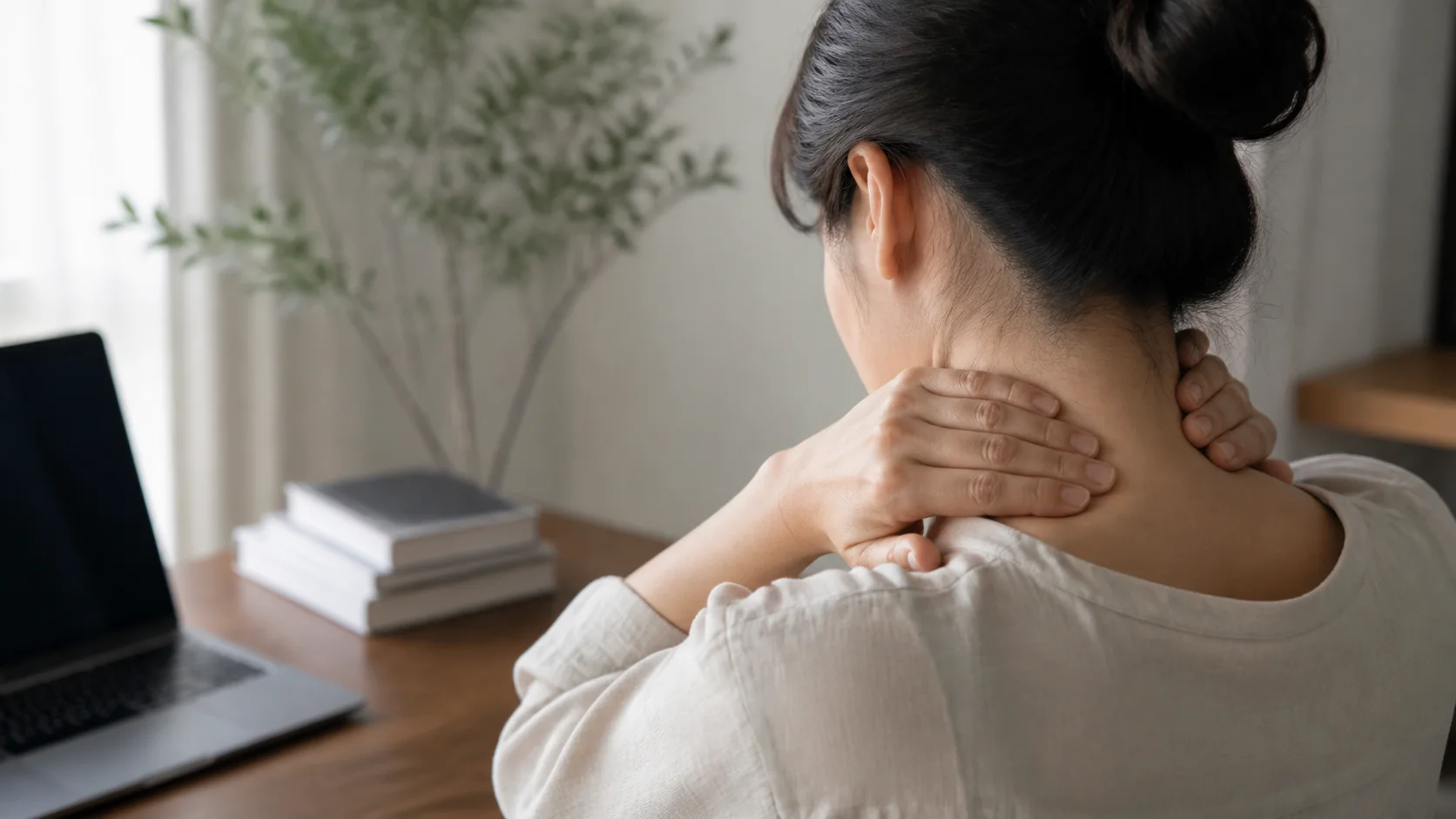
We examine how pain changes following prolonged sitting, tension in the jaw, neck, and shoulders, and lack of sleep.
Screens and posture are not necessarily the sole cause, but rather further exhaust senses that are already sensitive.
Prolonged postures, such as looking down at a laptop or turning the head to one side, lead to a buildup of both neck tension and eye fatigue. If there is significant movement on the screen, the burden of aligning visual information with the neck's sense of position increases, which can lead to brain fog and nausea.
Adjusting the monitor height and reducing a protruding chin posture is helpful, but applying too much force to maintain 'perfect' posture can actually make the neck stiffer. Rather than trying to hold one position perfectly, it is better to move briefly and shift your gaze to the distance to distribute the sensory burden.
Korean medicine treatments address both the neck muscles and the underlying cause of dizziness simultaneously.
Baekrokdam prescribes Korean herbal medicine by observing the sequence of tension in the back of the neck and shoulders, the location of headaches, the nature of dizziness and nausea, and the levels of sleep and fatigue. Treatment differs depending on whether dizziness and nausea overlap with phlegm-fluid (dam-eum) and qi stagnation, whether it is difficult to support the neck and head due to deficient qi and blood, or whether there is a strong tendency toward upper-body heat and migraines.
Acupuncture is performed to reduce excessive tension in the neck, occipital region, jaw, and shoulders, thereby reducing the burden associated with head movement. If residual dizziness from vestibular migraine or BPPV overlaps, we continue necessary vestibular treatment while managing sleep, digestion, and sensory hypersensitivity within a single integrated plan.
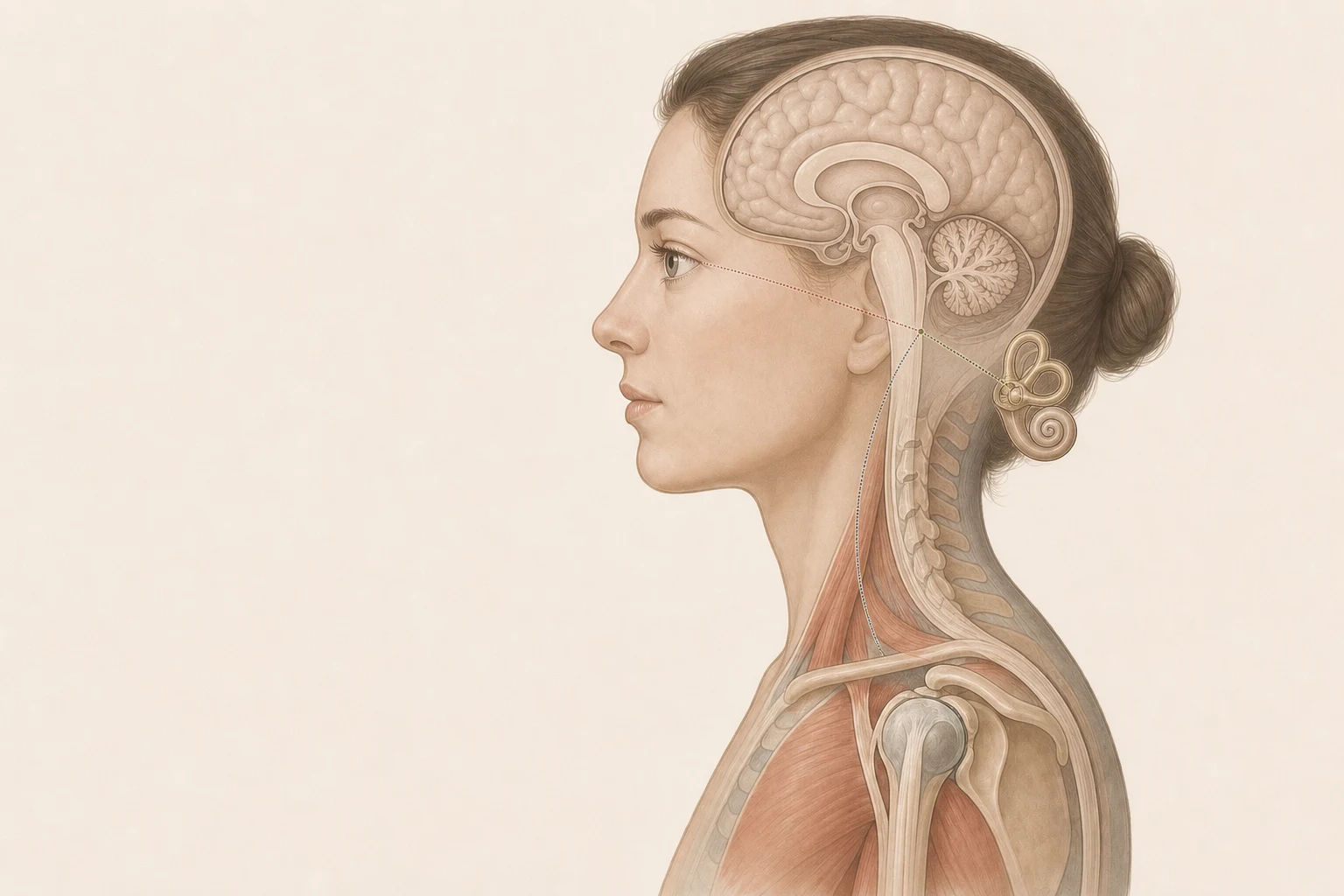
Balance is maintained not only by information from the ears but by processing visual, vestibular, and somatic sensory information together.
Rather than forcing the neck to crack, we restore movement within a safe range.
Avoid forcefully cracking your neck or repeatedly making popping sounds to quickly relieve stiffness. Slowly turn your head within a range that does not significantly increase pain, breathe while keeping your shoulders relaxed, and realign your visual, auditory, and somatic senses through short walks.
If you keep your neck fixed all day because you feel dizzy, your fear of movement and stiffness may increase. Conversely, staggeringon days when symptoms are severe, avoid driving and high places, and gradually expand your range of activity in an environment where you cannot fall.
As treatment progresses, you will return to using screens and walking while becoming less conscious of your neck.
Do not judge the treatment response based solely on the feeling of lightness immediately after a massage. Real-life improvement occurs when pressure in the back of the head accumulates less after meetings and screen work, and when swaying decreases while turning your head to cross the street or climbing stairs.
If neck pain decreases first but a feeling of cloudiness remains, the focus of treatment shifts toward the vestibular system and sleep. Conversely, if dizzy spells have decreased but stiffness in the back of the neck and headaches dominate your day, acupuncture and herbal medicine prescriptions will focus more on recovering from neck and headache symptoms.
If your neck stiffens and you feel unstable after video conferences, we examine both screen stimulation and neck fixation.
In video conferences, people often stare at small face windows for long periods with their heads almost fixed, and immediately transition to documents, messengers, or mobile phones. In such cases, it is not just a matter of neck tension; the balance sense and neck proprioception, sensitized by processing visual stimuli, can become exhausted, leading to prolonged cloudiness and instability.
It is helpful to note whether pressure in the back of the neck increases during the meeting, or if you feel more unstable when looking at a screen after the meeting is over. This helps determine whether to prioritize neck treatment visually induced dizzinessor focus more on adjusting the recovery routine. If pressure in the back of the neck and cloudiness persist until the next day even if you endured the current day, it is viewed as a signal that the recovery speed needs treatment, rather than being a simple posture problem.
Not all cases where neck and shoulder tension occur with dizziness are cervicogenic dizziness. After distinguishing between the vestibular system, migraines, and neck sensation, we use herbal medicine and acupuncture to simultaneously address back-of-neck tension, cloudiness, nausea, and sleep recovery.
Evidence and Update Information
This content was organized by Korean medicine doctor Choi Yeon-seung based on the materials below and was updated on 2026-09-01.
- Clinical characteristics in cervicogenic dizziness: systematic reviewCurrent diagnostic limitations regarding the simultaneity of neck pain and dizziness and the exclusion of other causes
- Therapeutic management of cervicogenic dizziness: systematic review and meta-analysisEvidence range of research on neck function, balance, and manual or exercise therapy
- ICHD-3: Cervicogenic headacheInternational Classification of Headache Disorders used to determine the causal relationship between neck structural abnormalities and headaches
- NIDCD: Balance disordersThe basic pathway where visual, auditory, and somatic senses collectively create balance, requiring a separate evaluation of the causes of dizziness
- Vestibular Disorders Association: Cervicogenic dizzinessPeer-reviewed materials explaining the possibility of neck pain and dizziness overlapping by chance, the absence of a single definitive diagnostic test, and the differential diagnosis process