Ear and Balance Differential Diagnosis
BPPV, Meniere's Disease, and Vestibular Migraine Differ in Duration and Accompanying Symptoms
BPPV, Meniere's Disease, and Vestibular Migraine differ in attack duration, accompanying symptoms, and the required tests and treatments. We also examine the role that Korean medicine treatment can play when these three conditions overlap or when dizziness persists after the acute phase.
Spinning dizziness for several seconds when turning the head, attacks accompanied by ear fullness and fluctuating hearing, and dizziness that occurs with sensitivity to light and sound cannot be treated in the same way.
| Category | Prominent Symptoms | Related Details |
|---|---|---|
| BPPV (Benign Paroxysmal Positional Vertigo) | Short sensation of spinning after specific postures | Subsides after stopping movement for a moment |
| Meniere's disease | Paroxysmal dizziness and ear symptoms | Tinnitus, fullness, or changes in hearing |
| Vestibular migraine | Dizziness lasting minutes to several days | History of migraine, sensitivity to light and sound |
Whether it lasts for a few seconds, over 20 minutes, or several days is the first clue
BPPVIt is typical for a strong sensation of spinning to occur briefly after specific movements, such as rolling over in bed or tilting the head back. The spinning usually subsides when the head is kept still, but nausea and a floating sensation may linger longer after the episode.
Meniere's diseaseIt is important to check if naturally occurring dizziness typically lasts for more than 20 minutes and is accompanied by fluctuating unilateral tinnitus, ear fullness, or changes in hearing. Vestibular migraine may involve vestibular symptoms ranging from 5 minutes to 72 hours, overlapping with a history of migraine, sensitivity to light and sound, or visual auras; some episodes may occur without a headache.
Tests and acute phase treatments also differ
For BPPV, we check in which position and what nystagmustype of nystagmus appears, then determine the treatment direction with a canalith repositioning procedure appropriate for the affected semicircular canal. Conversely, episodic dizziness accompanied by ear symptoms requires hearing tests and an ENT evaluation as the core; if hearing in one ear suddenly drops, it is not a matter to be watched for long.
Vestibular Migrainemigraine is diagnosed by looking at recurring patterns, migraine characteristics, and the possibility of other vestibular diseases rather than confirming it with a single imaging test. Rather than just the feeling of 'being dizzy,' the combination of episode duration, whether it is triggered by posture, ear symptoms, and sensitivity to light and sound significantly changes the actual direction of medical evaluation.
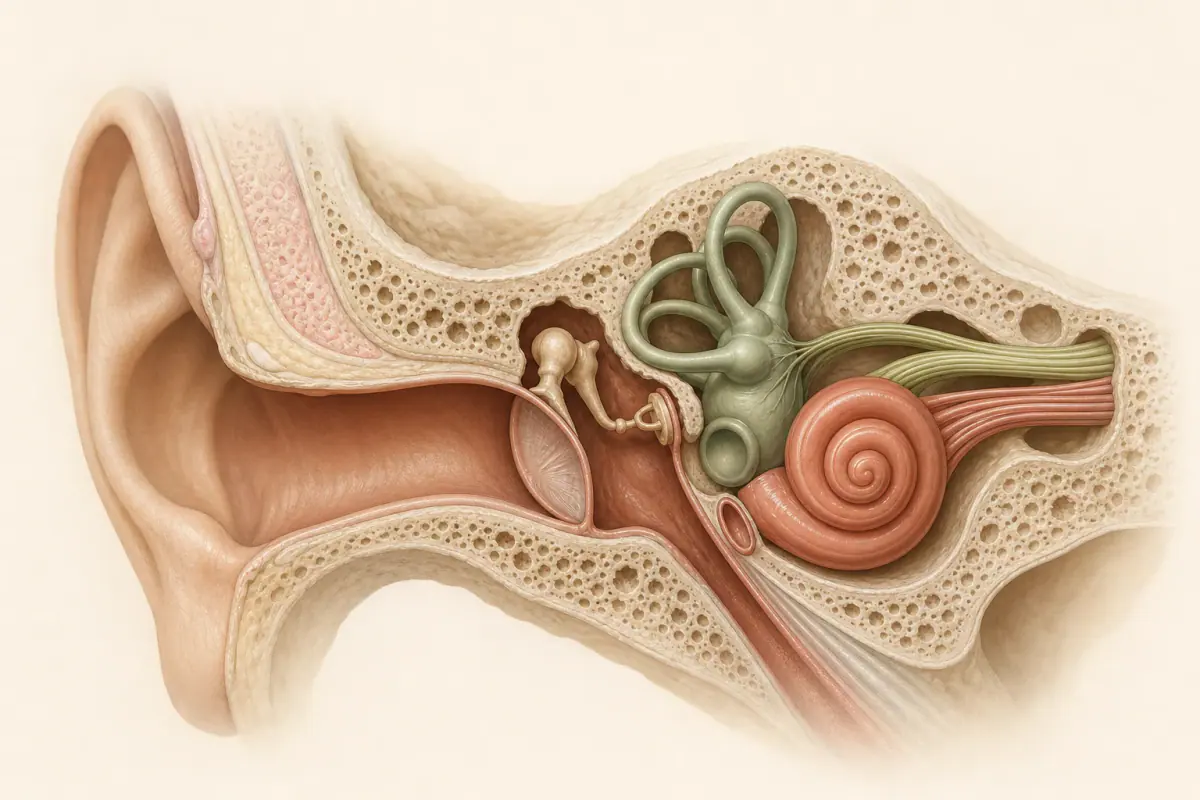
Although the auditory and balance organs are located close to each other, tinnitus, muffled ears, and dizziness must be evaluated through a combination of ear examinations and hearing and balance assessments.
There are many cases of dizziness that cannot be explained by a single diagnosis
Even after BPPV is corrected, one may feel unsteady when moving for several days, or positional dizziness may separately occur in someone who already had migraines. Since characteristics of Meniere's disease and migraine can overlap in one person, interpreting all subsequent episodes based only on the initial diagnosis may lead to incorrect treatment.
First, in the 'Causes of Dizziness: Spinning Sensation and staggering Distinction' guide, separate the sensations of spinning, imbalance, and the feeling of being on the verge of fainting. By combining these with changes that occurred in the ears and head during the episode, the current most burdensome level becomes clear.
Korean medicine treatment addresses the lingering instability after an episode and the background of recurrence
The role of Korean medicine treatment is not to skip procedures appropriate for the diagnosis, such as canalith repositioning procedures or hearing evaluations. However, if nausea when moving the head, disrupted sleep, sensitivity in the neck and head, or prolonged nausea and loss of energy after meals persist after those processes, the treatment goal changes.
At Baekrokdam, we do not look at the spinning sensation of dizziness in isolation, but examine how sleep, digestion, headache sensitivity, neck and shoulder tension, and fatigue recovery are intertwined. Korean herbal medicine and acupuncture treatments are designed to reduce the areas where recovery between recurring episodes is slow and the accompanying symptoms that hinder a return to daily life.

Record not only the location of pain but also the sensitivity to light and sound, and the order in which nausea and dizziness began.
Lifestyle management is not a homework assignment to find the cause, but a mechanism to minimize disruptions to recovery
When acute vertigo persists, prioritize avoiding driving or working in high places and turning on lights when getting up at night to reduce the risk of falls. If you have a clear tendency toward migraines, try to maintain consistent sleep and meal schedules; on days when you are sensitive to screens, light, or sound, it is better to reduce stimulation to ensure recovery time.
If ear fullness or changes in hearing accompany every attack, do not overlook these ear symptoms simply because the dizziness has subsided. Lifestyle management and Korean medicine treatment are not substitutes for hearing tracking, but rather serve as pillars to manage nausea, instability, and fatigue in between, helping you maintain your daily life.
Improvement is not judged by the frequency of attacks alone
We also look at whether the intensity and duration of attacks are decreasing, whether the time it takes to regain balance after moving your head is shortening, and whether the nausea and fatigue that lasted until the next day are easing. Rather than waiting only for days when you are completely free of dizziness, the important change is whether the range of movement you can manage in daily life is expanding.
During a consultation, it is sufficient to briefly describe the starting position and duration of the last one or two attacks, any ear symptoms or migraine characteristics, and the time it took to recover. This information is used directly to determine the priorities for otolaryngological evaluation and Korean medicine treatment.
We distinguish the duration, position, ear symptoms, and migraine characteristics of the attacks before focusing on the name of the dizziness. If nausea, instability, and issues with sleep, digestion, or fatigue remain even after completing necessary tests, specific goals for Korean medicine treatment can be established.
Evidence and Update Information
This content was organized by Korean medicine doctor Choi Yeon-seung based on the materials below and was updated on 2026-08-26.
- NIDCD: Ménière’s DiseaseConnection between episodic dizziness and hearing loss, tinnitus, and ear fullness
- NIDCD: Sudden DeafnessEmergency evaluation boundaries for sudden unilateral hearing changes
- NIDCD: TinnitusBasic information for assessing tinnitus hearing, sound characteristics, and daily burden
- NICE: Tinnitus: assessment and managementEvaluation and referral criteria for distinguishing hearing changes, pulsating patterns, and life impact in tinnitus
- AAO-HNSF: BPPV clinical practice guideline updatePositional testing, canalith repositioning procedure, re-evaluation, and residual symptom management criteria for BPPV
- NHS: Ménière’s diseaseEpisodic combinations of dizziness, hearing loss, tinnitus, and ear pressure, and daily safety guidelines
- Bárány Society: Vestibular neuritis criteriaDiagnostic criteria for acute persistent vestibular syndrome and vestibular neuritis, and symptoms to observe when distinguishing central causes
- International Headache Society: ICHD-3International classification distinguishing migraines, tension-type headaches, chronic headaches, and secondary headaches
- ICHD-3: Vestibular migraineCriteria for when dizziness, nausea, and visual sensitivity can appear without a headache
- NICE: Headaches in over 12sEvaluation and tracking criteria for migraines, tension-type headaches, and medication-overuse headaches