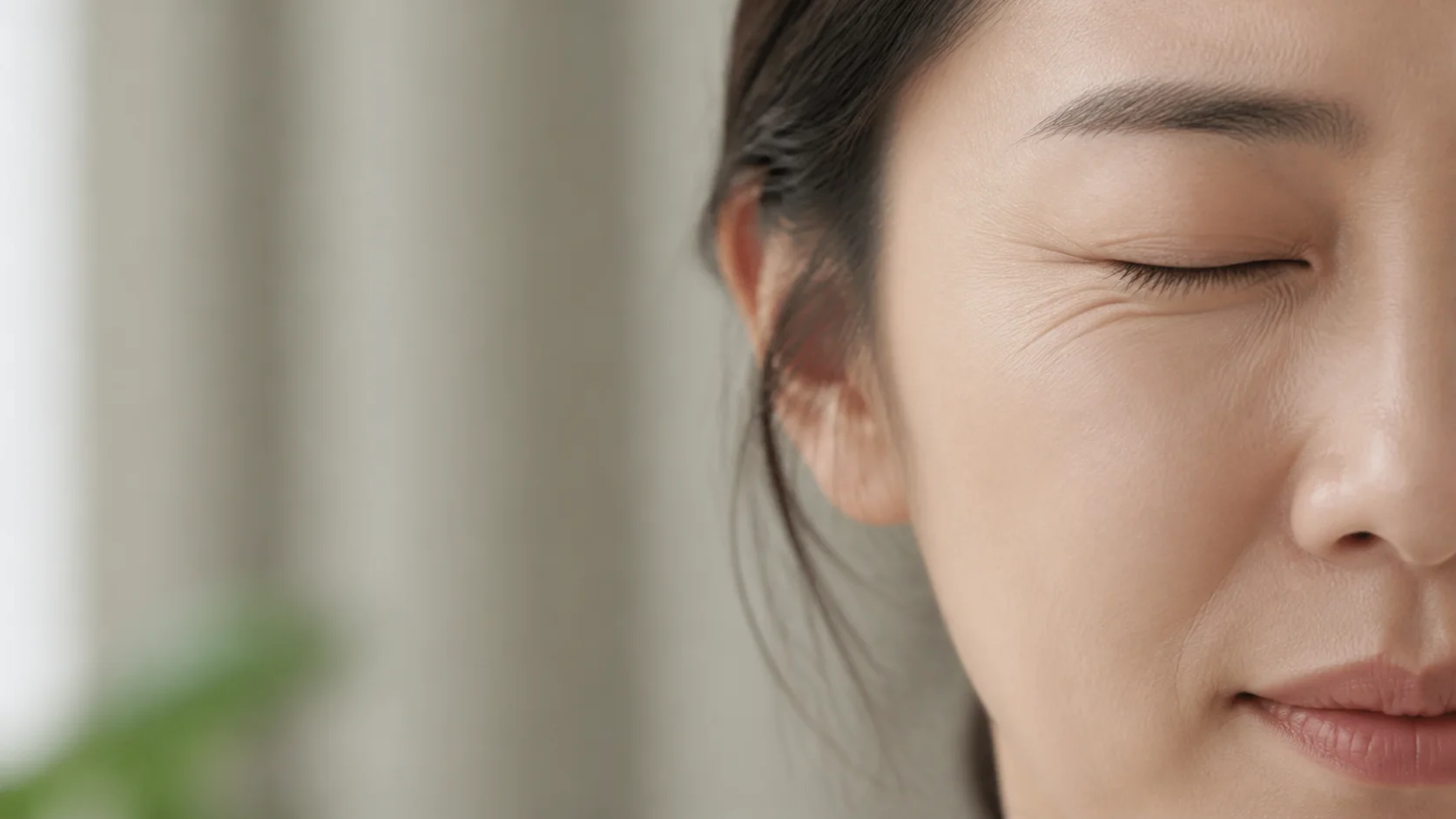
Facial Spasms: Read in the order of your curiosity
Before grouping symptoms under a single name
Facial spasms are observed as movements spreading from one eye to the corner of the mouth
Common eyelid myokymia usually appears on one side, particularly as a gentle, wave-like twitching of the skin on the lower eyelid. If both eyes close strongly against your will, or if spasms around one eye spread to the cheek or corner of the mouth on the same side, it must be distinguished from simple eyelidTremortwitching. If the twitching persists, spreads, or worsens, seek an examination from an ophthalmologist or neurologist. If facial drooping, slurred speech, or limb weakness occur suddenly, seek emergency evaluation immediately.
Categorizing Symptoms
We look at the range and accompanying symptoms rather than the intensity of the twitching
Next steps are determined based on visible movements and newly developed functional changes.
| Visible symptoms | Points to Distinguish | Next action |
|---|---|---|
| Mild twitching of one lower eyelid | Whether it is limited only to the eyelid | Record videos or triggering situations |
| Both eyes closing strongly | Other spasms such as blepharospasm | Ophthalmology or Neurology examination |
| Spreading from one eye to the cheek or mouth area | Possibility of hemifacial spasm | Neurology evaluation |
| Facial drooping, slurred speech, or weakness in arms and legs | Acute neurological abnormality | Immediate emergency care |
When to seek medical attention first
Please seek immediate evaluation for the following symptoms
These are symptoms where acute neurological or ophthalmological issues must be checked before simple eyelid twitching.
- Sudden drooping of one side of the face or loss of strength in the arms or legs
- Slurred speech accompanied by gait disturbance or severe headache
- If new vision loss, double vision, or severe eye pain occurs
- If the eye closes tightly and spasms spread rapidly to one side of the face
When it starts as eye twitching and spreads to the corners of the mouth
If repeated contractions of one side of the face interfere with conversation, driving, or sleep
Facial SpasmThis is different from simple fatigue-induced eyelid twitching and requires an evaluation of causes such as nerve compression. While maintaining diagnosis and treatment options, we monitor the timing when spasms increase based on fatigue, tension, and sleep, along with facial function.
Distinguish between eyelid twitching and one-sided facial contractions
Record whether the pulling sensation extends from around the eye to the mouth or cheek on the same side, and whether it can be stopped voluntarily.
Focus on the situations disrupted rather than the number of spasms
Track the time during which vision while driving, conversation, eating, taking photos, or falling asleep was disrupted.
Identify the point when the treatment effect wears off
Check the date of botulinum toxin treatment and the cycle when spasms increase again, along with sleep and fatigue.
Treatment GoalBy tracking spasms without exaggeration, we reduce the discomfort of interrupted conversation, driving, and sleep caused by the eye closing and facial pulling.
Consult about facial spasms
New facial asymmetry requires prompt medical evaluation, while for intermittent twitching, providing a video showing the entire face is helpful.
Photos show daily life scenes where symptoms appear, and explanatory diagrams simplify how reactions in the ears, balance, nerves, and the entire body are connected. They do not represent an individual's diagnostic or treatment results.If you have had these experiences
If repeated contractions of one side of the face interfere with conversation, driving, or sleep
Some people experience twitching that starts in one eye and pulls toward the cheek and mouth, causing distraction during conversation and driving, and feeling anxious again whenever the treatment effect wears off. Simple eye twitchingFirst, distinguish it from facial spasms.
Those who experience contractions strong enough to close one eye, making driving or looking at screens uncomfortable
When one-sided spasms repeat and interfere with daily life even after a neurology evaluation
Those who experience a repeating cycle of a comfortable period followed by a return of pulling sensations after botulinum toxin treatment
When you want to manage fluctuations in spasms, pulling, and fatigue between treatment effects
For those whose spasms and facial flushing increase together during times of fatigue, tension, or lack of sleep
When the intensity of spasms fluctuates on the same day as lack of sleep, overwork, or tension
This is how we approach the medical evaluation
Facial Spasms: The sequence of symptom onset and symptoms to check first
Facial spasms are different from simple fatigue-induced Eyelid twitchingeyelid twitching and require an evaluation of causes such as nerve compression. While maintaining the diagnosis and treatment choice, we monitor the times when spasms increase based on fatigue, tension, and sleep, as well as facial function.
Distinguish between eyelid twitching and one-sided facial contraction
Record whether the pulling sensation extends from around the eyes to the mouth and cheeks on the same side, and whether it can be stopped voluntarily.
Focus on the situations disrupted rather than the frequency of spasms
Track the time during which vision while driving, conversation, eating, taking photos, or falling asleep was hindered.
Identify the point when the treatment effect wears off
Check the date of procedures such as botulinum toxin treatment and the cycle of recurring spasms, along with sleep and fatigue patterns.
Reasons why it may not heal easily
Body conditions that coincide on days when facial spasms persist
Facial spasms are different from simple fatigue-induced eyelid twitching and require an evaluation of causes such as nerve compression. While maintaining the diagnosis and treatment choice, we monitor the times when spasms increase based on fatigue, tension, and sleep, as well as facial function.
Separately observe closing eyes, drinking water, and pronunciation
Rather than a single photo of a neutral expression, record how eye protection, mouth movements, chewing, and speaking change by date.
Distinguish between micro-tremors and full-face contractions
Use short videos and duration to distinguish whether only the eyelid is fluttering or if the eye closes and pulls toward the cheek and mouth.
Separate worsening after fatigue from new neurological symptoms
Record tremors following lack of sleep, but immediately seek a separate evaluation for sudden arm weakness, changes in speech, or gait abnormalities.
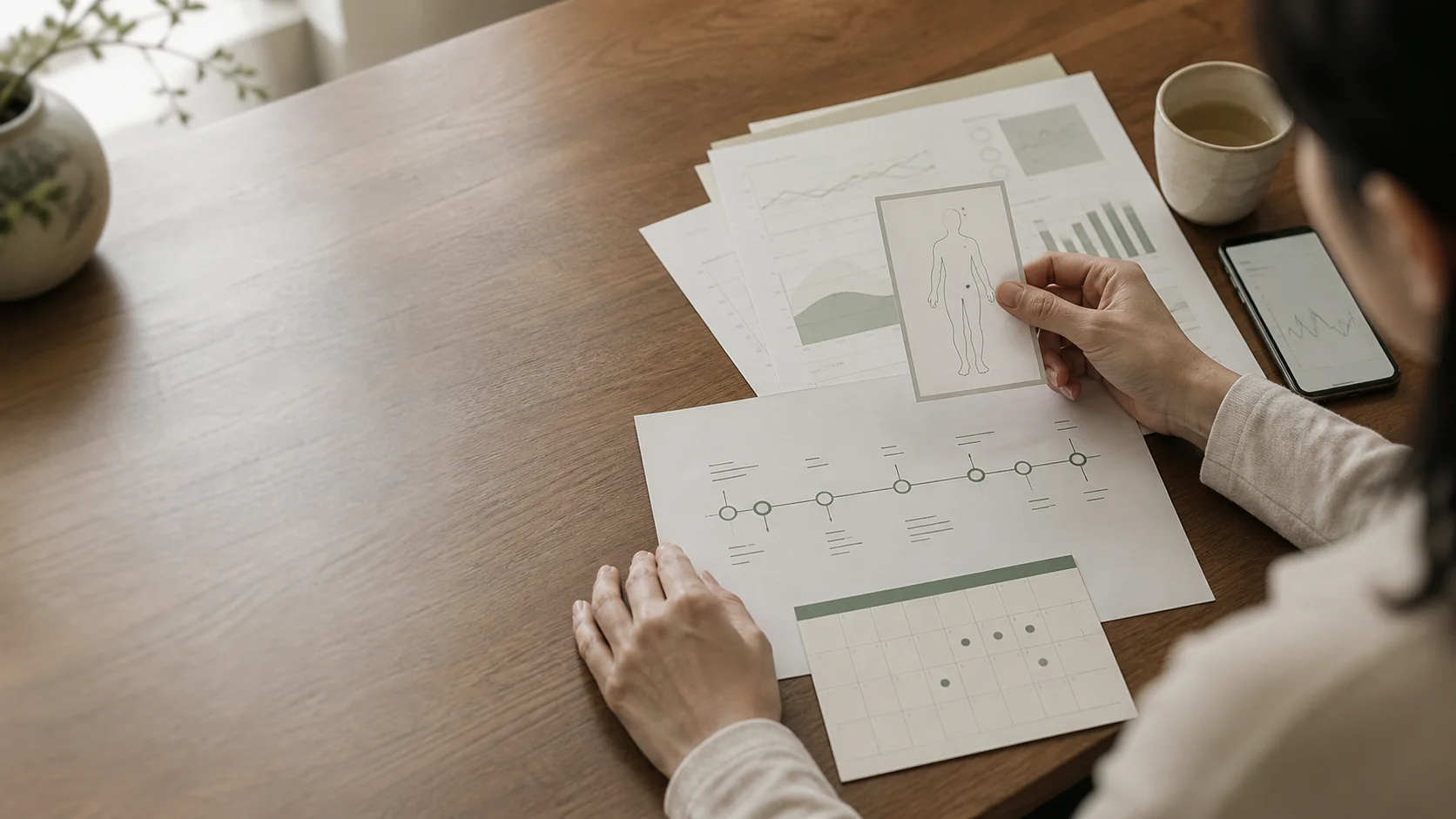
Placing the test name, date of administration, first symptom, accompanying symptoms, and recovery time on the same timeline allows for a more continuous flow of questions during multiple medical evaluations.
Conceptual reference · NICE: Shared decision making · AHRQ: Questions Are the AnswerTest and lifestyle records
How to place test results and lifestyle records on a single timeline
Please prepare videos of the spasms, treatment dates, and the point when discomfort returned.
Distinguish from simple eye twitching or paralysis
Check the affected area of one side of the face and the neurological evaluation.
Align treatment cycles with worsening conditions
Keep the procedure date, duration of effect, sleep, and fatigue on a single calendar.
Adjustments are made by observing the time during which daily activities are disrupted
Compare the duration of involuntary eye closure during driving, conversation, and sleep.
Herbal Medicine Pattern Identification for Facial Spasms
If repeated contractions of one side of the face interfere with conversation, driving, or sleep, herbal medicine treatment categorizes them into four patterns
Unlike simple eyelid twitching, hemifacial spasm may involve simultaneous movement of one eye, cheek, and the corner of the mouth. While continuing nerve compression evaluations and existing treatments, herbal medicine treatment focuses on changes related to sleep and tension.
When the eye and corner of the mouth pull tightly and rapidly with fatigue
We observe the frequency and intensity of contractions extending from around one eye to the corner of the mouth. We inquire about lack of sleep, eye fatigue, neck tension, and heat in the upper body. The goal is to reduce excessive muscle and nerve excitation and tension.
When spasms overlap with facial heat, headache, or dizziness
Before the spasm Ear Fullness·We check for accompanying heaviness in the head, bloating, phlegm, palpitations, and shallow sleep. We manage the burden of accompanying symptoms by reducing phlegm-fluid accumulation and upper-body hypersensitivity.
When twitching occurs after prolonged use and recovery is slow
We observe if spasms increase after conversation or screen use and if the eyes fatigue easily. We inquire about pallor, dizziness, menstruation, and coldness in the hands and feet. We reduce fatigue-induced worsening by supplementing blood and the foundation for recovery.
Changes to monitor during treatment
Daily activities you wish to reclaim before resolving facial spasms
While tracking spasms objectively, we aim to reduce the discomfort in conversation, driving, and sleep that was interrupted due to involuntary eye closure and facial pulling.
A short video showing the starting point and the sequence of spread to the eye, cheek, and corner of the mouth
In the first consultation, these criteria serve as the current starting point. While tracking spasms objectively, we aim to reduce the discomfort in conversation, driving, and sleep that was interrupted due to involuntary eye closure and facial pulling.
Neurology tests, treatment schedules, and the point when effects changed
We adjust treatment priorities by comparing changes over several days rather than a single good day. While tracking spasms objectively, we aim to reduce the discomfort in conversation, driving, and sleep that was interrupted due to involuntary eye closure and facial pulling.
Discomfort in driving, conversation, and sleep, along with caffeine, fatigue, and body heat
The direction of the next medical evaluation is determined based on the daily activities the patient wishes to resume. While tracking spasms objectively, we aim to reduce the discomfort in conversation, driving, and sleep that was interrupted due to involuntary eye closure and facial pulling.
At the crossroads of test results and recovery speed
If repeated contractions of one side of the face interfere with conversation, driving, or sleep, herbal medicine treatment categorizes them into four patterns
Unlike simple eyelid twitching, hemifacial spasm may involve simultaneous movement of one eye, cheek, and the corner of the mouth. While continuing nerve compression evaluations and existing treatments, herbal medicine treatment focuses on changes related to sleep and tension.
Pattern identification is not about grouping various symptoms into a single autonomic nerve issue. While maintaining the causes to be verified in ear, balance, nerve, and heart evaluations, we identify the axis where dizziness, tinnitus, headache, facial movement, sleep, digestion, body heat, and heart rate actually change together to adjust the priority of the prescription.
When tightness around the eyes and mouth increases with fatigue
- Changes observed in the head, ears, and face
- We observe the frequency and intensity of contractions extending from around one eye to the corner of the mouth.
- Changes observed throughout the body
- We inquire about lack of sleep, eye fatigue, neck tension, and heat in the upper body.
- Prescription Priority
- The focus is on reducing excessive muscle and nerve excitation and tension.
When facial heat, headache, dizziness, and spasms occur together
- Changes observed in the head, ears, and face
- We check if ear fullness or a heavy feeling in the head precedes the spasms.
- Changes observed throughout the body
- We check for bloating, phlegm, pulsating sensations, and shallow sleep.
- Prescription Priority
- We manage the burden of accompanying symptoms by reducing Dam-hwa (phlegm-heat) and hypersensitivity in the upper body.
When tremors occur after prolonged use and recovery is slow
- Changes observed in the head, ears, and face
- We observe if spasms increase after conversations or screen use, and if the eyes fatigue easily.
- Changes observed throughout the body
- We inquire about paleness, dizziness, menstruation, and coldness in the hands and feet.
- Prescription Priority
- We reduce fatigue-induced worsening by supplementing blood and the foundation for recovery.
When facial tightness increases in stressful situations
- Changes observed in the head, ears, and face
- We observe if spasms concentrate when meeting people or driving.
- Changes observed throughout the body
- We check for pulsating sensations, shallow breathing, insomnia, and anxiety regarding the symptoms.
- Prescription Priority
- We reduce hyperarousal and tension to decrease the time spent focusing on the spasms.
Order of Prescription Adjustment
- Distinguish from simple eye twitching or paralysis
We verify the affected area of one side of the face and perform a nerve evaluation.
- Align the treatment cycle with worsening conditions
We track treatment dates, duration of effect, sleep, and fatigue on a single calendar.
- Adjust based on the time of day when daily life is disrupted
We compare the timing of eye closure during driving, conversation, and sleep.
- Change one priority at a time and verify through daily functioning
We compare the frequency of spasms, the duration during which eyes are closed, preventing driving, reading, or conversation, and the duration of the Botox effect.
Why consider Korean herbal medicine treatment now?
- When one-sided spasms persist and interfere with daily life even after a neurology evaluation
- When you wish to manage fluctuations in spasms, pulling sensations, or fatigue between treatment effects
- When the intensity of spasms fluctuates on the same day as lack of sleep, overwork, or tension
What is verified in Korean herbal medicine treatment for this condition
- A short video showing the starting point and the sequence of spread to the eyes, cheeks, and mouth
- Dates of neurology examinations and treatments, and the point when the effect changed
- Discomfort during driving, conversation, or sleep, and factors such as caffeine, fatigue, and body heat
Changes in facial strength and vision are screened first
If you experience sudden facial drooping, slurred speech, weakness in the arms or legs, or changes in vision, do not wait for an eyelid twitching consultation.
We check if the spasms spread from the eyelids to the face
Videos of strong closure of both eyes and movements spreading to one cheek or the mouth are recorded to assist in differential diagnosis between neurology and ophthalmology.
We track remaining symptoms after diagnosis
After ruling out acute causes, the scope of concurrent herbal medicine treatment is determined based on the duration without twitching and the degree of interference with sleep and work.
Things to prepare before the consultationPlease prepare a video showing both eyes, cheeks, and mouth; the start time and sequence of spread; changes in vision, facial strength, or speech; and information on sleep, caffeine, and all current medications.
If new paralysis, slurred speech, gait disturbance, sudden hearing loss, thunderclap headache, chest pain, dyspnea, or fainting occurs, a prompt medical evaluation is required even if previous tests were normal. After ruling out these exceptions, we focus on herbal medicine treatment for chronic, recurrent, and recovery-phase symptoms.
Consult about facial spasmsDizziness, Ear, Head, and Face Glossary
Additional information regarding facial spasms
You can check simple definitions before proceeding to detailed explanations.Frequently Asked Questions
Frequently Asked Questions about facial spasms
Is slight twitching of the lower eyelid also a symptom?
Yes. Common eyelid myokymia often appears as gentle, wave-like ripples in one lower eyelid.
If the twitching spreads to the mouth, is it the same symptom?
If movement spreads from one eye to the cheek or mouth on the same side, please visit a neurology clinic for an examination to distinguish it from conditions such as hemifacial spasm.
What kind of video should I record and bring?
Record a video in a bright place where both eyes, cheeks, and mouth are visible together, and note the start time, duration, and the direction in which the movement spreads.
Can coffee cause eyelid twitching?
High caffeine intake is a common contributing factor. Record your intake times and the twitching, then reduce caffeine and compare the changes.
Could eyelid twitching be caused by medication?
Some medications may be related, but do not stop taking them on your own. Inform your prescribing physician about when you started or changed medications and your symptoms.
Where should I go if the twitching continues even when I am not tired?
Visit an ophthalmology clinic for eye discomfort, or seek a prompt medical evaluation at a neurology clinic if the movement spreads to the face or if other neurological symptoms occur.
For eyelid twitching tests, should I go to ophthalmology or neurology?
Visit an ophthalmology clinic if dry eye or eye discomfort is primary; seek a prompt medical evaluation at a neurology clinic if the movement spreads to the face or if other neurological symptoms occur.
What should I record and bring for herbal medicine treatment for facial spasms?
Please record a video showing where the spasm starts on one side of the face, the sequence in which it spreads from the eye to the mouth, and the duration. Also, prepare any Botox or surgery consultation notes and imaging test results.
Does herbal medicine treatment for facial spasms replace existing tests or treatments?
Sudden paralysis, slurred speech, vision changes, or severe headaches that start like a thunderclap require a neurological evaluation before Korean herbal medicine treatment. Once acute causes are ruled out, we determine goals for concurrent treatment if pain, spasms, or fatigue remain.
Should I bring my records again even if the facial spasm test results were normal?
Regardless of test results, if the range of spasms widens or facial paralysisor if changes in hearing occur, seek medical evaluation again. Please provide the test dates and your response to treatment.
Evidence and Update Information
This content was compiled by Korean medicine doctor Choi Yeon-seung based on the official professional materials and disease-specific clinical data below, and was updated on 2026-08-26.
- NINDS: Bell’s PalsyInformation on symptoms, evaluation, and recovery of peripheral facial nerve palsy
- CDC: Signs and Symptoms of StrokeEmergency pathways for sudden weakness in the face or arms and changes in speech or walking
- AAO-HNSF: Clinical Practice Guideline: Bell’s PalsyInitial evaluation, eye protection, treatment, and re-evaluation criteria for facial nerve palsy
- NHS: Bell’s palsyInitial treatment timing and eye protection guidance for acute unilateral facial nerve palsy
- American Academy of Ophthalmology: Eyelid twitchDistinguishing between fatigue-induced eyelid twitching and spasms where the eye closes or spreads to the face
- NINDS: Hemifacial SpasmTypical range, neurological evaluation, and treatment overview of hemifacial spasm
- Mayo Clinic: Bell’s palsyPatient guidance on distinguishing facial nerve palsy symptoms from other causes such as stroke