Tinnitus: Read in the order of your curiosity
Before defining the sound
Within the name 'tinnitus,' there are sounds that must be addressed first
tinnitusTinnitus is a symptom where one feels ringing, buzzing, hissing, clicking, pulsating, or music-like sounds in one or both ears or the head, despite no external sound. The sound can be low or high, soft or loud, and may be intermittent or continuous. For some, the sound changes when moving the head, neck, or eyes, or when touching specific parts of the body. It can be more prominent in a quiet room at night, affecting sleep, concentration, and mood. Sounds that match the heartbeat, or those starting after sudden hearing loss, facial weakness, vertigo, or head trauma, are not treated as general tinnitus and require prompt medical evaluation.
Categorizing Symptoms
Determine the next steps based on the sound, location, pulsation, hearing, and neurological symptoms
We examine the sensation of the tinnitus itself along with accompanying changes that may suggest the cause.
| Symptom scenario | Things to check together | Priority Action |
|---|---|---|
| Intermittent ringing, whistling, or rushing sounds | One side, both sides, or noise exposure | Document symptoms and consult regarding hearing |
| Continuous sound at night disrupting sleep or concentration | Mood, anxiety, and daily functioning | Medical evaluation and impact assessment |
| Pulsating in sync with the heartbeat | One side, new onset, or persistent | Prompt evaluation of the cause |
| Sudden hearing loss, facial weakness, or vertigo | Onset time and gait | Immediate emergency evaluation |
When to seek medical attention first
Symptoms requiring prompt evaluation rather than waiting with tinnitus
The following prioritize the examination of hearing, neurological, or vascular causes.
- Sudden hearing loss in one ear accompanying tinnitus
- Accompanied by facial muscle weakness or severe rotational vertigo
- Persistent new sound in sync with the heartbeat
- Tinnitus, vomiting, confusion, or neurological changes following head trauma
Persistent discomfort after ear examinations
Re-evaluating daily life after examinations are complete
If tinnitus continues to disrupt sleep and concentration even after checking for urgent ear diseases, hearing changes, and pulsatile causes, measuring the sound alone is insufficient. We re-examine when the sound increases, and how it relates to that day's sleep, headaches, neck tension, and digestionpulsatingto see how they fluctuate together.
We do not categorize everything as a simple ringing sound
The initial medical evaluation differs depending on whether the sound is in one or both ears, high or low pitch, synchronized with your pulse, or accompanied by a feeling of fullness and changes in hearing.
We look at how much your sleep and concentration are disrupted, rather than just the volume of the sound.
We compare the time it takes to fall asleep, early morning awakenings, and the number of times you interrupted reading or meetings before and after treatment.
We check for changes in your physical condition that occur alongside tinnitus.
Among neck and shoulder tension, headaches, facial flushing, digestive stagnation, and pulsating sensations, we identify only the items that actually change when the sound becomes louder.
Treatment GoalInstead of promising to eliminate the sound entirely, we aim to reduce the sleep and concentration time lost to tinnitus and increase the periods of daily life where your attention is not stolen by the sound.
Consult using scenarios where my tinnitus worsens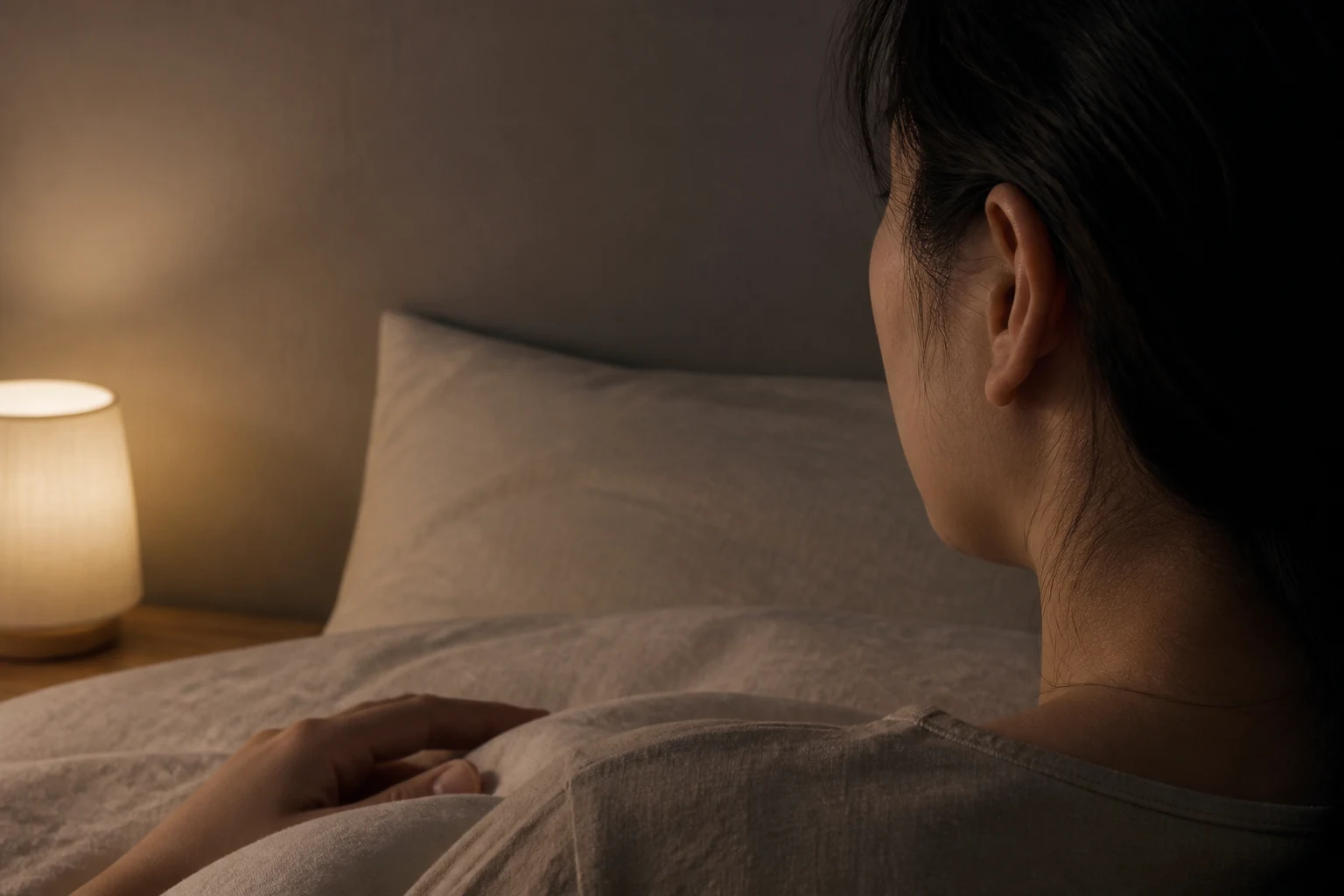
As ambient noise decreases and sleep anxiety increases, your attention may become more focused on the tinnitus.
Photos show daily life scenes where symptoms appear, and explanatory diagrams simplify how reactions in the ears, balance, nerves, and the entire body are connected. They do not represent an individual's diagnostic or treatment results.The scene after turning off the lights
Pretending to be fine during the day, but only the sound remains once the lights go out
When tinnitus, which was blended with the sounds of conversation and work, comes to the forefront in a quiet room, you may begin worrying about the next day even before falling asleep. What the patient finds difficult may not be the sound itself, but the night spent waiting for that sound.
The time spent checking your ears before falling asleep
We look specifically at the scene where sleep drifts away because you are checking which ear is louder or if it has changed since yesterday as soon as you lie on your pillow.
A day spent avoiding quiet activities
If you have started closing your books, cutting meetings short, or avoiding time alone, the burden on your daily life has increased, regardless of the intensity of the sound.
Fatigue that is difficult to explain because no one else can hear it
Even if symptoms are not visible externally, if they continue to disrupt your sleep and concentration, they are discomforts that will be fully addressed during your medical evaluation.
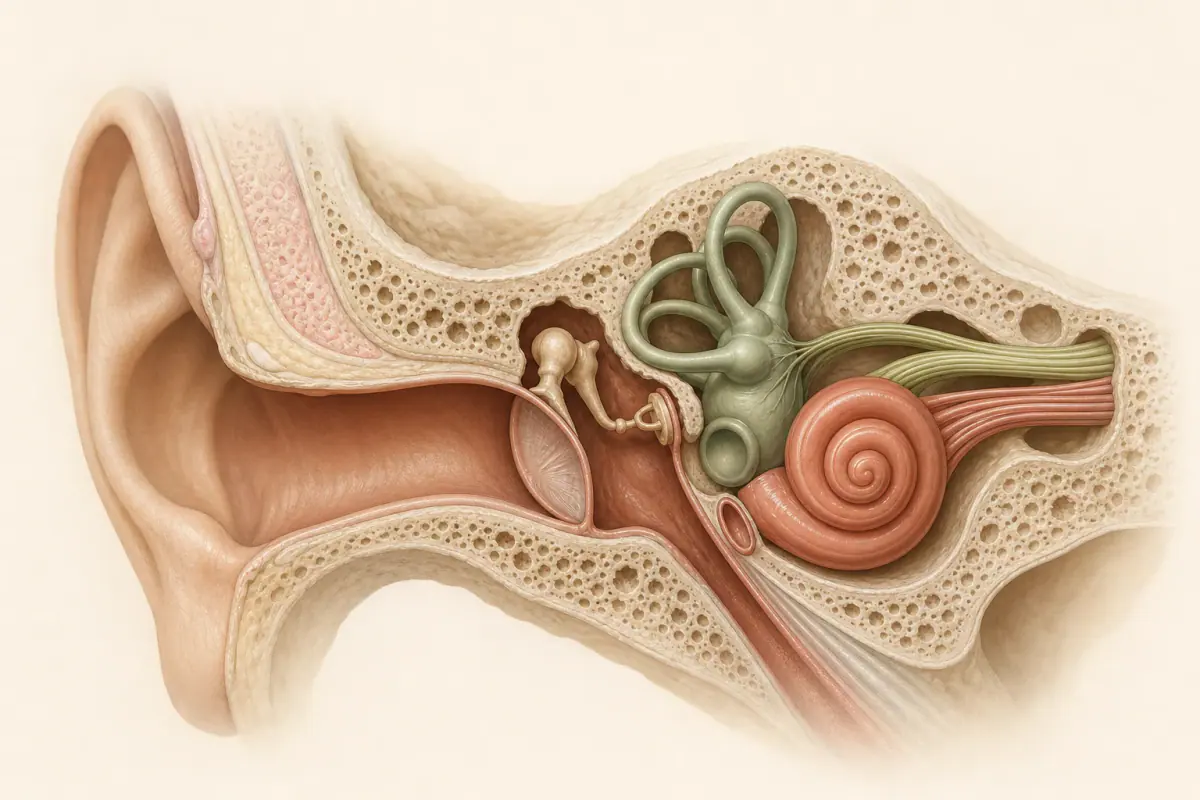
Although the auditory and balance organs are located close to each other, tinnitus, muffled ears, and dizziness must be evaluated through a combination of ear examinations and hearing and balance assessments.
Conceptual reference · NIDCDTime to re-examine the sounds
Discomfort that remains unexplained after ear examinations
While hearing that "there is nothing seriously wrong" may provide some relief, it does not eliminate the sounds that wake you up every night. We do not mix the symptoms that need immediate verification with the daily burden of chronic tinnitus in a single sentence.
Sudden changes in hearing and pulsating sounds
Sudden hearing loss, new onset of tinnitus in one ear, sounds that synchronize with the heartbeat, or new dizziness or neurological symptoms should not be dismissed as familiar chronic tinnitus; these require a medical evaluation first.
Beeps, whirring, low tones; one side or both; during silence or during busy times
By categorizing the pitch and location of the sound, its duration, and the sequence of accompanying fullness, hearing changes, or dizziness, it becomes clear what needs re-verification and what should be managed through routine clinical care.
Disrupted sleep and concentration, more critical than the volume of the sound
Rather than simply rating tinnitus intensity from 0 to 10, we also record the time it took to fall asleep, the number of times you woke up during the night, and instances where you had to give up reading or attending meetings.
Physical condition changes accompanying symptoms
When tinnitus coincides with changes in sleep, headaches, or neck tension
The fact that sounds become clearer in a quiet place is not the same as continuous damage inside the ear. We separately identify nights when attention is captured by the sound and days when physical tension and poor recovery increase the burden of tinnitus.
Nights when it is harder to ignore the sound as sleep becomes shallower
When early morning awakenings, pulsating sounds, and next-day fatigue persist, vigilance toward the sound easily increases. In such cases, we track the cycle of sleep and hyperarousal on the same calendar as the tinnitus records.
Days when headaches, facial heat, and neck/shoulder tension overlap
We check if upper body heat, temple headaches, teeth-clenching habits, and changes according to neck movement recur on the same day. It is difficult to explain all tinnitus through posture alone.
Delayed recovery following fullness, mild dizziness, or nausea
If an attack has ended but your head feels heavy and your energy has not returned, we narrow down the priority of the prescription by reviewing ear symptoms alongside digestion, body heat, and recovery time.
Where examinations and records meet
Examinations that explain the sound, records that explain the day
Hearing tests show the condition of the ear, while daily records show the traces tinnitus leaves on a day. Neither replaces the other; instead, they are placed on the same timeline.
Hearing tests and ear examinations
We align the test name, date, and results with the period before and after the onset of tinnitus. If new changes in hearing occur, we do not delay re-evaluation simply because previous results were fine.
Medications, noise, and changes in the jaw and neck
We distinguish the causes by recording new medications or dosage changes, exposure to loud noise, teeth-clenching habits, and changes according to neck movement.
A Single-Line Record of Sleep, Focus, and Recovery
Recording the time when the sound is loudest, the time you fell asleep, the number of times you woke up, and the time it took to resume your work in a single line makes it easier to compare lifestyle changes before and after treatment.

Changes in tinnitus care are confirmed not only by the volume of the sound, but also by the duration of reading or working and the ability to remain calm during a quiet night.
The starting point of herbal medicine prescriptions
Rather than erasing the sound, we reduce the bodily conditions that cause the sound to increase
Tinnitus treatment with Korean herbal medicine is not a method of using the same prescription based solely on the name of the sound. We identify the most consistent axis among body heat, tension, digestion, and energy levels that fluctuated on the days the sound increased to set the priority.
When high-pitched tinnitus occurs with headaches and facial heat
If throbbing in the temples, stiffness in the neck and shoulders, and upper body heat increase following lack of sleep and tension, we first look toward reducing overheating and tension.
When a feeling of fullness, nausea, and head heaviness overlap
When a feeling of pressure in the ears Residual Dizzinessand bloating occur on the same day, we examine patterns where phlegm-fluid (dam-eum) and digestive stagnation disturb the upper sensory organs.
When even small sounds linger and recovery is slow after overwork
In cases where decreased energy, dizziness, dry mouth, and lower back weakness occur alongside poor sleep recovery, we increase the proportion of supplementing the depleted foundation of recovery.
Changes to monitor during treatment
Sleep and concentration you wish to reclaim before the sound
Life does not only return once tinnitus has completely disappeared. The primary goal of care is to reduce the time stolen by the sound and increase the intervals where you can remain present during quiet nights and necessary tasks.
First Record: Separating sound and lifestyle loss
Next to the location, pitch, and duration of the sound, record the time you fell asleep, the number of times you woke up, and the task you had to stop focusing on. We observe whether these two different sets of numbers move in the same direction.
First Adjustment: Starting from the most closely linked axis
We do not address upper body heat, tension, digestive stagnation, and decreased energy all at once. We first address the axis that moved most consistently on the days the tinnitus increased Byeon-jeungfirst.
Next check: The ability to remain in a quiet state
The next prescription is adjusted based on whether the time it takes to fall asleep has decreased, whether you could finish a page of a book or a segment of a meeting without interruption, and whether recovery is faster after the sound increases.

Placing the test name, date of administration, first symptom, accompanying symptoms, and recovery time on the same timeline allows for a more continuous flow of questions during multiple medical evaluations.
Conceptual reference · NICE: Shared decision making · AHRQ: Questions Are the AnswerSame tinnitus, different bodily conditions
Even for the same sound, the starting point for the herbal medicine prescription differs
We first examine the sound and location of the tinnitus, hearing, aural fullnessand whether vertigo overlaps. After necessary ear examinations, we set the goal of Korean herbal medicine treatment according to the degree to which sleep and concentration are disrupted.
Pattern identification is not about grouping various symptoms into a single autonomic nerve issue. While maintaining the causes to be verified in ear, balance, nerve, and heart evaluations, we identify the axis where dizziness, tinnitus, headache, facial movement, sleep, digestion, body heat, and heart rate actually change together to adjust the priority of the prescription.
When high-pitched tinnitus occurs with headaches and facial heat
- Changes observed in the head, ears, and face
- We check for overlapping sharp sounds, temple throbbing, and sensitivity to light and sound.
- Changes observed throughout the body
- We ask if heat in the upper body increases following lack of sleep, tension, or stiffness in the neck and shoulders.
- Prescription Priority
- By reducing upper body heat and tension, we reduce the time during which tinnitus and headaches intensify simultaneously.
When the ears feel blocked, the head feels heavy, and the sound fluctuates
- Changes observed in the head, ears, and face
- We check if a feeling of fullness, mild dizziness, and nausea occur together with changes in sound.
- Changes observed throughout the body
- We check for bloating, phlegm, palpitations, and shallow sleep.
- Prescription Priority
- By reducing phlegm-fluid (Dameum) and hypersensitive upper body reactions, we regulate the pressure in the ears and the burden of the sound.
When tinnitus and a sense of exhaustion persist long after overwork
- Changes observed in the head, ears, and face
- We check if the sound, even if not loud, is clearer at night and if recovery is slow.
- Changes observed throughout the body
- We ask about easy fatigue, dizziness, dry mouth, lower back weakness, and sleep recovery.
- Prescription Priority
- By supplementing Qi, blood, and the foundation for recovery, we increase the interval between fatigue and the intensification of tinnitus.
When your heart races and you cannot sleep as you focus more on the sound
- Changes observed in the head, ears, and face
- We check if your attention becomes fixed on the tinnitus in quiet places and if anxiety increases even with small changes.
- Changes observed throughout the body
- We check for pulsating sounds, waking up in the early morning, cold sweats, and decreased concentration the following day.
- Prescription Priority
- We first stabilize sleep and hyperarousal responses to reduce the time you are preoccupied with tinnitus.
Order of Prescription Adjustment
- First, screen for hearing loss and pulsatile risks
Sudden hearing loss, pulsatile tinnitus, or new neurological symptoms take priority in the evaluation.
- Record the sound and the impact on daily life separately
We evaluate the impairment of sleep, concentration, and anxiety separately from the volume and location of the sound.
- Adjust treatment by observing recovery during quiet hours
We compare the time it takes to fall asleep, early morning awakenings, and the periods during which reading or work is possible.
- Change one priority at a time and verify through daily functioning
Rather than asking only about the volume, we look at the time it takes to fall asleep, discomfort in quiet places, and the extent of recovery in conversation and concentration.
Why consider Korean herbal medicine treatment now?
- When chronic tinnitus continues to interfere with sleep and concentration even after hearing tests and ear examinations
- When the volume of tinnitus fluctuates along with overwork, insomnia, headaches, or neck tension
- When recovery from ear fullness, residual dizziness, or lethargy after an episode is slow
What is verified in Korean herbal medicine treatment for this condition
- The location, pitch, and synchronization of the sound with the pulse, and the time of day when it is loudest
- The relationship between the onset of tinnitus and hearing tests, medications, or noise exposure
- Time to fall asleep, number of awakenings, situations where concentration was abandoned, and accompanying headaches or dizziness
Evaluate sudden changes in hearing or neurological function and sounds synchronized with the pulse
We first check for sudden hearing loss, changes in facial sensation or balance, and sounds that match the heartbeat.
Record the sound and its impact on daily life
We simultaneously check the location, rhythm, and duration of the sound, as well as hearing, dizziness, and changes in sleep, concentration, and mood.
Focus only on recurring discomfort after standard evaluation
After maintaining ear examinations, hearing tests, and cause-specific treatments, we set the goals for Korean herbal medicine treatment for the remaining tinnitus discomfort.
Things to prepare before the consultationPlease prepare information regarding the sound, location, onset, duration, and whether the tinnitus matches your pulse, as well as its impact on your hearing, dizziness, sleep, and concentration.
If new paralysis, slurred speech, gait disturbance, sudden hearing loss, thunderclap headache, chest pain, dyspnea, or fainting occurs, a prompt medical evaluation is required even if previous tests were normal. After ruling out these exceptions, we focus on herbal medicine treatment for chronic, recurrent, and recovery-phase symptoms.
Consult using tinnitus daily recordsDizziness, Ear, Head, and Face Glossary
Additional information to know about tinnitus
You can check simple definitions before proceeding to detailed explanations.Frequently Asked Questions
Frequently asked questions about tinnitus
What does tinnitus sound like?
It can be experienced in various ways, such as ringing, whistling, rushing, roaring, clicking, pulsating, or even like music.
Is tinnitus in only one ear more dangerous?
If tinnitus newly develops in one ear and persists, or is accompanied by hearing loss or neurological symptoms, a prompt evaluation of the cause is required.
Why does tinnitus feel louder at night?
Tinnitus may become more prominent as ambient noise decreases; the impact on sleep is also evaluated.
What does pulsatile tinnitus feel like?
It can be felt as a rhythmic sound, such as pulsating or rushing, that matches the speed of your heartbeat.
Why does tinnitus occur?
While hearing loss and noise exposure are commonly associated, it can also be caused by medications, ear diseases, trauma, temporomandibular joint issues, vascular problems, or remain unexplained.
Can earphones cause tinnitus?
Since exposure to loud noise is linked to tinnitus and hearing loss, we check the volume, exposure time, and changes in hearing.
Will tinnitus disappear if I stop taking my medication?
Even if there is a possibility of medication-related causes, do not stop taking them arbitrarily; consult your prescriber to determine the risks and availability of alternatives.
What should I record when seeking Korean herbal medicine treatment for tinnitus?
Please note whether the tinnitus is in one ear or both, and whether it is a ringing sound or matches your pulse pulsatile tinnitusand record it. Also, prepare information on the time of onset, hearing test results, and the impact on your sleep.
Does Korean herbal medicine treatment for tinnitus replace existing tests or treatments?
sudden hearing loss, if there is slurred speech, one-sided paralysis, or a severe new headache, do not wait for herbal medicine treatment. Herbal medicine treatment goals are set when dizziness and ear symptoms recur or recovery is slow even after necessary acute treatment.
Do I still need to bring my records even if my tinnitus test results were normal?
We will re-evaluate if you experience a sudden drop in hearing, or if new unilateral or pulsating tinnitus develops after the test. Please let us know the date of the test and any changes in the sound.
Evidence and Update Information
This content was compiled by Korean medicine doctor Choi Yeon-seung based on the official professional materials and disease-specific clinical data below, and was updated on 2026-08-26.
- NIDCD: Ménière’s DiseaseConnection between episodic dizziness and hearing loss, tinnitus, and ear fullness
- NIDCD: Sudden DeafnessEmergency evaluation boundaries for sudden unilateral hearing changes
- NIDCD: TinnitusBasic information for assessing tinnitus hearing, sound characteristics, and daily burden
- NICE: Tinnitus: assessment and managementEvaluation and referral criteria for distinguishing hearing changes, pulsating patterns, and life impact in tinnitus
- AAO-HNSF: BPPV clinical practice guideline updatePositional testing, canalith repositioning procedure, re-evaluation, and residual symptom management criteria for BPPV
- NHS: Ménière’s diseaseEpisodic combinations of dizziness, hearing loss, tinnitus, and ear pressure, and daily safety guidelines
- Bárány Society: Vestibular neuritis criteriaDiagnostic criteria for acute persistent vestibular syndrome and vestibular neuritis, and symptoms to observe when distinguishing central causes