How to Read Treatment Progress
Korean Medicine Treatment for Residual Dizziness When Vertigo Attacks Decrease but Brain Fog Persists Until the Next Day
If walking inside the home is possible after the spinning sensation stops, but discomfort returns in supermarkets, vehicles, or when looking at screens, we identify the remaining stages of returning to daily life after suppressing attacks to set goals for herbal medicine treatment, acupuncture treatment, and necessary rehabilitation.
Even if the frequency and intensity of attacks have decreased, if returning to supermarkets, vehicles, or screens is slow and grogginess remains the next day, the stage of enduring complex stimuli and the stage of restarting daily life the next day must be verified separately.
| Treatment Focus | Question | Current Status |
|---|---|---|
| Attack | Have the frequency, intensity, and duration decreased? | Onset and Offset |
| Residual Dizziness | Do you feel unsteady even if it is not spinning? | Walking and Turning Head |
| Brain Fog and Fatigue | When do your concentration and ability to eat return? | Time of return to work |
| Complex stimuli | How long can you tolerate supermarkets, vehicles, or screens? | Daily activity duration |
| Next day's daily life | After sleeping, do walking, eating, screen use, and work return to normal? | Time of waking up and first activity |
Changes in reduced attacks and discomfort lasting until the next day are handled separately
vertigoIf attacks have decreased from four times a week to once, or if the duration of a single attack has shortened, the attacks themselves have clearly changed. There is no need to disregard these improvements simply because fatigue remains the next day.
On the other hand, if instability, brain fog, and nausea persist even after the spinning sensation ends, further treatment is needed for the recovery phase. It is natural to shift the goal from reducing the number of attacks to reducing the time it takes to return to daily life.
First, we maintain the improvement in reduced attacks, and then we target the long-lasting residual dizziness for the next stage of treatment.
Even after the spinning sensation stops, visual, vestibular, and somatosensory systems may not stabilize immediately
Balance is not created by vestibular information from the ear alone. Since visual movement and the somatosensory input from the feet and joints must be realigned in the brain, you may experience a floating sensation while walking, brain fog, or nausea when looking at a screen after an attack.
Residual dizziness after a canalith repositioning procedure, vestibular Migrainesensory hypersensitivity, neck tension, and sleep deprivation each require different recovery methods. Rather than focusing on a single name for the attack, treatment should continue based on in which situations the remaining discomfort increases.
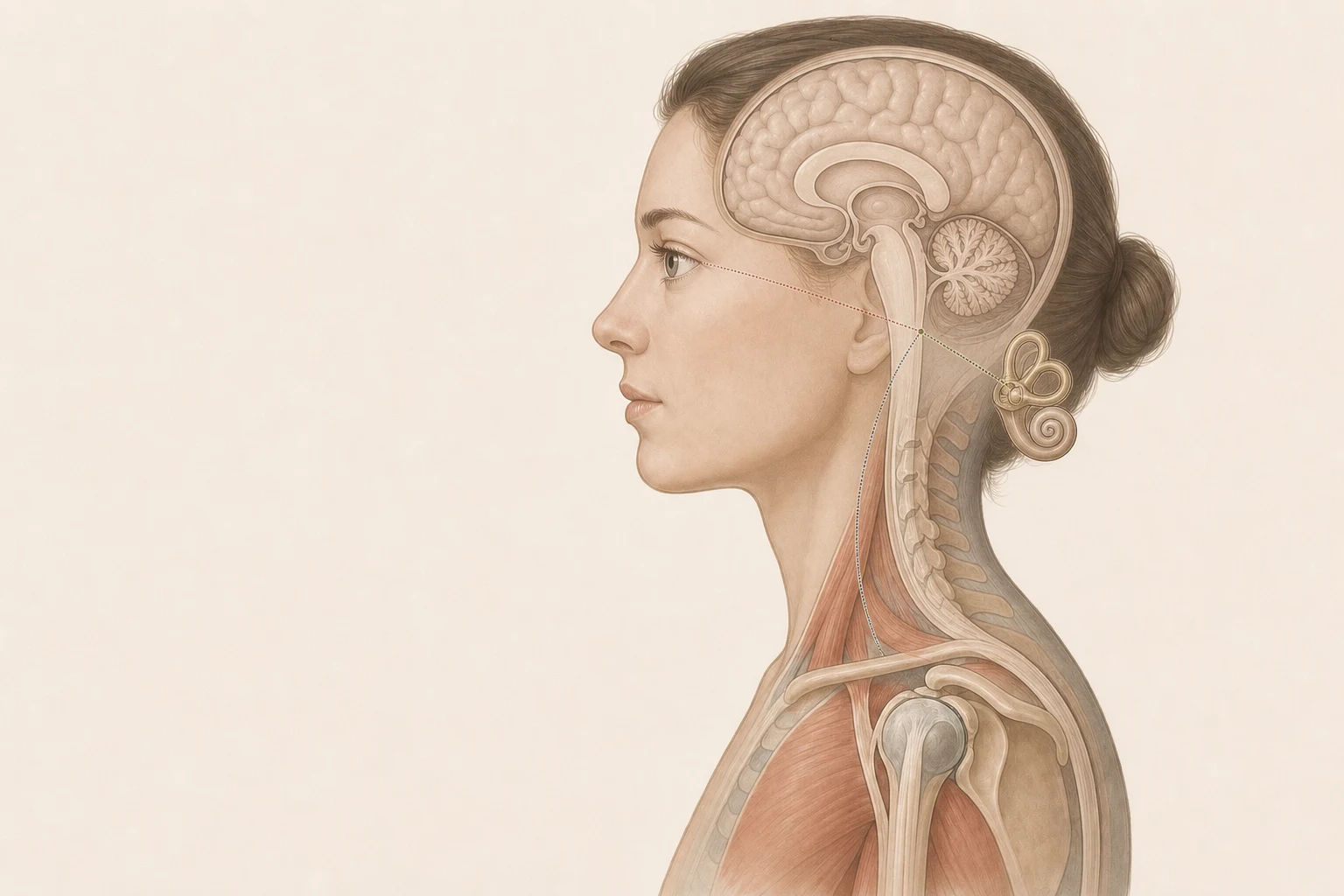
Balance is maintained not only by information from the ears but by processing visual, vestibular, and somatic sensory information together.
Immediately after an attack, eating, hydration, and short walks return before screen use and driving
If you resume long drives or screen-heavy work immediately after the spinning sensation stops, the remaining sensory sensitivity may be felt strongly again. Stay hydrated, eat light meals, walk for short periods in a safe space, and move your head slowly to gradually expand your daily activities.
Staying in bed all day and avoiding movement can also slow down recovery. It is important to engage your body's senses within a range where there is no risk of falling, but without overdoing it all at once to the point where symptoms spike significantly.
- Prioritize recovering nutrition and hydration
- Start with short walks and slow head movements
- Gradually resume screen use, driving, and complex outings according to your level of recovery
If returning to supermarkets, vehicles, or screens is delayed, complex stimuli and next-day daily recovery are still pending
If walking at home and short outings have improved, but swaying or nausea increases when looking at supermarket shelves, movement outside a car window, or during long screen work, it means discomfort still remains regarding complex visual and motion stimuli following basic movement. In this case, do not just note whether you succeeded, but record how many minutes you could manage and when you returned to your normal state after resting.
Even if you endured the day's schedule, if you wake up late the next day or postpone meals, walking, screen use, or work, it means the recovery has extended beyond a single day. Recording the time spent at the supermarket, vehicle travel time, continuous screen time, and the time of your first activity the next day helps determine what to prioritize after the treatment to reduce attacks.
- Time spent in the supermarket and the time you needed to rest after leaving
- Vehicle travel time and the time when motion sickness or brain fog subsided
- Continuous screen use time and the time you looked at a screen again the next day
- The time you had your first meal, walked, or started work the next day
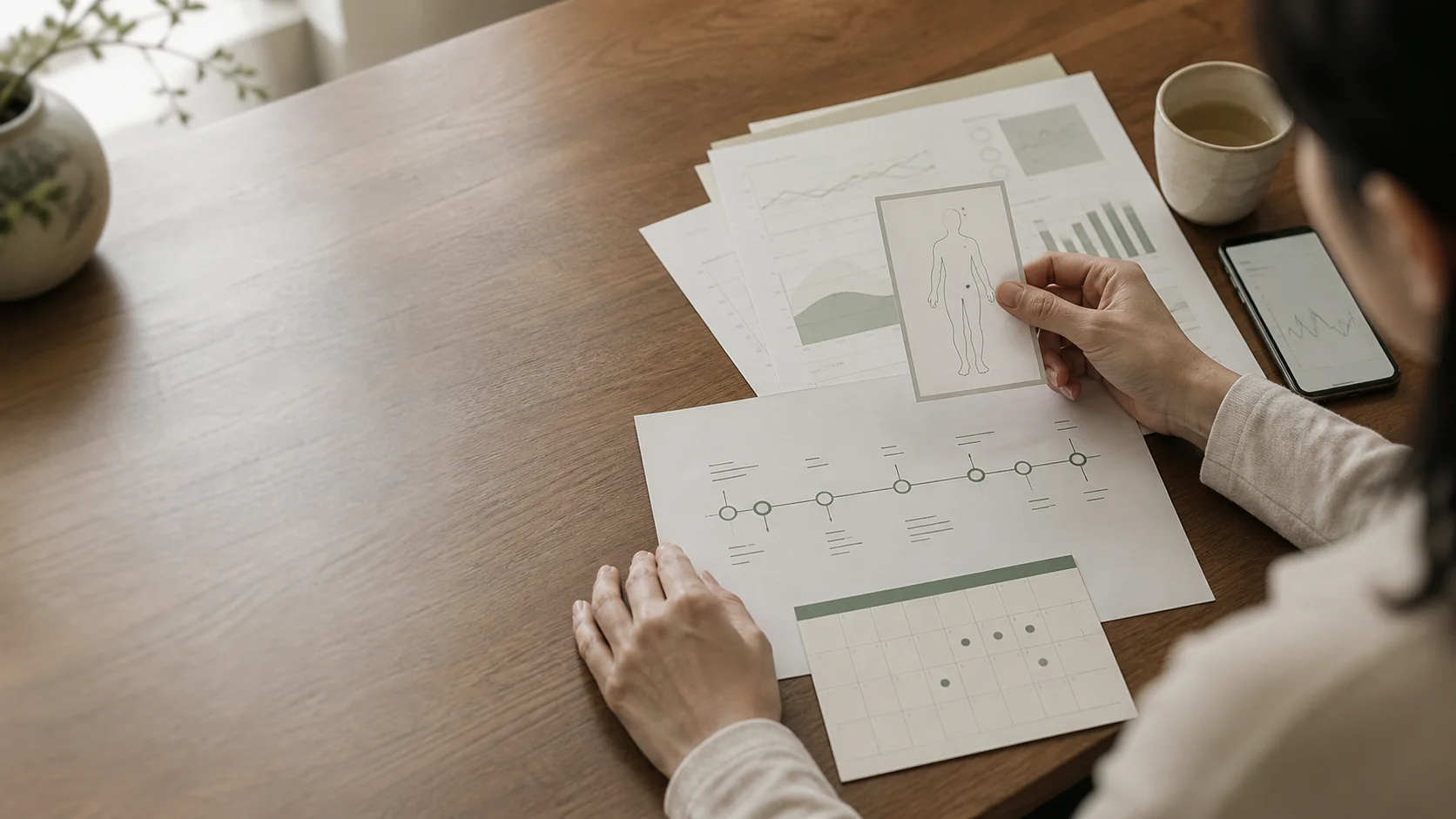
Placing the test name, date of administration, first symptom, accompanying symptoms, and recovery time on the same timeline allows for a more continuous flow of questions during multiple medical evaluations.
Korean medicine treatment also addresses the recovery of the neck, digestion, and sleep that remain after an attack
The focus of treatment differs even for the same residual dizziness depending on whether the patient has a stiff neck and headache after an attack, skips meals due to nausea, or has shallow sleep leading to prolonged brain fog the next day. If hearing tinnitusor a feeling of fullness in the ears has also changed, evaluation and management of the ears must also continue.
The Korean herbal medicine treatment at Baekrokdam addresses combinations of nausea, digestion, sleep, fatigue, and sensory hypersensitivity that hinder recovery. Acupuncture treatment is performed in parallel to reduce tension in the neck, headaches, and the sense of balance, and necessary Vestibular Rehabilitationtreatments are coordinated with existing treatments within a single plan.
The next goal of treatment is to reduce the time it takes to return to walking, eating, screen use, and work
Even if only the frequency of attacks has decreased, the treatment has partially responded. For recovery of daily life to be achieved, the time it takes to climb stairs, eat, use a screen, and start work the day after an attack must be faster than before.
The next prescription does not treat the already reduced attacks from the beginning. Instead, it focuses on shortening the time dizziness dominates the entire day by reducing remaining brain fog, nausea, neck tension, and sleep discomfort.
Even if attacks have decreased, if returning to supermarkets, vehicles, or screens is delayed, the stage of enduring complex stimuli remains; if daily life becomes difficult again the day after activity, the stage of completing recovery within one day remains. Record activity duration and the time of the first activity the next day to determine the goals for the next Korean medicine treatment, acupuncture, and rehabilitation.
Evidence and Update Information
Dr. Choi Yeon-seung, a Doctor of Korean Medicine, organized this based on the materials below and updated the content on 2026-09-02.
- NIDCD: Balance disordersBasic pathway for evaluating imbalance and the equilibrium system that may remain after an attack
- NIDCD: Ménière’s diseaseClinical context when dizziness occurs alongside hearing loss, tinnitus, and ear fullness
- ICHD-3: Vestibular migraineTemporal relationship between dizziness attacks, headaches, and sensory sensitivity
- Residual dizziness after successful repositioningA prospective study examining the progression of mild clouding and instability that remains even after the spinning sensation ends following a canalith repositioning procedure
- Residual dizziness after BPPV management reviewA review of possible mechanisms for residual dizziness and the process of returning to daily life and rehabilitation
- NHS: VertigoBasic guidelines for moving safely in daily life after rotational dizziness