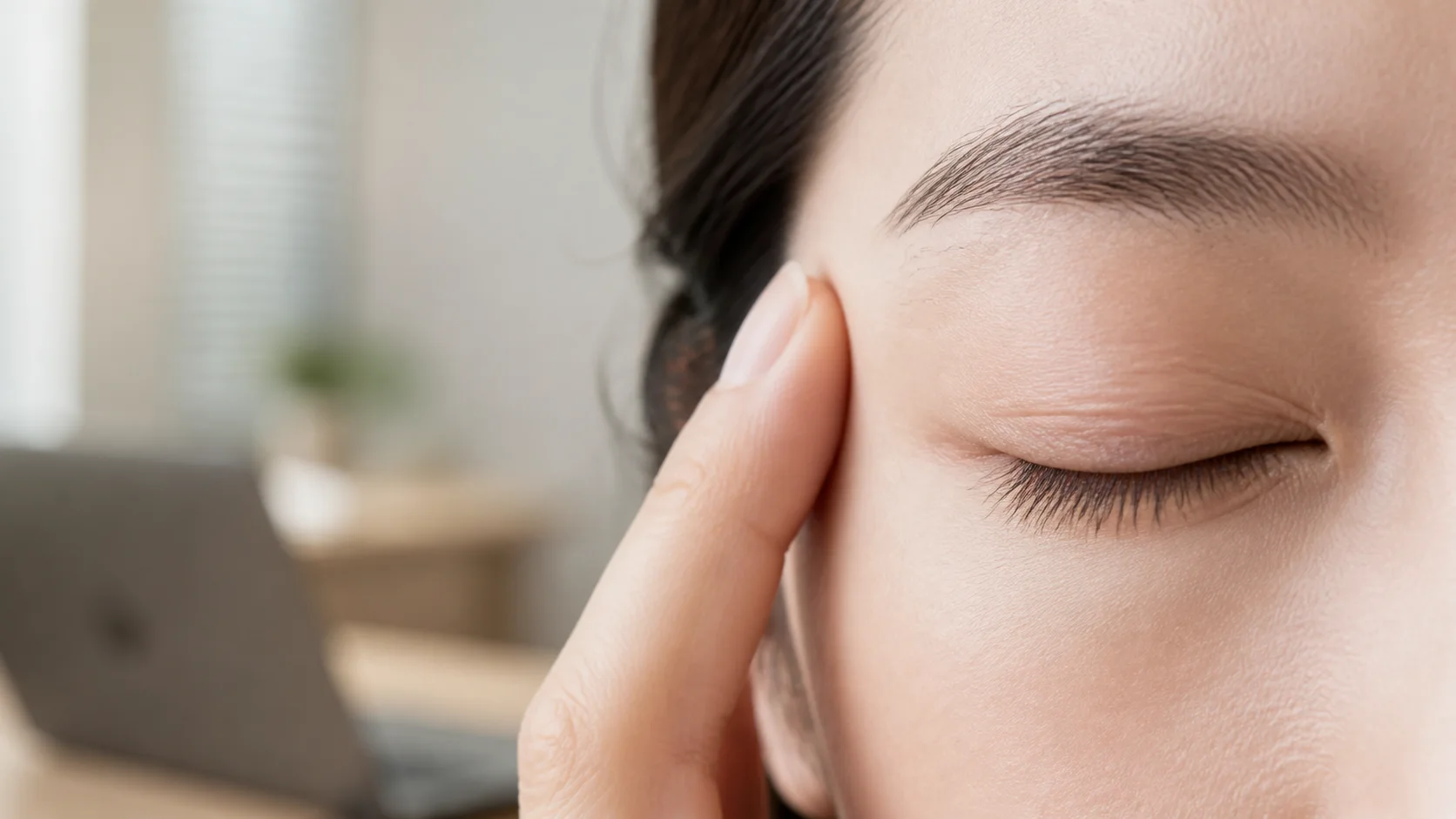
Eyelid twitching: Read in order of your curiosity
Before grouping symptoms under a single name
Check whether only the eyelid is twitching or if other parts of the face are moving
Common eye twitchingis eyelid myokymia, where the upper or lower eyelid of one side moves in thin, fast, fluttering motions; it may fluctuate for a few days following fatigue, lack of sleep, stress, or caffeine. This is different from blepharospasm, where the eyelids close tightly or it is difficult to open both eyes, and hemifacial spasm, where twitching spreads from around one eye to the corner of the mouth. You should seek medical evaluation if the twitching persists for several weeks, spreads to the face or body, or is accompanied by drooping eyelids, weakness, stiffness, redness, swelling, or discharge.
Distinguishing patterns of eye twitching
You must carefully observe the extent of the movement
Do not look only at the duration; check the intensity and range of contraction along with eye and neurological symptoms.
| Observed Pattern | Possible Classification | Next action |
|---|---|---|
| Fine trembling of one eyelid | Common eyelid myokymia (minor twitching) | Record progress while adjusting sleep, caffeine intake, and screen time |
| Frequent blinking and forceful closing of both eyes | Possibility of blepharospasm | Ophthalmology or neurology evaluation |
| Pulling sensation from one eye down to the mouth and cheek | Possibility of hemifacial spasm | Evaluation of range and cause at a neurology clinic |
| Accompanied by drooping, double vision, paralysis, or changes in speech | Sudden onset of neurological symptoms | Immediate emergency or neurology evaluation |
When to seek medical attention first
Eyelid twitching symptoms that require prompt medical evaluation
The following symptoms require checking for ophthalmological or neurological causes first, rather than being treated as simple, temporary eyelid micro-twitches.
- Drooping eyelids, difficulty opening eyes, double vision, or changes in visual field
- Weakness in one side of the face, arm, or leg, slurred speech, or accompanied by a severe new headache
- Repeated strong spasms that cause the eyelid to close completely or spread to the corners of the mouth
- Accompanied by severe eye redness, pain, swelling, discharge, and decreased vision
Do not dismiss these symptoms for too long by simply attributing them to fatigue
If eyelid twitching persists despite improving sleep or spreads to other parts of the face
Eyelid twitchingis commonly linked to fatigue, caffeine, and eye irritation, but if it persists or is accompanied by contraction of one side of the face, eyelid closure, or vision changes, other causes must be identified. In Korean herbal medicine treatment, we look not only at the twitching but also at sleep, eye fatigue, tension, and recovery capacity.
Specify which eye and which area is affected
Record whether it is the upper or lower eyelid, one side or both sides, the duration, and whether it is severe enough to close the eye.
Do not eliminate all fatigue factors at once
Identify only the items among sleep, caffeine, screen time, and dry eyes that consistently coincide with the twitching.
Observe if it spreads to the entire face
If the twitching pulls the cheek or mouth to the same side, or if the eye closes forcibly, prioritize a neurological evaluation.
Treatment GoalReduce the time spent worrying about screens and conversations due to eyelid twitching, while ensuring other facial spasms are not overlooked.
Consult about eyelid twitching
New facial asymmetry requires prompt medical evaluation, while for intermittent twitching, providing a video showing the entire face is helpful.
Photos show daily life scenes where symptoms appear, and explanatory diagrams simplify how reactions in the ears, balance, nerves, and the entire body are connected. They do not represent an individual's diagnostic or treatment results.If you have had these experiences
If eyelid twitching persists despite improving sleep or spreads to other parts of the face
Even after resting and reducing caffeine, some people Tremorexperience persistent eyelid twitching and worry if it is a condition that spreads across the entire face. We first distinguish common fatigue-related twitching from other facial movements.
Those whose eyelid twitches repeatedly in the same area for several days despite getting more sleep
When it recurs for several weeks even after managing sleep, caffeine, and eye irritation
Those whose twitching increases after screen work and tension, making them self-conscious about their gaze during conversations
When eye fatigue, headaches, and neck tension increase along with the twitching
Those who need a diagnosis because the movement spreads to the cheeks and mouth or becomes severe enough to close the eye
When screens, conversations, or sleep are disrupted by twitching even after a cause evaluation
This is how we approach the medical evaluation
Eyelid twitching: the sequence of symptom onset and symptoms to check first
Eyelid twitching is commonly linked to fatigue, caffeine, and eye irritation, but if it persists or is accompanied by contraction of one side of the face, eye closure, or changes in vision, other causes are investigated. In Korean herbal medicine treatment, we look not only at the twitching but also at sleep, eye fatigue, tension, and recovery capacity.
Specify which eye and which area is affected
Record whether it is the upper or lower eyelid, one side or both sides, the duration, and whether it is severe enough to close the eye.
Do not eliminate all fatigue factors at once
Identify only the items among sleep, caffeine, screen time, and dry eyes that consistently coincide with the twitching.
Observe if it spreads to the entire face
If the same side of the cheeks or mouth is pulled or the eye closes involuntarily, a neurological evaluation is prioritized.
Reasons why it may not heal easily
Physical conditions that accompany days when eyelid twitching persists
Eyelid twitching is commonly linked to fatigue, caffeine, and eye irritation, but if it persists or is accompanied by contraction of one side of the face, eye closure, or changes in vision, other causes are investigated. In Korean herbal medicine treatment, we look not only at the twitching but also at sleep, eye fatigue, tension, and recovery capacity.
Note whether it is the upper or lower eyelid, and if it affects one or both sides.
Use a mirror or a short video to record the starting area and the duration.
Check if the eyelid closes.
Distinguish between a subtle tremor and a strong contraction that obstructs your vision.
Check if it spreads to the cheeks or the area around the mouth.
If the pulling sensation extends to the lower part of the same side of the face, do not dismiss it as simple fatigue-induced twitching.
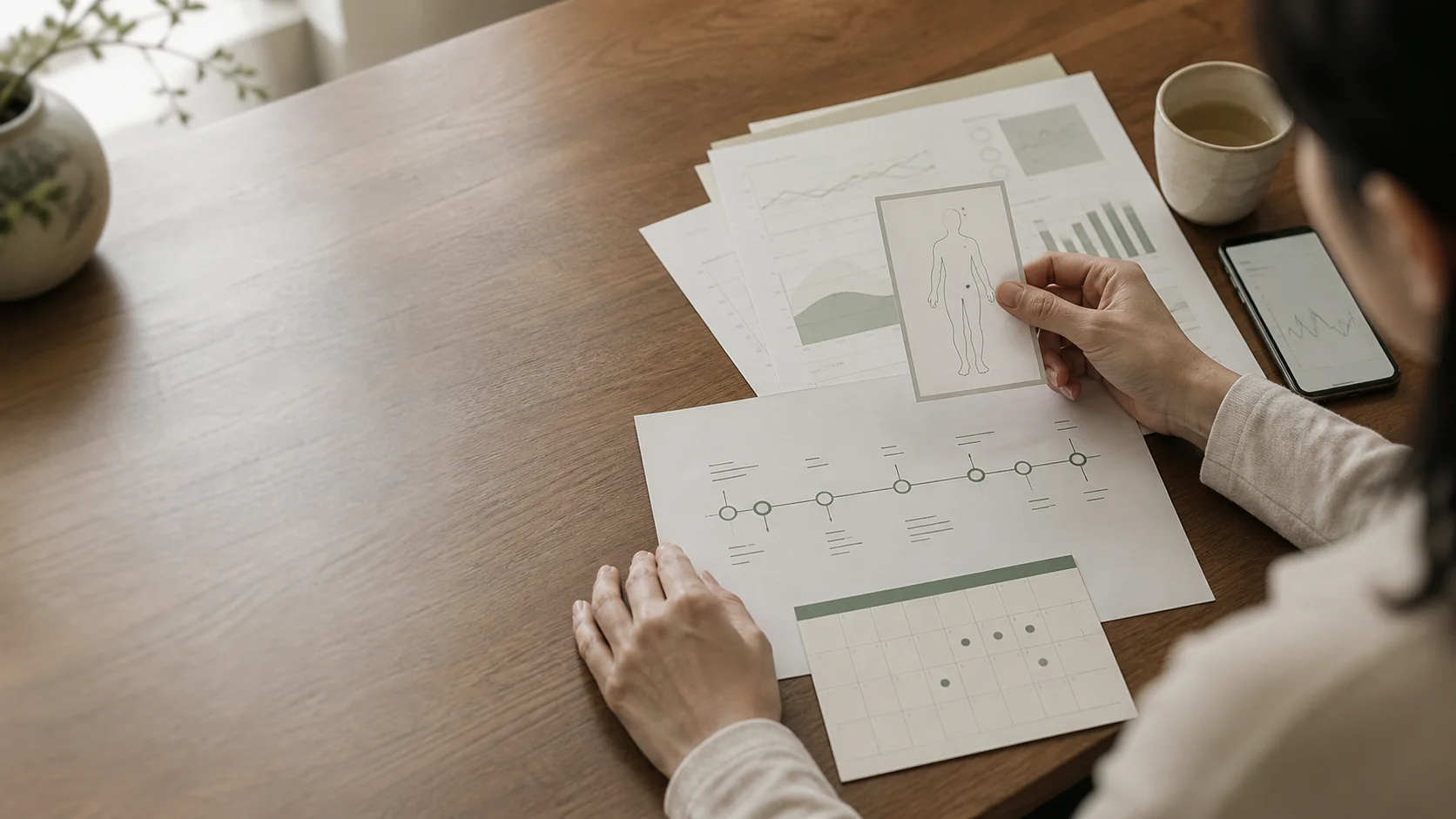
Placing the test name, date of administration, first symptom, accompanying symptoms, and recovery time on the same timeline allows for a more continuous flow of questions during multiple medical evaluations.
Conceptual reference · NICE: Shared decision making · AHRQ: Questions Are the AnswerTest and lifestyle records
How to place test results and lifestyle records on a single timeline
Please provide a short video showing the twitching area and the time it started.
First, check for spreading and whether the eye closes.
Facial Spasm This covers the range where a nerve evaluation is required.
Observe the relationship between sleep, screen time, and caffeine intake.
Instead of vague restrictions, identify specific conditions that repeatedly worsen the symptoms.
Adjust based on the amount of time spent looking at a screen comfortably.
Compare the frequency of twitching with the level of distraction it causes.
Korean herbal medicine pattern identification for eyelid twitching
If eyelid twitching persists despite improving sleep or spreads to other parts of the face, Korean herbal medicine treatment categorizes it into four types.
First, distinguish whether only the eyelid is twitching or if the cheeks and mouth are also moving, as seen in hemifacial spasm. The goal of Korean herbal medicine treatment is then determined by reviewing sleep, caffeine intake, eye fatigue, and recovery time.
When twitching and dryness occur after prolonged eye use
Check if the eyelid twitches and vision fatigues easily after using a screen or reading. Inquire about dizziness, paleness, menstruation, and coldness in the hands and feet. Fatigue-induced twitching is reduced by supplementing the blood and the eye's foundation for recovery.
When sleep is shallow and twitching occurs even with small stimuli
We check if the tremors increase the day after staying up all night or waking up in the early morning. pulsating· We check for loss of appetite, lethargy, and anxiety. We strengthen sleep and energy to reduce hypersensitive muscle reactions.
When the neck and jaw stiffen and tremble on stressful days
We check if eyelid twitching intensifies during meetings, driving, or conversations. We ask about jaw clenching, neck and shoulder pain, sighing, and sensations of heat rising to the face. We relieve tension and stiffness in the tendons to reduce the frequency of worsening episodes.
Changes to monitor during treatment
The quality of life you wish to recover before addressing eyelid twitching
We aim to reduce the time spent worrying about screens and conversations due to eyelid twitching, while ensuring other facial spasms are not overlooked.
Short videos of upper/lower eyelids, one side/both sides, and the duration of symptoms during the day
In the first consultation, these criteria serve as the current starting point. We aim to reduce the time spent worrying about screens and conversations due to eyelid twitching, while ensuring other facial spasms are not overlooked.
Sleep duration, caffeine, screen time, dry eyes, and the timing of twitching
We adjust treatment priorities by comparing changes over several days rather than relying on a single good day. We aim to reduce the time spent worrying about screens and conversations due to eyelid twitching, while ensuring other facial spasms are not overlooked.
Changes in cheeks, spreading to the mouth, eye closing, vision, or headaches
The direction of the next medical evaluation is determined based on the lifestyle the patient wishes to return to. We aim to reduce the time spent worrying about screens and conversations due to eyelid twitching, while ensuring other facial spasms are not overlooked.
At the crossroads of test results and recovery speed
If eyelid twitching persists despite improving sleep or spreads to other parts of the face, Korean herbal medicine treatment categorizes it into four types
We first distinguish whether only the eyelid is twitching or if the cheeks and mouth are also moving, as seen in hemifacial spasm. We set the goal for Korean herbal medicine treatment by observing sleep, caffeine intake, eye fatigue, and recovery time.
Pattern identification is not about grouping various symptoms into a single autonomic nerve issue. While maintaining the causes to be verified in ear, balance, nerve, and heart evaluations, we identify the axis where dizziness, tinnitus, headache, facial movement, sleep, digestion, body heat, and heart rate actually change together to adjust the priority of the prescription.
When eyes twitch and feel stiff after prolonged use
- Changes observed in the head, ears, and face
- We check if the eyelids twitch and vision fatigues easily after using screens or reading.
- Changes observed throughout the body
- We ask about dizziness, paleness, menstruation, and coldness in the hands and feet.
- Prescription Priority
- We reduce fatigue-induced twitching by supplementing the foundation for blood and eye recovery.
When sleep is light and twitching occurs even with small stimuli
- Changes observed in the head, ears, and face
- Check if twitching increases the day after staying up all night or waking up in the early morning.
- Changes observed throughout the body
- Check for throbbing, loss of appetite, lethargy, and anxiety.
- Prescription Priority
- Reinforce sleep and energy to reduce hypersensitive muscle reactions.
When the neck and jaw stiffen and twitch on stressful days
- Changes observed in the head, ears, and face
- Check if eye twitching becomes more concentrated during meetings, driving, or conversations.
- Changes observed throughout the body
- Ask about jaw clenching, neck and shoulder pain, sighing, and sensations of heat rising to the upper body.
- Prescription Priority
- Relieve tension and stiffness of the tendons and muscles to reduce episodes of worsening symptoms.
When headache, heat sensation in the eyes, and heaviness in the head overlap
- Changes observed in the head, ears, and face
- Check if twitching occurs on the same day as bloodshot eyes, temple pain, or dizziness.
- Changes observed throughout the body
- Check for bloating, phlegm, light sleep, and facial heat.
- Prescription Priority
- Control accompanying discomfort by reducing phlegm-heat and hypersensitivity in the upper body.
Order of Prescription Adjustment
- First, check for spreading of symptoms and eyelid closure
Identify cases that require neurological evaluation, such as facial spasms.
- Observe the time relationship between sleep, screen use, and caffeine
Look for repeated conditions that worsen symptoms rather than applying vague prohibitions.
- Adjust based on the amount of time spent viewing screens comfortably
Compare the frequency of twitching with the level of interference with concentration.
- Change one priority at a time and verify through daily functioning
Rather than just counting the number of twitches, check if screen use, driving, and conversation are less hindered and if the twitching does not spread to other parts of the face.
Why consider Korean herbal medicine treatment now?
- When symptoms recur for several weeks despite managing sleep, caffeine, and eye irritation
- When eye fatigue, headache, and neck tension increase along with the twitching
- When screen use, conversation, or sleep are hindered by twitching even after a cause evaluation
What is verified in Korean herbal medicine treatment for this condition
- Short videos showing the upper and lower eyelids, one side or both sides, and the duration of symptoms during the day
- Sleep duration, caffeine intake, screen time, and timing of dry eyes or twitching
- Spreading to cheeks or mouth, eyelid closure, changes in vision or headaches
Check if it remains within the eyelid
Check the range of spread to the upper/lower eyelids, face, and mouth area along with video recordings.
Compare changes in sleep and caffeine intake
Record the onset time after overtime work, screen work, or caffeine intake, and the time it takes to decrease after resting.
Track the duration of time without twitching
When there is no acute neurological risk, check the response to herbal medicine treatment along with recovery from sleep deprivation and fatigue.
Things to prepare before the consultationIf you provide videos of the eyelid twitching, records of onset timing, sleep, and caffeine, as well as current medications and test results from ophthalmology or neurology, we can determine during the consultation whether further testing is a priority or if supportive herbal medicine treatment can be considered.
If new paralysis, slurred speech, gait disturbance, sudden hearing loss, thunderclap headache, chest pain, dyspnea, or fainting occurs, a prompt medical evaluation is required even if previous tests were normal. After ruling out these exceptions, we focus on herbal medicine treatment for chronic, recurrent, and recovery-phase symptoms.
Consult about eyelid twitchingDizziness, Ear, Head, and Face Glossary
Additional information regarding eyelid twitching
You can check simple definitions before proceeding to detailed explanations.Frequently Asked Questions
Frequently Asked Questions about eyelid twitching
Do I need to receive treatment for eyelid twitching immediately?
Mild twitching of one eyelid can be monitored after getting enough rest and sleep and adjusting caffeine intake. Please seek medical evaluation if it persists for several weeks, becomes stronger, or spreads to other areas.
Will eating foods that are good for eyelid twitching help me recover faster?
There is insufficient evidence that specific foods treat eyelid twitching. Maintain regular meals and sleep, and only confirm through tests and consultation if a deficiency is suspected.
Is an MRI used for eyelid twitching tests?
Typical micro-twitching is often determined through medical history and physical examination. Imaging tests are selected based on the cause if the twitching spreads across the face or if there are neurological abnormalities.
Should I eat foods that are good for eyelid twitching or take magnesium?
Specific foods or magnesium do not treat all types of eyelid twitching. Common eyelid twitching is related to fatigue and stress and can worsen with high caffeine intake, so first try resting and reducing excessive caffeine consumption. If it persists for a long time, spreads to multiple areas, or is accompanied by weakness or stiffness, seek medical evaluation to identify other causes.
What should I record when seeking Korean herbal medicine treatment for eyelid twitching?
Please record the date the eyelid twitching started, which side is affected, and any changes after caffeine intake, lack of sleep, or screen use. It is also helpful to keep a short video showing if it spreads to other parts of the face.
Does Korean herbal medicine treatment for eyelid twitching replace existing tests or treatments?
Sudden paralysis, slurred speech, vision changes, or severe headaches that start like a thunderclap require a neurological evaluation before Korean herbal medicine treatment. Once acute causes are ruled out, we determine goals for concurrent treatment if pain, spasms, or fatigue remain.
Should I bring my records again even if the eyelid twitching test results were normal?
Even if there are no major abnormalities in the tests, we will re-evaluate if the eyelid twitching spreads to other parts of the face or if the eye closes involuntarily. Please bring the start date, videos, and a list of medications used.
How is the progress of Korean herbal medicine treatment for eyelid twitching determined?
We do not look at a single symptom score. We compare the frequency and duration of attacks, activities you can perform again, such as sleeping, eating, walking, using screens, or working, and the time it takes to return to your original state after an attack.
Evidence and Update Information
This content was compiled by Korean medicine doctor Choi Yeon-seung based on the official professional materials and disease-specific clinical data below, and was updated on 2026-08-26.
- NINDS: Bell’s PalsyInformation on symptoms, evaluation, and recovery of peripheral facial nerve palsy
- CDC: Signs and Symptoms of StrokeEmergency pathways for sudden weakness in the face or arms and changes in speech or walking
- AAO-HNSF: Clinical Practice Guideline: Bell’s PalsyInitial evaluation, eye protection, treatment, and re-evaluation criteria for facial nerve palsy
- NHS: Bell’s palsyInitial treatment timing and eye protection guidance for acute unilateral facial nerve palsy
- American Academy of Ophthalmology: Eyelid twitchDistinguishing between fatigue-induced eyelid twitching and spasms where the eye closes or spreads to the face
- NINDS: Hemifacial SpasmTypical range, neurological evaluation, and treatment overview of hemifacial spasm
- Mayo Clinic: Bell’s palsyPatient guidance on distinguishing facial nerve palsy symptoms from other causes such as stroke