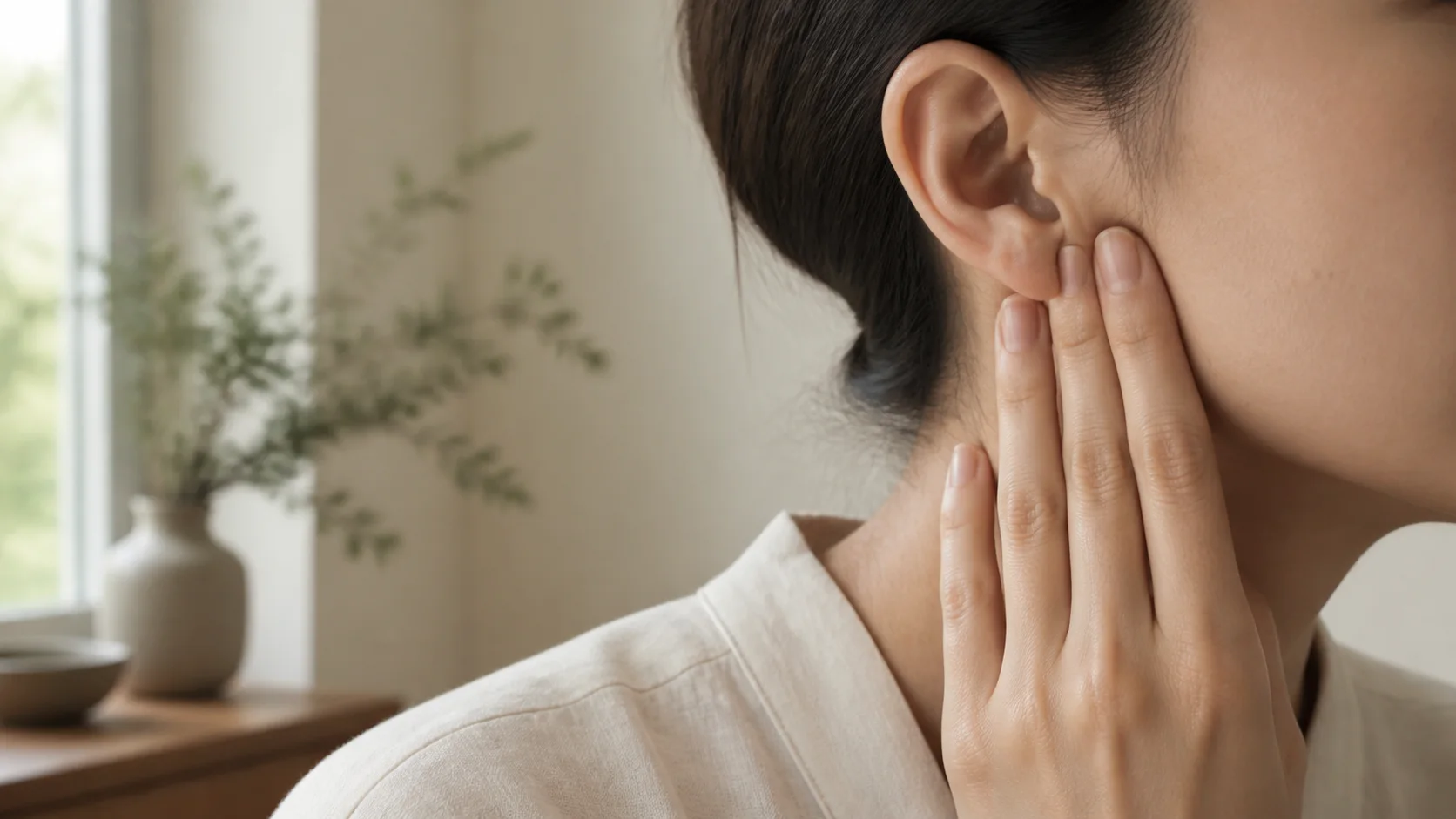
Ear fullness: Read in the order of your curiosity
Before grouping symptoms under a single name
Ear fullness is evaluated alongside changes in hearing, tinnitus, dizziness, and the jaw and neck
Ear Fullnessis common when Eustachian tube ventilation is blocked following a cold, rhinitis, or allergies, or when pressure changes during flying or diving; however, earwax, otitis media, TMJ disorders, Meniere's disease, and sudden sensorineural hearing loss can also be causes. In particular, if there is a sudden change in hearing in one ear or if new tinnitus or dizziness occurs, please receive an otolaryngology evaluation on the same day. Even if the fullness subsides first, if tinnitus or instability remains, do not assume they recovered at the same rate; record the start and end times of each symptom separately.
Symptom Presentation and Next Medical Evaluation
Points to Check for Ear Fullness by Situation
| Situation | First Step | Next Step |
|---|---|---|
| Pressure in both ears after a cold | Nose and ear examination | Eustachian tube and middle ear evaluation |
| Pain immediately after flying or diving | Check for pressure-related injury | Tympanic membrane and hearing tests |
| Sudden hearing difference in one ear | Otolaryngology (ENT) on the same day | Exclude sudden sensorineural hearing loss |
| Recurring fullness after examination | Record triggers and hearing | Baekrokdam supportive consultation |
When to seek medical attention first
Symptoms of ear fullness that require prompt medical evaluation
If the following changes occur, prioritize related medical care or emergency evaluation over waiting for a herbal medicine consultation or a scheduled outpatient visit.
- Sudden hearing loss in one ear, tinnitus, or dizziness
- Ear fullness accompanied by facial paralysis, speech impairment, or inability to walk
- Severe ear pain, high fever, or discharge of pus or blood
- Severe dizziness and hearing loss following head trauma or diving
For those who only feel a frustrating sense of ear blockage
If fullness varies according to tinnitus, dizziness, or tension in the jaw and neck even after an ear examination
Ear fullness is a symptom where earwax, the middle ear, the eustachian tube, the inner ear, and sudden hearing changes must be checked first. If the feeling of pressure recurs after examination, start by reorganizing which ear is affected and how it changes with swallowing, altitude, colds, or jaw movement.
Do not use 'blockage' and 'hearing loss' interchangeably
Record separately whether sounds are actually heard less, whether only your own voice echoes, or whether there is only a feeling of pressure.
Check the movement of the ears, jaw, and neck
Check if the fullness changes after swallowing, yawning, flying, clenching teeth, or turning the neck.
Observe the timing of accompanying tinnitus and dizziness
We examine the chronological order to determine if the muffled feeling is a precursor to a seizure, a lingering effect of a cold, or if it intensifies along with fatigue.
Treatment GoalWhile ensuring no hearing risks are overlooked, we aim to reduce the time spent repeatedly swallowing, concentrating, or checking the sensation during outings due to ear pressure.
Consult about muffled ears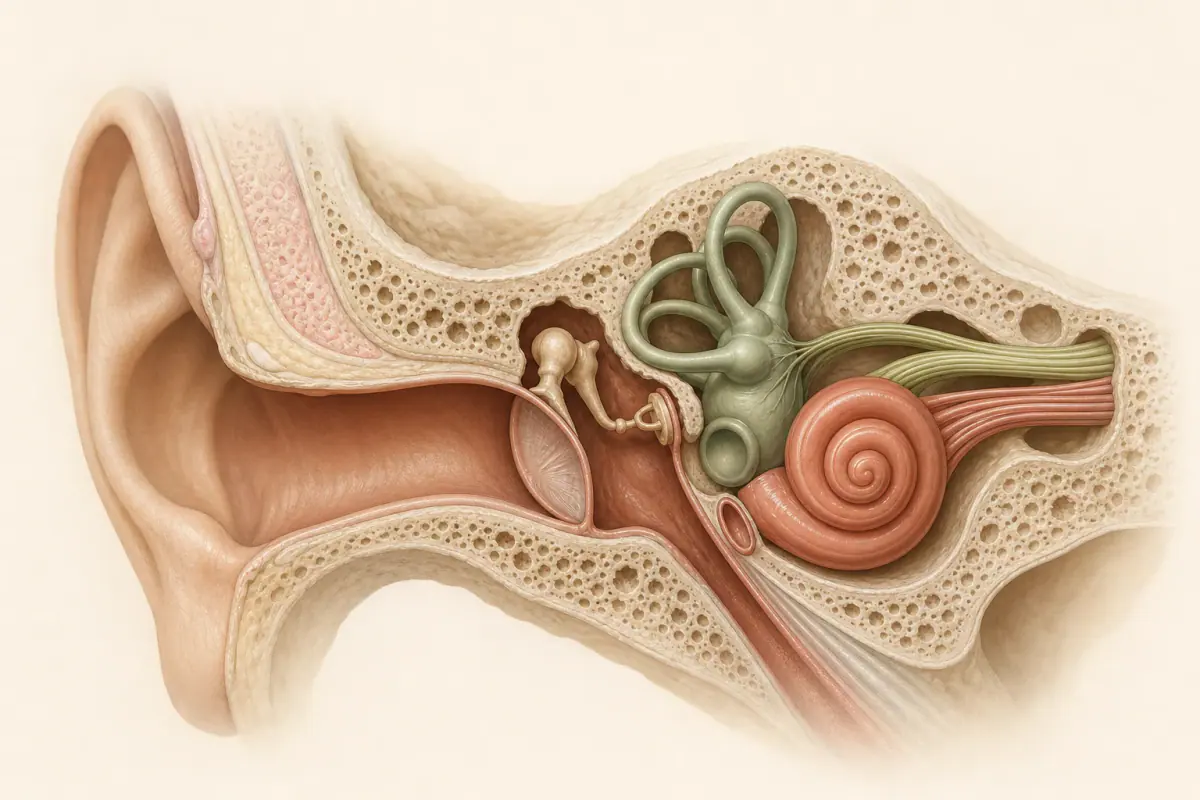
Although the auditory and balance organs are located close to each other, tinnitus, muffled ears, and dizziness must be evaluated through a combination of ear examinations and hearing and balance assessments.
Photos show daily life scenes where symptoms appear, and explanatory diagrams simplify how reactions in the ears, balance, nerves, and the entire body are connected. They do not represent an individual's diagnostic or treatment results.If you have had these experiences
If the muffled feeling varies according to tinnitus, dizziness, or jaw and neck tension even after an ear examination
You may keep swallowing and trying to relieve the pressure because your ears feel blocked, but even after an examination, the muffled feeling tinnitus, dizziness, or jaw and neck tension may cause the sensation to fluctuate. We first distinguish between actual hearing changes and sensory discomfort.
For those who have a lingering muffled feeling after a cold or a flight and constantly check their ears
When pressure chronically recurs even after an ear examination and hearing evaluation
For those whose tinnitus and pressure both intensify on days they are tired, despite normal test results
When the muffled feeling intensifies along with jaw and neck tension or lack of sleep
For those whose ear congestion changes on days they clench their jaw or have a stiff neck
Tinnitus ·Residual Dizziness· When nausea and ear pressure occur on the same day during movement
This is how we approach the medical evaluation
Ear fullness: The sequence of symptom onset and symptoms to check first
Ear fullness is common when Eustachian tube ventilation is blocked following a cold, rhinitis, or allergies, or when pressure changes during flying or diving, but earwax, otitis media, TMJ disorders,Meniere's diseaseand sudden sensorineural hearing loss can also be causes. Record separately which ear is affected, whether actual hearing has decreased, and if it changes with swallowing, altitude, or jaw movement. In particular, if sudden hearing change in one ear or new tinnitus/dizziness occurs, do not dismiss it as chronic fullness and seek an ENT evaluation on the same day first.
Do not treat 'fullness' and 'hearing loss' as the same thing
Record separately whether sounds are actually heard less, whether only your own voice echoes, or whether there is only a sensation of pressure.
Check the coordination of ear, jaw, and neck movements
Check if the fullness changes after swallowing, yawning, flying, clenching teeth, or turning the neck.
Observe the timing of accompanying tinnitus and dizziness
Observe chronologically whether the fullness is a precursor to an attack, remained after a cold, or increases with fatigue.
Reasons why it may not heal easily
Physical conditions that fluctuate together on days when ear fullness persists
Ear fullness is a symptom that requires first checking for earwax, middle ear/Eustachian tube/inner ear issues, and sudden hearing changes. If the pressure sensation recurs even after tests, reorganize the information starting with which ear is affected and how it changes with swallowing, altitude, colds, or jaw movement.
Confirm if there is actual hearing loss
Distinguish whether conversations or phone calls are harder to hear, whether there is only a sensation of pressure, and which ear is affected.
Ask about the resonance of their own voice and breathing
Record whether their own voice sounds loudly resonant, or if it changes when swallowing or yawning.
Note the timing of pain, discharge, or cold symptoms
Check whether ear pain, fever, discharge, or nasal congestion occurred first.

Placing the test name, date of administration, first symptom, accompanying symptoms, and recovery time on the same timeline allows for a more continuous flow of questions during multiple medical evaluations.
Conceptual reference · NICE: Shared decision making · AHRQ: Questions Are the AnswerTest and lifestyle records
How to place test results and lifestyle records on a single timeline
Please provide the hearing test results along with the postures or times when the feeling of fullness changes.
First, identify the cause of hearing loss and ear symptoms
Sudden hearing loss, ear pain, or discharge should be prioritized for the corresponding medical evaluation.
Identify scenarios that change the pressure
Select the conditions that actually cause changes among swallowing, altitude, jaw/neck movement, or having a cold.
Observe times without fullness and levels of concentration
Track how often the patient checks their ears, whether tinnitus or dizziness are present, and their ability to concentrate on work.
Korean herbal medicine pattern identification for ear fullness
If the feeling of fullness varies according to tinnitus, dizziness, or jaw and neck tension even after an ear examination, Korean herbal medicine treatment categorizes this into four patterns
Whether the feeling of fullness occurs with changes in hearing, tinnitus, orvertigoand whether it is linked to nasal or temporomandibular joint discomfort. After necessary ear examinations, we observe the remaining fullness, body heat, and changes in sleep.
When fullness overlaps with head heaviness or nausea
Check if ear pressure, a floating sensation, and discomfort similar to having phlegm occur together. Ask if bloating, edema, and body heaviness fluctuate on the same day. The focus is on reducing nausea and the burden of phlegm-fluid (Dameum) in the upper body.
When blockage increases with jaw clenching and neck stiffness
Observe if the feeling of fullness and tinnitus change after jaw movement or neck rotation. Check for tension, shallow sleep, headaches, and chewing habits. The goal is to reduce fluctuations in pressure by relieving tension in the jaw and neck and resolving the blockage of Qi.
When symptoms linger after a cold, and you experience easy swelling and fatigue
We check if congestion persists and feels heavier in the afternoon, even without acute pain. We ask about loss of appetite, loose stools, edema, and fatigue. By strengthening digestion and fluid metabolism, we address the conditions that delay recovery.
Changes to monitor during treatment
The quality of life you wish to reclaim beyond the feeling of ear fullness
While ensuring hearing risks are not overlooked, we aim to reduce the time spent repeatedly checking swallowing, concentration, and outings due to ear pressure.
Which ear is affected, actual changes in hearing, and echoing of one's own voice
In the first consultation, these criteria serve as the current starting point. While ensuring hearing risks are not overlooked, we aim to reduce the time spent repeatedly checking swallowing, concentration, and outings due to ear pressure.
Relationship with swallowing, colds, flying, jaw movement, and neck tension
We adjust treatment priorities by comparing changes over several days rather than relying on a single good day. While ensuring hearing risks are not overlooked, we aim to reduce the time spent repeatedly checking swallowing, concentration, and outings due to ear pressure.
The sequence and duration of accompanying tinnitus, dizziness, or headaches
The direction of subsequent visits is determined based on the lifestyle the patient wishes to return to. While ensuring hearing risks are not overlooked, we aim to reduce the time spent repeatedly checking swallowing, concentration, and outings due to ear pressure.
At the crossroads of test results and recovery speed
If ear fullness varies according to tinnitus, dizziness, or jaw and neck tension even after an ear examination, Korean herbal medicine treatment distinguishes between four categories
We categorize whether the feeling of fullness occurs alongside hearing changes, tinnitus, or vertigo, or if it is linked to nasal or temporomandibular joint discomfort. We examine the remaining fullness, body heat, and changes in sleep after necessary ear examinations.
Pattern identification is not about grouping various symptoms into a single autonomic nerve issue. While maintaining the causes to be verified in ear, balance, nerve, and heart evaluations, we identify the axis where dizziness, tinnitus, headache, facial movement, sleep, digestion, body heat, and heart rate actually change together to adjust the priority of the prescription.
When fullness overlaps with head heaviness and nausea
- Changes observed in the head, ears, and face
- We check if ear pressure and a floating sensation occur together with discomfort similar to having phlegm.
- Changes observed throughout the body
- We ask if bloating, edema, and body heaviness fluctuate on the same day.
- Prescription Priority
- The focus is on reducing the burden of Dameum in the upper body and alleviating nausea.
When congestion worsens with jaw clenching and neck stiffness
- Changes observed in the head, ears, and face
- We check if the feeling of fullness and tinnitus change after jaw movement or neck rotation.
- Changes observed throughout the body
- We check for tension, shallow sleep, headaches, and chewing habits.
- Prescription Priority
- We reduce fluctuations in pressure by releasing tension in the jaw and neck and resolving the blockage of Qi.
When symptoms linger after a cold, or when you easily swell and feel exhausted
- Changes observed in the head, ears, and face
- We check if there is no acute pain, but congestion persists and feels heavier in the afternoon.
- Changes observed throughout the body
- We ask about loss of appetite, loose stools, edema, and fatigue.
- Prescription Priority
- We regulate conditions that delay recovery by strengthening digestion and fluid metabolism.
When you feel a sense of fullness accompanied by tinnitus, headaches, and facial heat
- Changes observed in the head, ears, and face
- We check if ear pressure is associated with pulsating temples and high-pitched tinnitus.
- Changes observed throughout the body
- We check for neck and shoulder tension and facial heat following overwork or lack of sleep.
- Prescription Priority
- We reduce heat and tension in the upper body to alleviate the simultaneous worsening of ear and head discomfort.
Order of Prescription Adjustment
- Hearing and the cause of ear symptoms are checked first
Sudden hearing loss, ear pain, or discharge should be prioritized for the corresponding medical evaluation.
- Identify situations where pressure changes
Select the conditions where actual changes occur among swallowing, altitude, jaw movement, neck tension, or colds.
- Evaluate based on times without a feeling of fullness and your ability to concentrate
We track the frequency of checking your ears, accompanying tinnitus or dizziness, and your ability to concentrate on work.
- Change one priority at a time and verify through daily functioning
Along with the intensity of the fullness, we check if phone calls, conversations, flying, and falling asleep have become easier, and ensure there are no changes in hearing.
Why consider Korean herbal medicine treatment now?
- When a feeling of pressure chronically recurs even after an ear examination and hearing evaluation
- When the feeling of fullness increases along with jaw/neck tension and lack of sleep
- When tinnitus, mild dizziness, nausea, and ear pressure fluctuate on the same day
What is verified in Korean herbal medicine treatment for this condition
- Which ear is affected, actual changes in hearing, and echoing of one's own voice
- Relationship with swallowing, colds, flying, jaw movement, or neck tension
- The sequence and duration of accompanying tinnitus, dizziness, or headaches
Identify symptoms that have suddenly changed and require prompt medical evaluation
Sudden changes such as hearing loss in one ear, tinnitus, or dizziness should be prioritized for immediate medical evaluation.
Review the timing and circumstances when symptoms occurred
If pressure, clicking sounds, and muffled hearing occur following inflammation of the nose or throat, the ventilation status of the middle ear is checked.
Determine the changes to be measured in daily life
Earwax, inflammation, and discharge are checked via otoscopy, and tympanometry is performed if necessary.
Things to prepare before the consultationBringing the symptom onset time, recurring scenarios, test results, and a full list of prescribed medications, Korean herbal medicine, and supplements allows the consultation to distinguish between the need for re-examination and supportive Korean herbal medicine treatment.
If new paralysis, slurred speech, gait disturbance, sudden hearing loss, thunderclap headache, chest pain, dyspnea, or fainting occurs, a prompt medical evaluation is required even if previous tests were normal. After ruling out these exceptions, we focus on herbal medicine treatment for chronic, recurrent, and recovery-phase symptoms.
Consult about muffled hearingDizziness, Ear, Head, and Face Glossary
Additional information regarding muffled hearing
You can check simple definitions before proceeding to detailed explanations.Frequently Asked Questions
Frequently Asked Questions About Ear Fullness
Can rhinitis cause ear fullness?
Yes. If the eustachian tube behind the nose swells and middle ear ventilation becomes difficult, pressure and muffled hearing can occur.
Is it okay if my ears clear up when I yawn?
It may be a temporary eustachian tube issue, but if it persists for a long time or if hearing differs between the left and right ears, an examination is necessary.
How is ear fullness treated?
Treatment varies depending on the identified cause, such as eustachian tube issues following a cold or rhinitis, earwax, otitis media, or TMJ disorders. If hearing in one ear drops suddenly, do not wait for nasal congestion treatment; prioritize same-day hearing tests and otolaryngology evaluation.
Does sudden sensorineural hearing loss also feel just like fullness without pain?
It can. A sudden difference in hearing in one ear is considered an emergency even if there is no pain.
What else should I check along with ear fullness symptoms?
Following a cold, rhinitis, or a flight, pressure, muffled hearing, clicking, tinnitus, or dizziness may occur together. However, if hearing in one ear drops suddenly or over a few days accompanied by fullness, tinnitus, or dizziness, it could be sudden sensorineural hearing loss. Do not assume it is just earwax or nasal congestion and wait; get a hearing test at an otolaryngology clinic immediately.
If ear fullness has decreased but tinnitus or balance discomfort remains, is this part of the same recovery process?
It cannot be concluded that it is the same recovery process. Hearing, tinnitus, fullness, vertigo, and staggeringDivide the timeline into when symptoms started and when they decreased, and determine the order of medical evaluation starting with the symptoms that most hinder sleep, conversation, and walking.
What should I record when seeking herbal medicine treatment for a feeling of fullness in the ears?
Please note whether the feeling of fullness is in one ear or both, and if it started along with hearing loss, tinnitus, or vertigo. Please also prepare hearing test results and information regarding cold symptoms, flights, or jaw joint symptoms.
Does herbal medicine treatment for a feeling of fullness in the ears replace existing tests or treatments?
sudden hearing loss, if there is slurred speech, one-sided paralysis, or a severe new headache, do not wait for herbal medicine treatment. Herbal medicine treatment goals are set when dizziness and ear symptoms recur or recovery is slow even after necessary acute treatment.
Should I bring my records again even if the test results for the feeling of fullness in the ears were normal?
Even if a hearing test was normal, if sounds suddenly seem quieter or if tinnitus or vertigo newly develop, it must be checked again. Please provide the test date and any changes in symptoms.
How is the progress of herbal medicine treatment for a feeling of fullness in the ears determined?
We do not look at a single symptom score. We compare the frequency and duration of attacks, activities you can perform again, such as sleeping, eating, walking, using screens, or working, and the time it takes to return to your original state after an attack.
Evidence and Update Information
This content was organized by Korean medicine doctor Choi Yeon-seung based on the official/professional materials and disease-specific clinical data below, and was updated on 2026-09-03.
- NIDCD: Ménière’s DiseaseConnection between episodic dizziness and hearing loss, tinnitus, and ear fullness
- NIDCD: Sudden DeafnessEmergency evaluation boundaries for sudden unilateral hearing changes
- NIDCD: TinnitusBasic information for assessing tinnitus hearing, sound characteristics, and daily burden
- NICE: Tinnitus: assessment and managementEvaluation and referral criteria for distinguishing hearing changes, pulsating patterns, and life impact in tinnitus
- AAO-HNSF: BPPV clinical practice guideline updatePositional testing, canalith repositioning procedure, re-evaluation, and residual symptom management criteria for BPPV
- NHS: Ménière’s diseaseEpisodic combinations of dizziness, hearing loss, tinnitus, and ear pressure, and daily safety guidelines
- Bárány Society: Vestibular neuritis criteriaDiagnostic criteria for acute persistent vestibular syndrome and vestibular neuritis, and symptoms to observe when distinguishing central causes